 By Ethan Brooks
Updated November 2026
A good soil tester for garden beds tells you what your soil actually needs before you spend money on amendments. Most vegetable gardeners guess at pH and fertility, add lime or fertilizer on instinct, and then wonder why tomatoes yellow or blossom end rot shows up mid-season. This guide compares six products across the criteria that matter most: what they measure (pH, moisture, nitrogen, phosphorus, potassium, or light), how easy they are to read in the field, how many tests a kit provides, and how well each suits a raised bed, a container, or a larger in-ground plot.
Our top picks at a glance
- 1
 TOP CHOICEBest overallRapitest Soil Test Kit for Gardens, Vegetables, Flowers and LawnsView on Amazon
- 2
 TOP CHOICEBest for multi-function checksLuster Leaf 1818 Rapitest 4-in-1 Soil pH/Moisture/Fertility/Light TesterView on Amazon
- 3
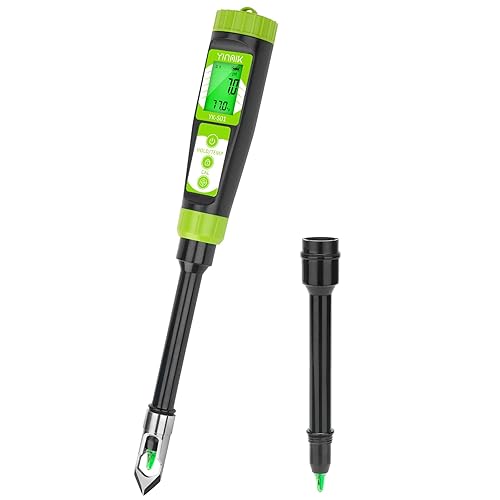 TOP CHOICEBest for quick pH readingsYINMIK Digital Soil pH Meter for GardenersView on Amazon
- 4
 Best for precise pH workApera Instruments AI102G GroStar Series GS2 Soil pH Pen Tester KitView on Amazon
- 5
 Best for NPK nutrient mappingMosser Lee Soil Master Soil Test KitView on Amazon
- 6
 Best budget pickLuster Leaf Rapitest Soil Tester 1609CSView on Amazon
Our Top Picks
The table below summarizes the six products. The detailed notes follow in the order that best matches the selection criteria: broad usefulness for garden beds first, then specialized tools.
Quick Comparison
| Product | Best for | Key feature |
|---|---|---|
| Rapitest Soil Test Kit for Gardens, Vegetables, Flowers and Lawns | General vegetable and flower beds | pH and nutrient color-chart testing |
| Luster Leaf 1818 Rapitest 4-in-1 Soil Tester | Checking several conditions at once | pH, moisture, fertility and light |
| YINMIK Digital Soil pH Meter | Fast pH checks in beds and pots | Direct-insert digital pH probe |
| Apera Instruments AI102G GroStar GS2 Soil pH Pen Tester Kit | Accurate pH for serious growers | Replaceable Swiss spear pH probe |
| Mosser Lee Soil Master Soil Test Kit | Nutrient planning across a garden | NPK plus pH, 40 tests |
| Luster Leaf Rapitest Soil Tester 1609CS | Occasional checks on a small budget | Simple pH and moisture tester |
Rapitest Soil Test Kit for Gardens, Vegetables, Flowers and Lawns
Rapitest Soil Test Kit for Gardens, Vegetables, Flowers and Lawns. USA designed and assembled soil tester completely, quickly and accurately measures/analyzes soil pH acidity and garden nutrients.
Best for: General vegetable and flower beds where you want a reliable pH and basic nutrient snapshot.
This is a good first kit for a home vegetable gardener who has never tested soil. It is aimed at the typical garden bed rather than lab-grade work, and the color-chart method keeps the learning curve short.
Key specs
- Designed for garden soil, vegetables, flowers and lawns
- Color-comparison test for soil pH and nutrients
- Made in the USA, per the product listing
Pros
- Easy to use outdoors with no batteries
- Covers the readings most vegetable beds need
- Straightforward enough for beginners
Cons
- Color matching depends on lighting and eyesight
- Less precise than a calibrated digital meter
Bottom line: A sensible starting point for most home vegetable gardeners who want a clear answer on pH and nutrients.
Luster Leaf 1818 Rapitest 4-in-1 Soil pH/Moisture/Fertility/Light Tester
Luster Leaf 1818 Rapitest 4-in1 Soil pH/Moisture/Fertility/Light Tester, Fertility
Best for: Gardeners who want one tool to check several growing conditions at once.
If you are trying to figure out why a corner of the garden underperforms, a multi-function probe lets you compare pH, moisture, fertility, and light in the same spot. It suits people who like to troubleshoot systematically.
Key specs
- Four functions in one tool: pH, moisture, fertility and light
- Probe-style design for inserting into soil
Pros
- Covers four conditions in a single purchase
- Useful for comparing sun and shade spots
- No batteries needed for the basic readings
Cons
- Readings for light and fertility are approximate
- Probes need regular cleaning to stay accurate
Bottom line: Good for gardeners who want broad diagnostics rather than a precise lab-style number.
YINMIK Digital Soil pH Meter for Gardeners
YINMIK Digital Soil pH Meter for Gardeners, Soil Direct pH Tester for Plant Care, Measure pH of Solution Potting Soil Growing Media,Great for Indoor,Greenhouse,Outdoor,Garden, Lawn, Farming, Yard Use
Best for: Quick, repeatable pH checks in raised beds, containers and greenhouse plots.
A digital probe removes the guesswork of color matching. If you plan to test the same beds every season and want numbers you can log, this type of meter is a better fit than a color kit.
Key specs
- Digital pH readout for direct soil insertion
- Designed for garden, lawn, indoor and greenhouse use
Pros
- Digital display removes color-matching error
- Fast enough to check several spots in one session
- Works in containers as well as in-ground beds
Cons
- PH meters need calibration and a dry probe between readings
- Measures pH only, not nutrient levels
Bottom line: A practical pick for gardeners who mainly need to know whether their soil pH is in range.
Apera Instruments AI102G GroStar Series GS2 Soil pH Pen Tester Kit
Apera Instruments AI102G GroStar Series GS2 Soil pH Pen Tester Kit for Direct Soil Test and Nutrient Solutions Test with Replaceable Swiss Spear pH Probe, Gen II
Best for: Growers who want more precise pH readings and can calibrate a meter.
This is a pen-style meter with a replaceable pH probe, aimed at people who care about accuracy and plan to keep the tool for years. It is a step up in precision from a basic color kit.
Key specs
- Pen-style pH meter with direct soil testing
- Replaceable Swiss spear pH probe
Pros
- Replaceable probe extends the tool’s working life
- Usable for both soil and nutrient solutions
- Good precision for serious beds and hydroponic overlap
Cons
- Requires calibration and proper storage of the probe
- More involved than a simple one-step kit
Bottom line: Best for experienced gardeners who want dependable pH numbers and are comfortable with basic meter care.
Mosser Lee Soil Master Soil Test Kit
Mosser Lee Soil Master Soil Test Kit, Measures pH, Nitrogen, Phosphorus & Potassium (NPK), Nutrient Tester for Gardens, Lawns, Flowers, Raised Beds & Indoor Plants, 40 Tests & 24 Garden Tags
Best for: Planning fertilizer across a whole garden by measuring nitrogen, phosphorus and potassium along with pH.
If your question is “what should I feed this bed?” rather than just “is it acidic?”, an NPK-capable kit is the more useful tool. The listing indicates enough tests for a full season of checks.
Key specs
- Measures pH, nitrogen, phosphorus and potassium
- Listing indicates 40 tests and 24 garden tags
Pros
- Covers NPK plus pH in one kit
- Test count supports repeat checks across beds
- Garden tags help track results by location
Cons
- Color-based nutrient readings are approximate
- Results are best used as trends, not exact lab values
Bottom line: A strong choice for gardeners who fertilize by data and want to compare nutrient levels between beds.
Luster Leaf Rapitest Soil Tester 1609CS
Luster Leaf Rapitest Soil Tester 1609CS
Best for: Occasional spot checks on a small budget.
This is a straightforward tester for gardeners who only want a rough sense of soil conditions a few times a year. It keeps the cost of entry low and the operation simple.
Key specs
- Simple probe-style soil tester from the Luster Leaf line
- Designed for quick field checks
Pros
- Simple to understand and use
- Budget-friendly entry point
- Requires no setup
Cons
- Fewer readings than multi-function or NPK kits
- Less precise than digital meters
Bottom line: Suitable for gardeners who want a basic check and do not need detailed nutrient data.
Buying Guide
What you need to measure
Start with the question you are trying to answer. If you only need to know whether soil is acidic or alkaline, a pH meter or pH color kit is enough. If you are deciding how much nitrogen, phosphorus or potassium to add, look for a kit that reports NPK. Most vegetables grow best between pH 6.0 and 7.0, so a pH reading alone can tell you whether lime or sulfur is worth considering.
Good picks for this: Mosser Lee Soil Master Soil Test Kit, Rapitest Soil Test Kit for Gardens
Accuracy: digital versus color methods
Color-chart kits are inexpensive and easy to read, but results depend on lighting and how well you match shades. Digital meters remove that variable but need calibration and a clean probe. Decide whether you value quick, forgiving readings or repeatable numbers you can track over several seasons.
Good picks for this: YINMIK Digital Soil pH Meter, Apera Instruments GroStar GS2
Test count and refills
If you test several beds, a kit’s number of tests matters more than its price tag. Check whether the listing states how many tests the kit includes and whether replacement reagents are available. A kit with 40 tests can cover a full season of checks across multiple beds.
Good picks for this: Mosser Lee Soil Master Soil Test Kit, Rapitest Soil Test Kit for Gardens
Measurement range and parameters
Some testers measure only pH; others add moisture, light, or nutrients. Multi-function tools are convenient for diagnosing problem spots, but they trade some precision for breadth. Match the parameters to the decisions you actually make in the garden.
Good picks for this: Luster Leaf 1818 Rapitest 4-in-1 Soil Tester, Luster Leaf Rapitest Soil Tester 1609CS
Probe design and durability
Probes take the most wear. Replaceable probes extend the life of a meter, while fixed probes should be rinsed, dried and stored carefully. Keep probes out of hot, dry storage and avoid forcing them into compacted or rocky soil, which can bend or break them.
Good picks for this: Apera Instruments GroStar GS2, Luster Leaf 1818 Rapitest 4-in-1 Soil Tester
Where you will test
Raised beds, containers and in-ground plots behave differently. Containers dry quickly and can show pH swings after watering with hard water. A probe that is easy to insert into loose potting mix is more useful in pots, while a sturdier tool suits in-ground beds. Think about the spots you will actually sample.
Good picks for this: YINMIK Digital Soil pH Meter, Rapitest Soil Test Kit for Gardens
Ease of use and record keeping
If you plan to compare beds over time, a kit that includes labels or tags makes it easier to keep records. Clear instructions also matter, since a test done incorrectly gives misleading numbers. Sample from several spots in each bed, mixing the soil at root depth, to get a representative reading.
Good picks for this: Mosser Lee Soil Master Soil Test Kit, Luster Leaf Rapitest Soil Tester 1609CS
FAQ
How often should I test garden soil?
Test once before planting a new bed, then roughly once a year or after major amendments. Beds that receive heavy fertilizing or lime may warrant a check every season so you can see trends.
What pH is best for vegetables?
Most vegetables do well between pH 6.0 and 7.0. Some crops, such as blueberries and potatoes, prefer more acidic conditions. Check the needs of the specific crops you grow before adjusting.
Is a home soil tester as accurate as a lab test?
Home kits are useful for spotting trends and making practical decisions, but they are generally less precise than laboratory analysis. For exact nutrient recommendations, a county extension office or certified soil lab can provide detailed reports.
When should I sample soil for testing?
Sample when the soil is moderately moist, not waterlogged or frozen. Avoid testing right after fertilizing or liming, since the readings may reflect recent additions rather than the underlying soil.
How deep should I take a soil sample?
For most vegetable beds, sample the top 4 to 6 inches, which is where most roots grow. Take several subsamples across the bed and mix them before testing.
Can a pH meter measure nutrients too?
Usually not. A basic pH meter measures acidity only. Nutrient readings require a kit or meter designed for nitrogen, phosphorus and potassium, and those results are generally less precise than pH.
Does soil moisture affect test results?
Yes. Very wet or very dry soil can give unreliable pH and nutrient readings. Test when the soil is evenly moist and follow the instructions that come with your kit.
Conclusion
For most vegetable gardeners, a general-purpose kit such as the Rapitest Soil Test Kit for Gardens is the simplest place to start. If you want to track pH precisely, a digital meter like the YINMIK or Apera GroStar suits you better. Gardeners who plan fertilizer by nutrient levels should look at the Mosser Lee Soil Master, while the Luster Leaf 4-in-1 suits anyone diagnosing several conditions at once. The Luster Leaf 1609CS works for occasional checks when budget is the main concern. Whichever you choose, sample consistently and treat results as guidance for your next decision rather than a final verdict.
Sources
- Research-based guidance on soil sampling, pH and nutrient management for home gardens (extension.org)
- Information on soil health, classification and land management practices (usda.gov)
- Guidance on home gardening practices and soil considerations (epa.gov)
Related reading
- 5 Best Garden Soil Moisture Testers for Vegetable Beds (2026)
- Where to Buy Bulk Garden Soil: 6 Best Picks for Raised Beds (2026)
- Top 7 Vege Garden Soil Mix Picks for Raised Beds and Containers
- Top 7 Soils for Raised Vegetable Garden Beds: Compared for 2026
- Top 7 Organic Veggie Garden Soil Picks for Healthy Harvests in 2026
- Top 7 Organic Raised Bed Garden Soil Picks for Healthy Vegetables
About Ethan Brooks
Ethan Brooks is part of our editorial team and reviews and edits our vegetable & edible gardening guides, checking product details against manufacturer specifications and owner feedback.