 By Emily Parker
Updated November 2026
A soil testing kit for vegetable garden beds tells you what your soil actually needs before you spend money on amendments or fertilizer. Most vegetables grow best in slightly acidic to neutral soil, roughly pH 6.0 to 7.0, and they need steady supplies of nitrogen, phosphorus and potassium. A basic kit can show you whether you are short on any of these, or whether you have already added too much. The five kits below were chosen by comparing manufacturer specifications, the number of tests each includes, the parameters measured, brand reputation and the kinds of feedback owners commonly describe. None of these were tested by us in a lab or in our own gardens.
Our top picks at a glance
- 1
 TOP CHOICEBest overallRapitest Soil Test Kit for Gardens, Vegetables, Flowers and LawnsView on Amazon
- 2
 TOP CHOICEBest for complete nutrient coverageSoil Test Kit 140 Tests (pH, Nitrogen, Phosphorus, Potassium & Ammonia)View on Amazon
- 3
 TOP CHOICEBest for tailored recommendationsMySoil Soil Test Kit, Unlock Your Lawn & Garden PotentialView on Amazon
- 4
 Best for repeat seasonal testingSoil Test Kit 4-in-1 for Lawns & Gardens (40 Tests)View on Amazon
- 5
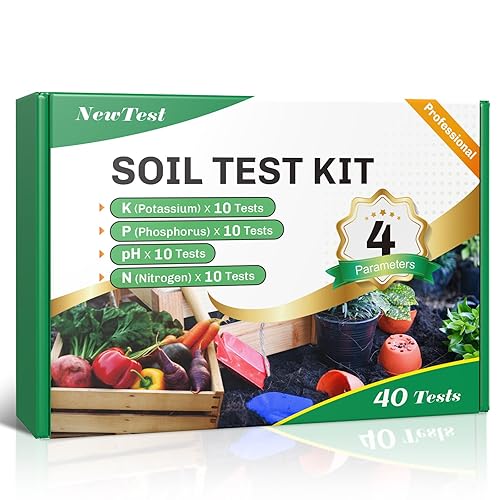 Best budget pickAccurate Soil Tester for Lawns Gardening Vegetable Garden NutrientsView on Amazon
Our Top Picks
Quick Comparison
| Product | Best for | Key feature |
|---|---|---|
| Rapitest Soil Test Kit for Gardens, Vegetables, Flowers and Lawns | Gardeners who want a well-known, straightforward kit | pH acidity and garden nutrient readings |
| Soil Test Kit 140 Tests | Growers who want the widest test count | pH, nitrogen, phosphorus, potassium and ammonia |
| MySoil Soil Test Kit | Beginners who want guidance with results | Recommendations matched to soil and plant needs |
| Soil Test Kit 4-in-1 for Lawns & Gardens | Gardeners testing across several seasons | 40 tests across four parameters |
| Accurate Soil Tester for Lawns Gardening Vegetable Garden Nutrients | Shoppers looking for a budget pick | Four-parameter test with 40 tests |
Rapitest Soil Test Kit for Gardens, Vegetables, Flowers and Lawns
Rapitest Soil Test Kit for Gardens, Vegetables, Flowers and Lawns. USA designed and assembled soil tester completely, quickly and accurately measures/analyzes soil pH acidity and garden nutrients.
Best for: Gardeners who want a well-known, straightforward kit for checking pH and general garden nutrients.
This kit suits vegetable gardeners who want a single, easy-to-read test for acidity and basic nutrient levels before planting a new bed. Its listing describes it as designed and assembled in the USA and aimed at fast, accurate analysis of soil pH and nutrients for gardens, vegetables, flowers and lawns.
Key specs
- Measures soil pH acidity
- Measures garden nutrients
- Suited to vegetables, flowers and lawns
Pros
- Clear focus on pH, the first number most vegetable growers need
- Designed for general garden use across several plant types
- Brand has a long presence in home gardening supplies
Cons
- Fewer test parameters than the largest kits on this list
- Results are best read against a reference chart, which takes some practice
Bottom line: A good first choice for a home vegetable gardener who mainly wants to confirm pH and check basic nutrients.
Soil Test Kit 140 Tests (pH, Nitrogen, Phosphorus, Potassium & Ammonia)
Soil Test Kit 140 Tests (2026 Updated Instructions) – pH, Nitrogen, Phosphorus, Potassium & Ammonia – Garden, Lawn & Plant Soil Tester Kit for Accurate Fertility Analysis
Best for: Growers who want the widest test count and the most parameters in one box.
Gardeners planning several beds, or those who want to track changes over multiple seasons, may find the 140-test count useful. The listing advertises updated 2026 instructions and covers pH, nitrogen, phosphorus, potassium and ammonia for garden, lawn and plant soil.
Key specs
- 140 tests
- Parameters: pH, nitrogen, phosphorus, potassium, ammonia
- Updated instruction set (per listing)
Pros
- High test count supports repeated checks across beds
- Covers ammonia as well as the core nutrients
- Instructions are described as updated for current use
Cons
- Ammonia readings are less commonly needed by home vegetable growers
- Color matching still requires careful lighting and attention
Bottom line: Best for gardeners who want maximum testing capacity and broader parameter coverage.
MySoil Soil Test Kit, Unlock Your Lawn & Garden Potential
MySoil Soil Test Kit, Unlock Your Lawn & Garden Potential, Complete & Accurate Nutrient and pH Analysis with Recommendations Tailored to Your Soil and Plant Needs
Best for: Beginners who want guidance with their results, not just numbers.
New growers often struggle with interpreting a color chart. This kit is marketed around complete nutrient and pH analysis paired with recommendations tailored to soil and plant needs, which can help a first-time vegetable gardener decide what to add.
Key specs
- Nutrient and pH analysis
- Recommendations tailored to soil and plant needs (per listing)
Pros
- Recommendations reduce guesswork for beginners
- Covers both pH and nutrients in one process
- Useful for choosing between lime, compost and fertilizer
Cons
- Recommendations are general and should be checked against your crop needs
- Experienced growers may prefer a kit with more raw test capacity
Bottom line: A sensible pick for someone who wants clear next steps after testing.
Soil Test Kit 4-in-1 for Lawns & Gardens (40 Tests)
Soil Test Kit 4-in-1 for Lawns & Gardens – 40 Tests (pH, Nitrogen, Phosphorus, Potassium) – Easy Soil Testing Kit for Vegetable Garden, Lawn & Plants
Best for: Gardeners testing across several seasons who want a balanced, mid-sized kit.
This kit covers four core parameters across 40 tests. It is marketed specifically as an easy soil testing kit for vegetable gardens, lawns and plants, which makes it a practical option for rotating beds or checking a new plot each spring.
Key specs
- 40 tests
- Four parameters: pH, nitrogen, phosphorus, potassium
Pros
- Covers the nutrients most vegetable crops depend on
- Enough tests for several seasons of spot checks
- Marketed for vegetable gardens specifically
Cons
- Does not measure ammonia or micronutrients
- Test count is lower than the 140-test option
Bottom line: A balanced choice for seasonal testing without paying for capacity you may not use.
Accurate Soil Tester for Lawns Gardening Vegetable Garden Nutrients
Accurate Soil Tester for Lawns Gardening Vegetable Garden Nutrients for pH Nitrogen Phosphorus Potassium Soil Test Kit 4 Parameters: 40 Tests Professional Soil Testing Kits
Best for: Shoppers looking for a budget pick that still covers the four main parameters.
Home gardeners with a small number of beds may not need a large kit. This tester covers pH, nitrogen, phosphorus and potassium across 40 tests, which is enough to build a basic picture of your soil.
Key specs
- 40 tests
- Four parameters: pH, nitrogen, phosphorus, potassium
Pros
- Good coverage of core vegetable nutrients for the price category
- Simple process suited to occasional checks
- Works for lawns as well as vegetable beds
Cons
- Less brand history to draw on than some longer-established names
- Accuracy depends on careful sampling and following the chart closely
Bottom line: The most economical option here for a few beds, provided you are comfortable with a simple color-matching process.
Buying Guide
Parameters measured
At minimum, look for pH, nitrogen, phosphorus and potassium. These four drive most vegetable growing decisions. Ammonia and micronutrients such as calcium or magnesium are useful for specialized diagnosis but are less essential for most home beds.
Good picks for this: Soil Test Kit 140 Tests, Soil Test Kit 4-in-1 for Lawns & Gardens
Test count per kit
Count how many beds you test and how often. A single spring check for two raised beds needs far fewer tests than monitoring a large in-ground plot over three seasons. Kits with 40 tests generally cover a typical home garden for a year or two of spot checks.
Good picks for this: Soil Test Kit 4-in-1 for Lawns & Gardens, Accurate Soil Tester for Lawns Gardening Vegetable Garden Nutrients
Ease of reading results
Most consumer kits rely on color-matching against a chart. Good instructions, clear photos and a consistent sampling method make a large difference. Beginners often benefit from kits that interpret results rather than only reporting numbers.
Good picks for this: MySoil Soil Test Kit, Rapitest Soil Test Kit for Gardens, Vegetables, Flowers and Lawns
Crop and garden fit
Check whether the kit names vegetables or edible gardens. Kits aimed at general lawns may not give the guidance vegetable growers need, such as target pH ranges for tomatoes, brassicas or legumes.
Good picks for this: Rapitest Soil Test Kit for Gardens, Vegetables, Flowers and Lawns, Soil Test Kit 4-in-1 for Lawns & Gardens
Sampling and accuracy
No kit is more accurate than the sample you give it. Take samples from 6 to 8 inches deep in several spots across each bed, mix them in a clean container, and remove debris before testing. Follow the kit’s stated sampling depth and wait times.
Good picks for this: Soil Test Kit 140 Tests, MySoil Soil Test Kit
Budget and test frequency
If you test once a year, a smaller kit is usually enough. If you amend beds each season and want to watch trends, a larger count pays off over time. Compare cost per test rather than the box price alone.
Good picks for this: Accurate Soil Tester for Lawns Gardening Vegetable Garden Nutrients, Soil Test Kit 4-in-1 for Lawns & Gardens
Limitations of at-home kits
Home kits give useful directional information but are not a substitute for a lab test. A state cooperative extension office can run a more detailed analysis, including organic matter and micronutrients, for a modest fee. Use home kits for quick checks and labs for major decisions.
Good picks for this: Rapitest Soil Test Kit for Gardens, Vegetables, Flowers and Lawns, MySoil Soil Test Kit
FAQ
How often should I test my vegetable garden soil?
Test once a year, ideally in early spring or after harvest, and retest any bed where you have made major amendments. Testing every season is useful if you are actively adjusting pH or fertility.
What pH is best for most vegetables?
Most vegetables grow well between pH 6.0 and 7.0. Some crops, such as blueberries and potatoes, prefer more acidic soil, so check the target range for each crop you plan to grow.
How deep should I take soil samples?
Sample the top 6 to 8 inches for most vegetable beds. Take several subsamples across the bed and mix them together before testing.
Can a home kit replace a lab test?
A home kit is good for quick, low-cost checks. For detailed analysis or diagnosing a problem, a lab test through a university or state extension program gives more reliable results.
Do I need to test for nitrogen every year?
Nitrogen levels change quickly with rain, microbial activity and crop uptake, so home kit readings for nitrogen are best treated as a snapshot. Many growers focus annual testing on pH and phosphorus and adjust nitrogen through regular feeding.
What should I do if my soil pH is too low or too high?
Garden lime raises pH and elemental sulfur lowers it, but both work slowly and depend on soil type. Apply amendments according to label rates or extension guidance, then retest after several months.
Conclusion
For most home vegetable gardeners, the best soil testing kit is one that clearly measures pH and the core nutrients, with enough tests for the number of beds you grow. The Rapitest kit suits a straightforward first check, the 140-test kit fits growers who want broad capacity, and the MySoil kit helps beginners turn results into action. The 4-in-1 and budget options cover seasonal testing for smaller plots. Whichever you choose, sample carefully and compare results year over year.
Sources
- Research-based guidance on collecting soil samples and interpreting garden soil test results (extension.org)
- Overview of soil health, nutrient management and soil survey data (usda.gov)
- Information on soil testing, contaminants and home garden soil safety (epa.gov)
Related reading
- Top 7 Soils for Raised Vegetable Garden Beds: Compared for 2026
- Top 7 Organic Raised Bed Garden Soil Picks for Healthy Vegetables
- Top 5 Raised Garden Soil Mix Picks for Vegetable Beds in 2026
- Sta-Green Flower & Vegetable Garden Soil: 7 Best Picks for 2026
- Sta Green Garden Soil: 7 Best Picks for Vegetable Beds (2026)
About Emily Parker
Emily Parker is part of our editorial team and reviews and edits our vegetable & edible gardening guides, checking product details against manufacturer specifications and owner feedback.