 By Ethan Brooks
Updated November 2026
A garden works soil scoop is one of the simplest tools you can own, but the differences between models matter more than most gardeners expect. Scoop width, blade material, handle comfort and whether the tool is built for digging or only for moving loose mix all change how well it performs in raised beds, containers and seed trays. This guide compares six scoops from the Garden Works line and similar well-reviewed options, using manufacturer specifications, brand reputation and common owner feedback as the basis for each recommendation. We did not physically test these tools, so treat the specs below as what the makers state and what owners tend to report.
Our top picks at a glance
- 1
 TOP CHOICEBest overallGarden Works Potting ScoopView on Amazon
- 2
 TOP CHOICEBest for heavy diggingGARDEN WEASEL Oversized Potting ScoopView on Amazon
- 3
 TOP CHOICEBest for small kitchens and windowsillsHome-X Set of 2 Soil Scoops, Mini Hand ScoopsView on Amazon
- 4
 Best budget pickGarden Soil Scoop, 2-in-1 Multi-Function Plastic Spoon Soil ShovelView on Amazon
- 5
 Best for bonsai and fine pottingBaolaili Bonsai Soil Scoops, Plastic Garden Soil ScoopsView on Amazon
- 6
 Best premium optionCorona CT 3364 Premium ComfortGEL Stainless Steel ScoopView on Amazon
Our Top Picks
| Product | Best for | Key feature |
|---|---|---|
| Garden Works Potting Scoop | General potting and transplanting | Balanced scoop shape for everyday use |
| GARDEN WEASEL Oversized Potting Scoop | Moving large volumes of soil | Heavy-duty steel with an oversized bowl |
| Garden Soil Scoop 2-in-1 Multi-Function | Budget buyers wanting two tools in one | Scoop plus mini scoop combination |
| Baolaili Bonsai Soil Scoops | Fine potting and container work | Lightweight plastic with ergonomic grip |
| Corona CT 3364 Premium Hand Scoop | Frequent users who want comfort | Stainless steel blade with ComfortGEL handle |
| Home-X Set of 2 Soil Scoops | Small spaces and seed starting | Two sizes in one set |
Garden Works Potting Scoop
Garden Works Potting Scoop
Best for: General potting and transplanting
This is a solid all-round choice for gardeners who move soil between pots, beds and seed trays and want one scoop that handles most jobs without specialty features.
Key specs For another angle, check out Backyard Garden Ideas for Small Yards: 7 Layouts That Really Work.
- Hand-held scoop designed for potting mix and garden soil
- Suited to container and raised bed planting
Pros
- Simple shape that fills and empties cleanly
- Works well for both containers and beds
- Easy to store alongside other hand tools
Cons
- Not built for heavy digging into compacted ground
- Fewer features than multi-tool sets
Bottom line: A reliable first scoop for most home vegetable gardeners who mostly work with loose potting mix.
GARDEN WEASEL Oversized Potting Scoop
GARDEN WEASELHeavy duty steel scoop for transplanting, moving soil & potting mix. Mini shovel design for garden beds & container planting Oversized Potting Scoop for Soil Digging Planting Gardening
Best for: Moving large volumes of soil
Gardeners filling multiple raised beds or large containers will appreciate the bigger bowl and sturdier build for repetitive scooping.
Key specs
- Heavy-duty steel construction, as described in the listing
- Oversized scoop head for bulk soil movement
- Mini shovel design for garden beds and container planting
Pros
- Large capacity cuts down on trips to the bag
- Steel blade handles denser material better than plastic
- Works for both digging and transplanting
Cons
- Heavier than plastic options, which can tire the wrist over long sessions
- Oversized bowl is less precise for seedlings
Bottom line: The right pick for people filling several beds at once who want a sturdier tool.
Garden Soil Scoop, 2-in-1 Multi-Function Plastic Spoon Soil Shovel
Garden Soil Scoop, 2-in-1 Multi-Function Plastic Spoon Soil Shovel Wear Resistant Digging Tool Cultivation Potting Scoop with Mini Scoop for Digging Up or Transporting
Best for: Budget-minded gardeners wanting two tools in one
Owners who want a main scoop and a small detail scoop without buying two separate tools often start here.
Key specs
- Plastic construction with wear-resistant finish, per the listing
- Includes a mini scoop for digging up or transporting small amounts
Pros
- Two functions in a single purchase
- Light enough for long planting sessions
- Good for seed trays and small pots
Cons
- Plastic can flex under heavy, dense soil
- Smaller main scoop than steel alternatives
Bottom line: A practical budget pick for light-to-medium potting work.
Baolaili Bonsai Soil Scoops, Plastic Garden Soil Scoops
Baolaili Bonsai Soil Scoops, Plastic Garden Soil Scoops, Black, Classic, Ergonomic Grip
Best for: Fine potting and container work
Bonsai growers and anyone repotting small plants will find the compact plastic scoop easy to control around delicate roots.
Key specs
- Plastic body in black with ergonomic grip, per the listing
- Classic scoop shape sized for small containers
Pros
- Lightweight and easy to control
- Ergonomic grip reduces hand fatigue on small jobs
- Fits into tight pot openings
Cons
- Not suited to digging in garden beds
- Plastic will not hold up to rocky or compacted soil
Bottom line: Best for precise container and bonsai work rather than bed preparation.
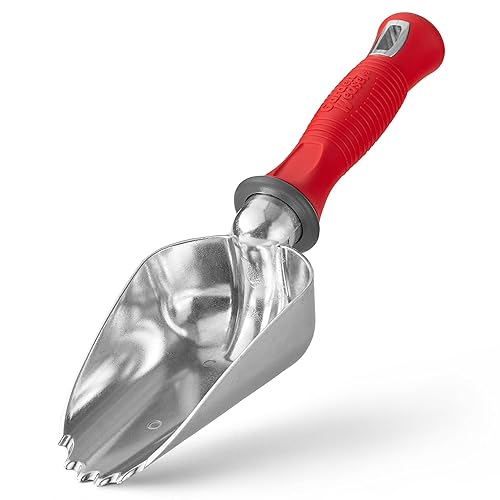
Corona CT 3364 Premium ComfortGEL Stainless Steel Scoop
Garden Hand Tools, Garden Scoops, Hand Scoops, Corona CT 3364 Premium Hand Scoop, 6 in L Blade, ice melt and pet food Corona Tools Corona CT 3364 Premium ComfortGEL Stainless Steel Scoop, red
Best for: Frequent users who prioritize hand comfort
Gardeners who scoop daily, or who have sensitive hands, may value the cushioned grip and corrosion-resistant blade.
Key specs
- Stainless steel blade, 6 inch length, per the listing
- ComfortGEL handle for cushioned grip
Pros
- Stainless steel resists rust with regular cleaning
- Padded handle reduces strain during long sessions
- Well-built for repeated use
Cons
- Higher-end option than basic plastic scoops
- Listing also references other uses, so check fit for your task
Bottom line: A premium choice for gardeners who use a scoop often and value comfort.
Home-X Set of 2 Soil Scoops, Mini Hand Scoops
Home-X Set of 2 Soil Scoops – Mini Hand Scoops for Transplanting, Weeding, and Potting – Small Garden Scoop, Potting Scoopers, Bonsai Tool – Set of 2 Different Sizes 6½" x 2½" and 6¼" x 1¾" – Green
Best for: Small spaces and seed starting
Balcony and windowsill gardeners who need two sizes for transplanting and weeding will find this set convenient.
Key specs
- Two sizes: 6½” x 2½” and 6¼” x 1¾”
- Green finish, per the listing
Pros
- Two sizes cover both bulk and precise work
- Compact footprint for small spaces
- Useful for seed trays and weeding
Cons
- Too small for moving bulk soil in beds
- Thin blades may bend under hard use
Bottom line: Ideal for compact growing setups and seed starting.
Buying Guide
Scoop Size and Capacity
Match scoop size to the job. Narrow scoops of about 1¾ to 2½ inches wide suit seedlings and small pots, while wider bowls around 4 inches or more move soil faster in raised beds. A larger bowl means fewer trips, but it is harder to control in tight containers.
Good picks for this: GARDEN WEASEL Oversized Potting Scoop, Home-X Set of 2 Soil Scoops
Blade Material
Steel blades handle compacted and dense soil better than plastic, which can flex or crack under pressure. Stainless steel resists rust if you clean and dry the tool after use. Plastic is lighter and adequate for loose potting mix.
Good picks for this: Corona CT 3364 Premium ComfortGEL Stainless Steel Scoop, GARDEN WEASEL Oversized Potting Scoop
Handle Comfort and Grip
If you scoop for long periods, look for an ergonomic or padded grip. A handle that fits your palm reduces wrist strain. Test grip shape in the store if possible, or read owner comments about hand fatigue.
Good picks for this: Corona CT 3364 Premium ComfortGEL Stainless Steel Scoop, Baolaili Bonsai Soil Scoops
Intended Use: Digging vs. Transplanting
Some scoops are designed for breaking ground and moving bulk material, while others suit transplanting and potting. Check whether the product is described as a digging tool or a potting tool before buying, since using a light scoop for hard digging often leads to damage.
Good picks for this: Garden Works Potting Scoop, Garden Soil Scoop 2-in-1 Multi-Function
Durability and Construction
Look at how the scoop is joined to its handle or body. Riveted or one-piece construction generally lasts longer than thin glued seams. Wear-resistant finishes help plastic tools hold up, but no plastic scoop will match steel for heavy work.
Good picks for this: GARDEN WEASEL Oversized Potting Scoop, Garden Works Potting Scoop
Multi-Function Sets
A set with two sizes or a scoop-plus-mini-scoop combination saves money on separate tools and covers more tasks, from bulk filling to weeding around seedlings. The tradeoff is that each piece may be smaller or lighter than a dedicated single tool.
Good picks for this: Home-X Set of 2 Soil Scoops, Garden Soil Scoop 2-in-1 Multi-Function
Care and Storage
Rinse soil off after each use and let the scoop dry fully before storing. Rust is the main enemy of steel blades, and trapped moisture can weaken wood or plastic handles over time. Hang tools on a hook or keep them in a dry bucket.
Good picks for this: Corona CT 3364 Premium ComfortGEL Stainless Steel Scoop, Garden Works Potting Scoop
FAQ
What is a garden works soil scoop used for?
A garden works soil scoop is a hand tool for moving potting mix, garden soil and compost. Gardeners use it to fill containers, transplant seedlings, scoop soil into raised beds and measure amendments. Size and blade material determine whether a given scoop suits light potting or heavier bed work.
Is a steel soil scoop better than plastic?
Steel is generally more durable for dense or compacted soil and resists bending. Plastic is lighter and adequate for loose potting mix and seed starting. For most home gardeners, a steel scoop is the better all-round choice if you work in beds, while plastic works well for containers.
What size soil scoop should I buy for raised beds?
A bowl around 4 inches wide or larger moves soil faster across a raised bed. If you also transplant seedlings, pairing a large scoop with a small one covers both jobs and avoids over-filling small pots.
Can I use a soil scoop for digging?
Light scoops are meant for moving loose material, not breaking hard ground. For digging, choose a heavy-duty steel model or a dedicated trowel. Using a thin plastic scoop on compacted soil can bend or break the blade.
How do I clean and store a soil scoop?
Brush off dried soil, rinse with water and dry the tool completely before storage. Keep steel blades lightly oiled if you store them in a damp area. Store scoops out of direct sun, which can weaken plastic over time.
Do I need more than one scoop?
Many gardeners keep one large scoop for beds and one small scoop for seedlings and containers. A two-piece set can cover both needs without buying separately.
Conclusion
For a general-purpose garden works soil scoop, the Garden Works Potting Scoop is a sensible starting point. Choose the GARDEN WEASEL Oversized Potting Scoop if you move large volumes of soil, the Corona ComfortGEL model if hand comfort matters most, and the Home-X set or Baolaili bonsai scoops for small containers and seed starting. Budget buyers wanting two tools in one should consider the 2-in-1 Garden Soil Scoop. Match the scoop to your primary task, and the right size and material will follow.
Sources
- Research-based guidance on potting mixes, container planting and garden soil preparation from land-grant university extension programs (extension.org)
- Soil health and gardening resources from the U.S. Department of Agriculture (usda.gov)
Related reading
- Soil Mixture for Vegetable Garden: A Step-by-Step Recipe That Works
- Can I Use Garden Soil in a Pot: When It Works and How to Do It Right
- Preparing Garden Soil for Planting: A Practical Guide
- Improving Garden Drainage in Heavy or Wet Soil
- How to Take a Soil Sample for a Garden Soil Test
- How to Start a Garden: Site, Soil and First Plantings
- How to Prepare Soil for a New Garden
About Ethan Brooks
Ethan Brooks is part of our editorial team and reviews and edits our vegetable & edible gardening guides, checking product details against manufacturer specifications and owner feedback.