 By Emily Parker
Updated November 2026
Growing tomatoes and broccoli in the same plot is a common question for home gardeners, and the answer depends on what you want from a companion planting guide. Some readers want a quick pairing chart they can pin to a shed wall. Others want a full book that explains why certain plants share space well, how far apart to set them, and which neighbors to avoid. This list covers six titles that address tomatoes and broccoli companion planting from different angles. The selection method was research-based: we looked at each title’s listed scope, the author’s and publisher’s stated focus, and the patterns owners tend to mention in reader feedback, such as whether the book is practical for raised beds or leans toward theory. We did not test these books ourselves, so treat the picks as a guide to fit rather than a verdict on content quality.
Best overall: Carrots Love Tomatoes – View on Amazon
Best for beginners: Companion Planting for Beginners – View on Amazon
Best wall chart: LWQCHW Companion Planting Poster – View on Amazon
Best for raised beds and containers: Companion Planting Charts (101 charts) – View on Amazon
Best focused tomato guide: The Perfect Partners: Companion Planting For Tomatoes – View on Amazon
Best budget pick for organic gardeners: Companion Planting Guide (organic vegetables, herbs and fruit) – View on Amazon
Our Top Picks
Quick Comparison
| Product | Best for | Key feature |
|---|---|---|
| Carrots Love Tomatoes: Secrets of Companion Planting for Successful Gardening | Gardeners who want the classic pairing logic | Long-established companion planting title with broad vegetable coverage |
| Companion Planting for Beginners | First-time growers | Plain-language pairing advice without dense theory |
| Companion Planting Poster (unframed, 8 x 12 in) | Quick reference in the garden | Visual pairing layout for tomatoes, broccoli and other crops |
| Companion Planting Charts (101 charts) | Raised beds and containers | Chart-based pairings for small spaces and organic pest control |
| The Perfect Partners: Companion Planting For Tomatoes | Tomato-focused planning | Dedicated to tomato pairings and spacing |
| Companion Planting Guide (organic vegetables, herbs and fruit) | Backyard organic growers | Broad guide covering vegetables, herbs and fruit |
Carrots Love Tomatoes: Secrets of Companion Planting for Successful Gardening

Carrots Love Tomatoes: Secrets of Companion Planting for Successful Gardening
Best for: Gardeners who want a foundational explanation of why plants pair well
This is one of the most widely recognized titles in the companion planting genre. It suits readers who want the reasoning behind pairings, not just a list, including how plant roots, shade and pest deterrence are thought to interact. If you plan to grow tomatoes and broccoli alongside other crops, it gives you a framework you can apply beyond these two plants.
Key specs
- Subject: companion planting for vegetables and garden success
- Format: print book
Pros
- Explains the logic behind pairings
- Broad crop coverage beyond tomatoes
- Useful for planning a whole garden layout
Cons
- Some pairing advice reflects traditional lore that has limited controlled evidence behind it
- Less focused on exact modern spacing measurements
Bottom line: A strong pick for readers who want the concepts behind companion planting and plan to grow many crops.
Companion Planting for Beginners: Pair Your Plants for a Bountiful, Chemical-Free Vegetable Garden

Companion Planting for Beginners: Pair Your Plants for a Bountiful, Chemical-Free Vegetable Garden
Best for: Beginners who want simple, chemical-free pairing guidance
The title signals a practical, low-jargon approach. It is aimed at new vegetable growers who want to know which plants to group, how to arrange a bed, and how to avoid common mistakes without reading a textbook.
Key specs
- Audience: beginner vegetable gardeners
- Focus: chemical-free vegetable gardening through plant pairing
Pros
- Accessible writing for first-season gardeners
- Covers the basics of pairing and bed planning
- Emphasis on organic, chemical-free methods
Cons
- May lack the depth experienced growers want on spacing details
- Fewer charts than a reference-style book
Bottom line: The best starting point for a gardener planting tomatoes and broccoli for the first time.
LWQCHW Companion Planting Poster: Tomatoes, Carrots, Corn, Broccoli, Squash, Lettuce and More

Tomatoes, Carrots, Corn, Broccoli, Squash, Lettuce and More(Unframed,08x12inch(20x30cm)) LWQCHW Companion Planting Poster, Vegetable Garden Pairing Guide
Best for: A quick visual reference you can keep near the garden
A poster works differently from a book. It is meant to be glanced at while you plan a bed or walk the rows. Gardeners who already understand the basics often prefer this format for checking pairings on the spot.
Key specs
- Unframed print, 8 x 12 inches (20 x 30 cm)
- Covers tomatoes, broccoli and several other vegetables
Pros
- Fast visual reference for pairings
- Easy to pin up in a shed or potting area
- Covers the main crops in one view
Cons
- Limited explanation of why pairings work
- Small print can be hard to read from a distance
Bottom line: A useful add-on for experienced planners who want a handy chart rather than a long read.
COMPANION PLANTING CHARTS: 101 Companion Planting Charts for Organic Pest Control, Better Vegetable Pairings, Raised Beds, and Container Gardens
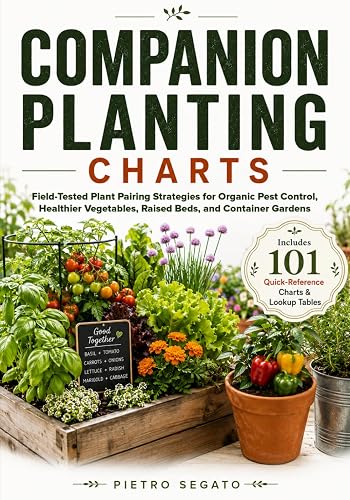
COMPANION PLANTING CHARTS: 101 Companion Planting Charts for Organic Pest Control, Better Vegetable Pairings, Raised Beds, and Container Gardens … for Raised Beds, Containers & Small Spaces)
Best for: Raised-bed and container gardeners who need many chart-style references
This title is built around charts rather than prose. It fits gardeners with limited space who want to check pairings for specific bed layouts, containers, and organic pest control approaches.
Key specs
- Format: chart-based companion planting reference
- Focus: raised beds, containers and small spaces
Pros
- Many charts for quick comparison
- Covers small-space and container layouts
- Organized around organic pest control
Cons
- Light on narrative explanation
- Charts can oversimplify complex plant interactions
Bottom line: Best for raised-bed gardeners who want an organized reference they can flip through during planning.
The Perfect Partners: Companion Planting For Tomatoes

The Perfect Partners: Companion Planting For Tomatoes
Best for: Tomato growers who want a dedicated pairing guide
A title centered on tomatoes is a natural fit if your main goal is to build a tomato-focused plot. Broccoli is a secondary crop here, so check whether the book covers brassicas before buying if that is your priority.
Key specs
- Focus: companion planting centered on tomatoes
Pros
- Tomato-specific pairing advice
- Useful for planning tomato bed layouts
- Narrow scope keeps the advice focused
Cons
- Broccoli coverage may be limited
- Less useful for gardeners growing few tomatoes
Bottom line: A good choice for tomato-first gardeners who want to plan around their main crop.
Companion Planting Guide: A Companion Gardening Book for Growing Organic Vegetables, Herbs & Fruit in Your Backyard!

Companion Planting Guide: A Companion Gardening Book for Growing Organic Vegetables, Herbs & Fruit in Your Backyard! (Beginners Guide to Companion Planting)
Best for: Backyard organic gardeners who grow a mix of vegetables, herbs and fruit
This guide covers a wider range of plants than a tomato-only title. It suits gardeners who want one book for the whole backyard, with tomatoes and broccoli as part of a larger system.
Key specs
- Scope: vegetables, herbs and fruit
- Focus: organic backyard growing
Pros
- Covers vegetables, herbs and fruit together
- Organic growing orientation
- Good for building a whole-garden plan
Cons
- Less depth on any single crop
- Specific spacing for tomatoes and broccoli may be general
Bottom line: Suited to backyard gardeners who want one reference covering many crops, not a deep dive on tomatoes alone.
Buying Guide
Scope: tomato-specific or whole-garden
Decide whether you want a book about tomatoes and broccoli specifically or a broader reference. A tomato-only title gives depth on one crop. A whole-garden guide helps you plan rotations and mixed beds. Check the table of contents for the crops you grow most.
Good picks for this: The Perfect Partners: Companion Planting For Tomatoes; Companion Planting Guide (organic vegetables, herbs and fruit)
Format: book, poster or chart set
Books explain reasoning. Posters and chart sets give fast answers at the bed edge. Many gardeners use a book for planning and a chart for reference. Consider how you plan and where you will consult the material.
Good picks for this: LWQCHW Companion Planting Poster; Companion Planting Charts (101 charts)
Depth of explanation
Look for books that explain why plants pair well, not just which ones. Explanations let you adapt advice to your climate and bed layout. Pure lists are faster but leave you guessing when your situation differs.
Good picks for this: Carrots Love Tomatoes; Companion Planting for Beginners
Spacing and layout detail
Broccoli usually needs roughly 18 to 24 inches between plants, while many indeterminate tomatoes need 24 to 36 inches or more depending on the variety and support. Check whether a book gives spacing numbers or only general advice. Specific spacing guidance is more useful for raised beds.
Good picks for this: Companion Planting Charts (101 charts); Companion Planting for Beginners
Space type: raised beds and containers
If you garden in raised beds or containers, look for titles that address small footprints and limited root volume. Layout advice for open ground does not always translate directly to a 4 by 8 foot bed.
Good picks for this: Companion Planting Charts (101 charts); Companion Planting Guide (organic vegetables, herbs and fruit)
Organic and pest-management focus
Many companion planting books present pairings as part of pest management. Keep in mind that the evidence for some pest-deterrent claims is mixed. Pair these ideas with standard monitoring and cultural practices rather than relying on plant neighbors alone.
Good picks for this: Companion Planting for Beginners; Companion Planting Charts (101 charts)
Durability and reference use
A book you will reread benefits from a sturdy binding and clear layout. A poster should be readable at arm’s length and ideally protected from moisture if it will live outdoors. Consider whether you want a permanent reference or a planning-season tool.
Good picks for this: LWQCHW Companion Planting Poster; Carrots Love Tomatoes
FAQ
Do tomatoes and broccoli grow well together?
Tomatoes and broccoli are often grown in the same garden, but they have different needs. Broccoli prefers cooler conditions and steady moisture, while tomatoes need heat and good drainage. Many gardeners separate them into different beds or zones to give each crop what it needs.
Is there good evidence that companion planting works?
Some pairings have research support, such as trap crops or flowers that attract beneficial insects, but many traditional claims are based on observation rather than controlled trials. Use companion planting as one tool alongside sound soil care and crop rotation.
How far apart should broccoli and tomatoes be planted?
Broccoli is commonly spaced about 18 to 24 inches apart, and tomatoes often need 24 to 36 inches or more depending on the variety. Leave room for airflow and for the mature canopy of each crop. Check the seed packet or a trusted extension guide for your variety.
Should I plant broccoli and tomatoes at the same time?
Broccoli is typically started in early spring or late summer for fall harvest, while tomatoes are usually transplanted after the last frost. Because the timing differs, you may plant them in succession rather than together. Plan around your local frost dates.
What should I avoid planting near tomatoes?
Many guides advise keeping tomatoes away from potatoes because they share some diseases, and from fennel, which is widely reported to inhibit growth. Check the book you choose for its specific list of cautions.
Can I use a companion planting chart in a raised bed?
Yes, charts are useful in raised beds, but adjust for bed size and root space. A small bed may only fit one tomato plant and a few broccoli plants, so prioritize the pairings that matter most for your goals.
Does companion planting help with pests?
Some plant combinations may reduce pest pressure, but results vary by region and season. Regular scouting, row covers for cabbage worms on broccoli, and good sanitation are more reliable. Consult your local extension service for pest guidance specific to your area.
Conclusion
For a foundational understanding of tomatoes and broccoli companion planting, Carrots Love Tomatoes offers the most explanation of why pairings work. Beginners will find Companion Planting for Beginners more approachable. Experienced gardeners who want a quick reference may prefer the LWQCHW poster or the 101-chart set, especially for raised beds and containers. If your focus is tomatoes first, The Perfect Partners is the most targeted choice, though broccoli coverage should be checked. Pick the format that matches how you plan and where you consult your reference.
Sources
- Research-based vegetable planting guides and crop spacing information from land-grant university extension services (extension.org)
- Plant hardiness, planting calendars and sustainable vegetable production resources (usda.gov)
- Vegetable production guidance covering tomatoes, brassicas and integrated pest management (ncsu.edu)
Before you buy: helpful guides
Related reading
- Tomatoes and Parsley Companion Planting: 5 Best Picks for 2026
- Companion Planting for Broccoli: 8 Best Partners and What to Avoid (2026)
About Emily Parker
Emily Parker is part of our editorial team and reviews and edits our vegetable & edible gardening guides, checking product details against manufacturer specifications and owner feedback.