 By Graham Fisher
Updated November 2026
Choosing a cedar raised garden bed comes down to size, wall depth, how much weight the frame can hold, and whether the build includes legs and drainage. This guide compares six cedar options against those criteria, so you can match a bed to your space, your crops and how much soil you plan to fill it with.
Our top picks at a glance
- 1
 TOP CHOICEBest overallSelect Cedar Raised Garden BedView on Amazon
- 2
 TOP CHOICEBest for deep-rooted cropsDeep Root Cedar Raised Bed Garden KitView on Amazon
- 3
 TOP CHOICEBest for raised height and accessCedar Raised Garden Bed with LegsView on Amazon
- 4
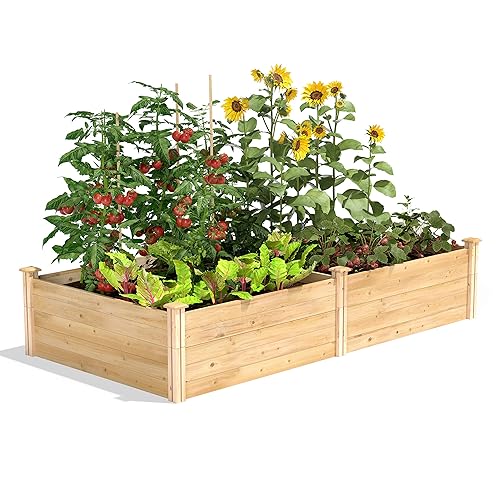 Best for made-in-USA constructionPremium Cedar Raised Garden BedView on Amazon
- 5
 Best for large plantings8×8 Ft Wooden Raised Garden BedView on Amazon
- 6
 Best for long, tall bedsBlueWish 72''L x 23''W x 30''H Outdoor Cedar Garden Bed, 2×6 FT RaisedView on Amazon
Our Top Picks
| Product | Best for | Key feature |
|---|---|---|
| Select Cedar Raised Garden Bed | Everyday vegetable growing | 4′ x 8′ footprint, 17.5″ height |
| Cedar Raised Garden Bed with Legs | Raised height and easier reach | Built-in legs, 30″ height |
| Deep Root Cedar Raised Bed Garden Kit | Deep-rooted crops | Extra-deep soil volume |
| Premium Cedar Raised Garden Bed | Made-in-USA construction | 3/4″ thick North American cedar |
| 8×8 Ft Wooden Raised Garden Bed | Large plantings | Open base, iron mesh |
| BlueWish Outdoor Cedar Garden Bed | Long rows and high capacity | 8 drainage holes, 6 legs |
Select Cedar Raised Garden Bed
Select Cedar Raised Garden Bed (4' x 8' x 17.5" H)
Best for: Everyday vegetable growing in a standard 4′ x 8′ footprint.
This is a straightforward bed for gardeners who want a manageable size and a 17.5-inch wall height, which suits most common vegetables, herbs and greens. A related read: 7 Best Hand Held Garden Tillers for Small Beds and Raised Rows (2026).
Pros
- Standard 4′ x 8′ size fits most yards and easily reaches from both sides.
- 17.5-inch walls give enough soil depth for carrots, peppers and most root crops.
Cons
- Shallower than deep-root designs, so very long taproots may need more depth.
Cedar Raised Garden Bed with Legs
Cedar Raised Garden Bed with Legs, Outdoor Planter Box 48x24x30, 200lb
Best for: Raised height and easier reach for gardeners who prefer not to bend.
Built with legs, this bed lifts the planting surface to about 30 inches, which helps anyone who finds ground-level beds hard on the back and knees.
Pros
- Elevated design reduces bending during planting, weeding and harvest.
- Rated by the manufacturer for up to 200 pounds, which covers a full soil load.
Cons
- Legs need a level surface, and a loaded bed should be checked for stability.
Deep Root Cedar Raised Bed Garden Kit
Deep Root Cedar Raised Bed Garden Kit
Best for: Deep-rooted crops such as carrots, parsnips and tomatoes.
This kit is aimed at gardeners who want more soil volume so that roots have room to develop and moisture holds steadier between waterings.
Pros
- Extra depth gives long taproots room to develop without hitting compacted ground.
- Kit format means all parts are included for a single assembly session.
Cons
- Greater depth means a larger soil order, so budget for more filler and mix.
Premium Cedar Raised Garden Bed
Premium Cedar Raised Garden Bed, 4' x 8' x 17.5" (3/4" Thick) – Made in USA with North American Cedar
Best for: Made-in-USA construction with thicker cedar boards.
Owners who prioritize sourcing and board thickness often look at this bed, since the 3/4-inch walls resist warping better than thinner stock.
Pros
- 3/4-inch thick North American cedar boards hold their shape well over seasons.
- Made in the USA, which some buyers prefer for traceability.
Cons
- Heavier than thinner-walled beds, so placement is harder once filled.
8×8 Ft Wooden Raised Garden Bed
8×8 Ft Wooden Raised Garden Bed, Transformable Outdoor Planter Box with Elevated Iron Mesh, Open Base Cedar Garden Bed for Vegetables Flowers, Backyard Patio Garden,Natural
Best for: Large plantings that need a bigger footprint.
This 8 x 8 foot bed suits gardeners planning a full plot of mixed vegetables or a block of squash and cucumbers that spread.
Pros
- Large 8 x 8 foot footprint gives plenty of room for crop rotation within one bed.
- Open base with elevated iron mesh supports root growth and drainage.
Cons
- Reaching the center from the edge is difficult, so plan a path or access on all sides.
Buying Guide
Bed Size and Footprint
Measure the area where the bed will sit before you shop. Common options include 4 by 8 feet and larger 8 by 8 foot beds, and a bed that is too big for your yard can make weeding and harvesting harder. Leave a clear walkway on every side so you can reach the center without stepping into the soil.
Wall Depth and Root Space
Depth determines how much soil the bed holds and which crops will thrive. Shallower beds work well for leafy greens and herbs, while deeper walls give carrots, tomatoes and other deep-rooted plants room to grow. Think about the crops you plan to grow first, then choose a depth to match.
Weight Capacity and Frame Strength
A filled raised bed can weigh a great deal once soil and water are added. Check the stated capacity and look at the board thickness and corner construction, since thicker boards and solid joints hold up better over multiple seasons. A sturdier frame also makes it easier to add a trellis or cover later.
Legs, Height and Accessibility
Beds with legs sit higher off the ground, which reduces bending and can make gardening more comfortable for people with back or knee concerns. Open-base designs also let roots grow into the native soil below. If you prefer a lower profile, a ground-level frame may be the simpler choice.
Drainage and Construction Details
Drainage holes help excess water escape so roots do not sit in soggy soil. Look for a bed with built-in drainage or room to add it yourself, and check whether the cedar is solid wood or a thinner panel. Clean, well-finished joints and natural cedar boards tend to age more evenly outdoors.
FAQ
Is cedar a good wood for raised garden beds?
Cedar is widely used for raised beds because it has natural resistance to rot and insects compared with many other softwoods. It will still weather and gray over time, but a well-built cedar bed can last for many seasons. Choosing thicker boards can extend its life further.
How deep should a raised garden bed be?
Many gardeners find that about 12 to 18 inches of depth works well for a wide range of vegetables and flowers. Shallow beds suit lettuce and herbs, while deeper beds better support carrots, potatoes and tomatoes. Match the depth to the roots of the plants you want to grow.
Do raised beds need drainage holes?
Drainage holes are helpful because they let extra water leave the soil and reduce the risk of root rot. If a bed does not include them, you can drill holes in the base or choose an open-bottom design. Good drainage matters most in rainy climates or during wet seasons.
Can I put a raised bed directly on grass or soil?
Yes, you can place a raised bed on grass or bare soil, though it helps to level the ground first and clear away heavy weeds. Some gardeners lay landscape fabric or cardboard underneath to slow weed growth. An open-base bed also allows roots to reach the native soil below.
How much soil do I need to fill a raised bed?
The amount depends on the bed’s length, width and depth, so calculate the volume before buying soil. Bulk garden soil or a mix of topsoil and compost are common choices. Keep in mind that soil settles over time, so you may need to top it off after the first season.
Conclusion
The Select Cedar Raised Garden Bed suits most home gardeners looking for a straightforward, well-sized bed, while the Deep Root kit is a good pick if you plan to grow deep-rooted crops. If raised height and easy access matter most, the bed with legs is worth a look, and the Premium bed suits anyone who prioritizes made-in-USA construction. For a large planting area, the 8 by 8 foot bed offers the most room to grow.
Related reading
- Cedar Raised Garden Bed Design: 6 Steps for Durable Vegetable Beds
- Cedar Raised Bed Garden Boxes: A Step-by-Step Guide for Vegetables
- Best Raised Garden Beds: 5 Metal and Cedar Beds Compared
- 5 Best Cedar Raised Bed Garden Kits for Vegetables (2026)
About Graham Fisher
Graham Fisher is part of our editorial team and reviews and edits our vegetable & edible gardening guides, checking product details against manufacturer specifications and owner feedback.


