 By Graham Fisher
Updated November 2026
Choosing a cedar wood raised garden bed comes down to size, depth, leg support and how much weight the frame can hold once it is filled with wet soil. This guide compares six beds sold on Amazon US, based on listing specifications, brand reputation and the patterns owners commonly report. We looked at dimensions, wood type, drainage, assembly and load capacity.
Our top picks at a glance
- 1
 TOP CHOICEBest overallCedar Raised Garden Bed with Legs, Outdoor Planter Box 48x24x30, 200lbView on Amazon
- 2
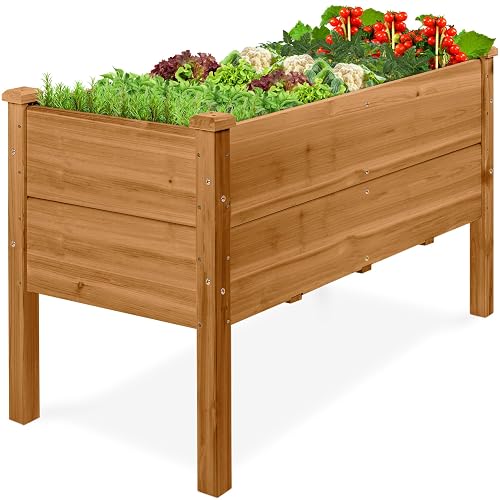 TOP CHOICEBest for deep-rooted cropsExtra Deep 16in Bed, Natural Fir Wood, 48x24x30inView on Amazon
- 3
 TOP CHOICEBest for a standard 4×8 layoutSelect Cedar Raised Garden Bed (4' x 8' x 17.5" H)View on Amazon
- 4
 Best for a budget setupYaheetech Raised Garden Bed Wooden Planter Box for Vegetables/FlowersView on Amazon
- 5
 Best for drainage and open baseAMERLIFE 8×4 Ft Wood Raised Garden Bed, 15 Inch DepthView on Amazon
- 6
 Best for large plantingsBlueWish 96"L x 24"W x 30"H Outdoor Cedar Garden BedView on Amazon
Our Top Picks
| Product | Best for | Key feature |
|---|---|---|
| Cedar Raised Garden Bed with Legs, 48x24x30 | Overall use | Legs and 200 lb rating |
| Yaheetech Raised Garden Bed Wooden Planter Box | Budget setups | Easy assembly |
| Select Cedar Raised Garden Bed (4′ x 8′) | Standard 4×8 layout | 17.5-inch height |
| AMERLIFE 8×4 Ft Wood Raised Garden Bed | Drainage | Open base design |
| BlueWish 2×8 Ft Outdoor Cedar Garden Bed | Large plantings | 9 drainage holes |
| Extra Deep 16in Bed, Natural Fir Wood | Deep-rooted crops | 16-inch depth |
Cedar Raised Garden Bed with Legs, Outdoor Planter Box 48x24x30, 200lb
Cedar Raised Garden Bed with Legs, Outdoor Planter Box 48x24x30, 200lb
Best for: Overall use with raised height and a solid frame
This bed suits gardeners who want a waist-height planter that is easy on the back and holds a full load of soil. Worth reading next: 7 Best Raised Garden Bed Treated Wood Options for Vegetables (2026).
Pros
- Legs lift the bed for comfortable working height.
- Listed at a 200 lb capacity for filled soil.
Cons
- Filling a 30-inch-tall bed takes a lot of soil.
Yaheetech Raised Garden Bed Wooden Planter Box for Vegetables/Flowers
Fir wood raised bed offers easy assembly, and a practical space for growing vegetables, herbs, and garden plants. Yaheetech Raised Garden Bed Wooden Planter Box for Vegetables/Flowers, Wood
Best for: Budget setups and simple assembly
Good for first-time builders who want a basic planter for vegetables and herbs without a large investment.
Pros
- Assembly is straightforward with basic tools.
- Compact footprint fits patios and small yards.
Cons
- Listed as fir rather than cedar, so expect a shorter lifespan.
Select Cedar Raised Garden Bed (4′ x 8′ x 17.5″ H)
Select Cedar Raised Garden Bed (4' x 8' x 17.5" H)
Best for: Standard 4×8 layouts
A familiar footprint that works well for row planting tomatoes, squash and lettuce in a single bed.
Pros
- The 4×8 size is easy to plan around for spacing.
- Cedar resists rot better than many softwoods.
Cons
- Depth is shallower than the deepest options here.
AMERLIFE 8×4 Ft Wood Raised Garden Bed, 15 Inch Depth
AMERLIFE 8×4 Ft Wood Raised Garden Bed, Durable 15 Inch Depth Planter Box for Vegetables, Herbs, and Flowers, Ideal for Outdoor Gardening with Open Base
Best for: Drainage and open-bottom beds
The open base lets roots reach native soil, which suits gardeners who want deeper rooting without extra fill.
Pros
- Open base improves drainage and root access.
- A 15-inch depth handles most vegetables.
Cons
- Open bottoms can let pests in, so add hardware cloth if needed.
BlueWish 96″L x 24″W x 30″H Outdoor Cedar Garden Bed
BlueWish 96''L x 24''W x 30''H Outdoor Cedar Garden Bed, 2×8 FT Raised Garden Bed with 9 Drainage Holes & 8 Legs, Elevated Planter Boxes for Gardening, Vegetable, Flower, 990lbs Capacity, Natural
Best for: Large plantings and heavy loads
A long, tall bed for gardeners who want room for many plants and a high weight rating.
Pros
- Listed at 990 lb capacity with eight legs.
- Nine drainage holes help excess water escape.
Cons
- Its size needs a level, well-prepared site.
Extra Deep 16in Bed, Natural Fir Wood, 48x24x30in
Extra Deep 16in Bed, Elevated Wood Construction, Natural Fir Wood, Ideal For Backyard, Patio & Outdoor Garden Planting Best Choice Products 48x24x30in Raised Garden Bed, 16in Depth – Acorn Brown
Best for: Deep-rooted crops like carrots and potatoes
The 16-inch depth gives root vegetables room, and the elevated frame suits patios and backyards.
Pros
- Depth suits carrots, parsnips and potatoes.
- Elevated design keeps soil off the ground.
Cons
- Natural fir is not cedar, so plan on finishing or replacing boards sooner.
Buying Guide
Size and Footprint
Measure the space you have before you shop. A 4×8 foot bed is a common choice because it fits a wide range of vegetables while still being reachable from both sides. Smaller footprints are easier to fit on a patio or a narrow side yard.
Leave room around the bed for walking, watering and harvesting. A bed that is too wide to reach across without stepping on the soil can lead to compaction over time.
Depth and Root Space
Bed depth determines how much soil you can fill and how far roots can grow. Shallower beds around 12 to 15 inches work well for lettuce, herbs and most leafy greens. Deeper beds of 16 inches or more give room for carrots, potatoes and tomatoes with larger root systems.
Deeper beds also hold more soil, which means more water and more time between waterings in hot weather. Keep in mind that a deeper bed needs more soil to fill, which adds to the overall cost.
Frame Strength and Load Capacity
A filled raised bed is much heavier than an empty one, especially after a rain. Look for listed load capacities and the number of support legs, since legs help keep the walls from bowing outward under soil pressure. For another angle, check out 6 Best Pruning Shears for Vegetable Garden Use (2026).
Thicker boards and corner brackets or posts also add rigidity. A frame with legs at the corners and along the long sides will generally hold its shape better over several seasons.
Drainage and Base Design
Good drainage prevents waterlogged roots and soil that stays soggy long after rain. Beds with drainage holes or an open base let excess water escape and allow roots to reach into the ground below.
An open bottom also gives earthworms and other soil organisms access from below. If you place the bed on a hard surface like a patio, make sure water can still drain out of the bottom or sides.
Wood Type and Assembly
Cedar is naturally resistant to rot and insects, so it is a popular choice for outdoor garden beds. Fir is a lower-cost option that still works well, though it may need more attention to weathering over time. Check whether the bed comes pre-cut and pre-drilled or requires more measuring and fastening on your end. You may also like 7 Best Western Red Cedar Raised Garden Bed Options for Vegetables (2026).
Simple assembly with clear instructions and included hardware can save an afternoon. If you have limited time or tools, favor kits that come mostly ready to build.
FAQ
Is cedar really better than other woods for raised beds?
Cedar resists rot and insect damage better than many untreated softwoods, which helps it last longer when in contact with moist soil. It is generally a good choice for vegetable gardens because it avoids the chemical treatments used on some pressure-treated lumber. Other woods like fir can still perform well with proper care.
How deep should a raised bed be for vegetables?
Most vegetables do well in beds between 12 and 18 inches deep. Shallow-rooted crops such as lettuce and herbs can grow in the lower end of that range, while carrots, potatoes and tomatoes benefit from more depth. If you are unsure, a 16-inch bed is a versatile middle ground.
How much soil will I need to fill a raised bed?
The amount depends on the bed’s length, width and depth, so multiply those measurements to get the volume and convert to cubic feet or cubic yards. Many gardeners use a mix of topsoil and compost. Keep in mind that soil settles over the first season, so you may need to top it off.
Can I place a raised bed directly on grass or a patio?
Yes, but the placement affects drainage and root access. On grass, the open base lets roots grow down into the native soil, while on concrete or a patio the bed will rely more on side and bottom drainage. Placing a layer of landscape fabric or cardboard under the bed on grass can help suppress weeds.
How long does a cedar raised garden bed last?
Cedar beds often last many years when they are kept off waterlogged ground and allowed to dry between rains. Lifespan varies with climate, wood thickness and how the bed is maintained. Checking the joints and legs each season helps you catch loosening or early wear.
Conclusion
If you want a balanced, all-purpose bed with sturdy legs and a generous footprint, the 48x24x30 cedar bed with legs is a strong starting point. Gardeners who plan to grow deep-rooted crops or want extra soil volume may prefer the extra deep 16-inch fir bed, while those with a standard 4×8 space will find the Select Cedar bed a natural fit.
Budget-minded buyers should weigh the lower-cost options against the wood type and depth they need, and larger gardens may benefit from the BlueWish 2×8 bed with its higher load capacity and drainage holes.
Related reading
- Cedar Raised Garden Bed Design: 6 Steps for Durable Vegetable Beds
- Cedar Raised Bed Garden Boxes: A Step-by-Step Guide for Vegetables
- Best Raised Garden Beds: 5 Metal and Cedar Beds Compared
- 5 Best Cedar Raised Bed Garden Kits for Vegetables (2026)
About Graham Fisher
Graham Fisher is part of our editorial team and reviews and edits our vegetable & edible gardening guides, checking product details against manufacturer specifications and owner feedback.