 By Graham Fisher
Updated November 2026
A cement block raised garden bed gives vegetables deep, well-drained soil and a clean, permanent edge, but not every pre-made option suits every yard. This guide compares five products on material durability, bed depth, footprint, drainage, and how well each fits a home vegetable garden. Ratings and sales figures are left out on purpose. Each pick is based on listing details and common owner feedback patterns.
Our top picks at a glance
- 1
 TOP CHOICEBest overallRaised Garden Bed, Natural Stacked Stone LookView on Amazon
- 2
 TOP CHOICEBest for a tight budgetLand Guard 2 Pack 4×2×1ft Galvanized Raised Garden BedView on Amazon
- 3
 TOP CHOICEBest for mobility and storageElevated Garden Bed 21 Gallon with WheelsView on Amazon
- 4
 Best for a larger oval layoutLand Guard 2Pcs Galvanized Raised Garden Bed KitView on Amazon
- 5
 Best for a single large bedLand Guard Galvanized Raised Garden Bed KitView on Amazon
Our Top Picks
| Product | Best for | Key feature |
|---|---|---|
| Raised Garden Bed, Natural Stacked Stone Look | Overall use | Heavy-duty composite panels |
| Land Guard 2 Pack 4×2×1ft Galvanized Bed | Tight budgets | Two bottomless galvanized beds |
| Elevated Garden Bed 21 Gallon with Wheels | Mobility and storage | Wheels and extra storage shelf |
| Land Guard 2Pcs Galvanized Raised Garden Bed Kit | Larger oval layouts | Oval shape, two-bed kit |
| Land Guard Galvanized Raised Garden Bed Kit | Single large bed | Oval, large capacity |
Raised Garden Bed, Natural Stacked Stone Look
Raised Garden Bed, Natural Stacked Stone Look, Heavy Duty and Customizable Composite Polyurethane Planter Box, Outdoor Garden Planter Bed (4 Panel Pack)
Best for: Overall use and a stone-style look in the yard.
This four-panel composite kit suits gardeners who want the appearance of stacked stone without the weight and labor of real masonry. Manufacturers describe it as heavy duty and customizable.
Pros
- Stacked stone finish blends with patios and landscaping
- Composite panels are designed to resist weather and rot
Cons
- Interior depth may be shallower than deep-root crops prefer
Land Guard 2 Pack 4×2×1ft Galvanized Raised Garden Bed
Land Guard 2 Pack 4×2×1ft Galvanized Raised Garden Bed Outdoor, Heavy Duty Bottomless Metal Raised Planter Box for Vegetables, Flowers, Herbs, Backyard Patio Gardening, Silver
Best for: Tight budgets and gardeners who want two beds at once.
Owners often report this as a practical starter option for beds of about 4 by 2 feet, sized for a small vegetable patch or herbs.
Pros
- Galvanized steel resists rust better than uncoated metal
- Bottomless design lets roots reach native soil
Cons
- Thin walls can bow if overfilled with wet soil
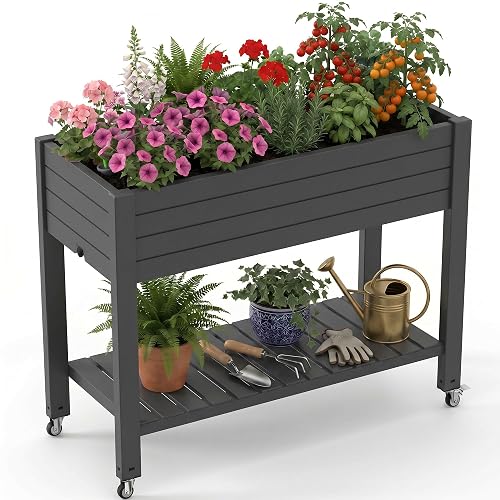
Elevated Garden Bed 21 Gallon with Wheels
Thickened Weatherproof Material, Elevated Garden Bed, 21 Gallon Planter Raised Beds for Vegetables, Fruits, Backyard EFU Raised Garden Beds Outdoor, with Wheels & Extra Storage Shelf
Best for: Mobility and storage near the bed.
This elevated planter suits gardeners who need to move a bed to catch more sun or who want tools and supplies within reach.
Pros
- Wheels make repositioning easier
- Built-in storage shelf keeps supplies close
Cons
- Capacity is smaller than a full-depth in-ground-style bed
Land Guard 2Pcs Galvanized Raised Garden Bed Kit
Land Guard 2Pcs Galvanized Raised Garden Bed Kit, Galvanized Planter Oval Large Metal Raised Garden Boxes Outdoor for Vegetables…
Best for: Larger oval layouts across two beds.
Gardeners planning a row of vegetables or a companion-planting layout often choose a two-piece oval kit for even spacing.
Pros
- Oval shape gives generous planting room
- Two pieces allow flexible placement
Cons
- Requires a level, prepared site to sit square
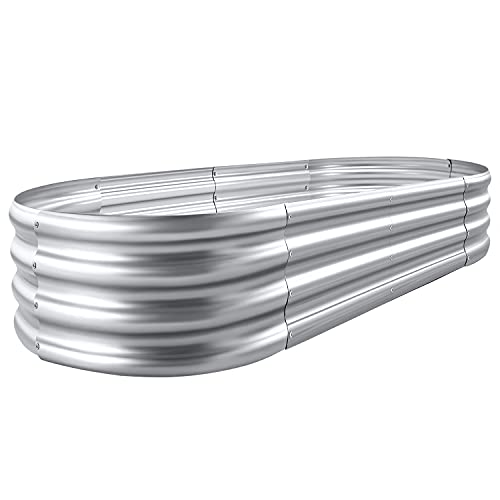
Land Guard Galvanized Raised Garden Bed Kit
Land Guard Galvanized Raised Garden Bed Kit, Galvanized Planter Garden Boxes Outdoor, Oval Large Metal Raised Garden Beds for Vegetables…………
Best for: A single large bed for focused planting.
This single oval bed suits a gardener who wants one big growing space rather than several small ones.
Pros
- Large single footprint reduces seams
- Galvanized finish suits outdoor exposure
Cons
- Heavy to fill and move once assembled
Buying Guide
Bed Depth
Most vegetables do well in at least 10 to 12 inches of soil, while carrots and tomatoes benefit from more. Check the interior depth in the listing, not just the outer height. For more on depth, see Raised Garden Soil Depth: How Deep Your Vegetable Beds Should Be.
Good picks for this: Raised Garden Bed, Natural Stacked Stone Look and Land Guard Galvanized Raised Garden Bed Kit
Material Durability
Composite panels resist rot, while galvanized steel resists rust when the coating is intact. Scratches on galvanized metal can start corrosion over time, so inspect edges after assembly.
Good picks for this: Raised Garden Bed, Natural Stacked Stone Look and Land Guard 2 Pack 4×2×1ft Galvanized Raised Garden Bed
FAQ
Are cement block raised garden beds safe for growing vegetables?
Standard concrete and cement block are generally considered safe for vegetable gardens, and they do not leach the kind of harmful material that concerns many gardeners. Many growers still line the inside of the bed with a food-safe liner or fill it with quality soil mix to add an extra layer of peace of mind. Checking that the blocks are not reclaimed or treated with unknown coatings is a good idea.
How deep should a raised bed be for vegetables?
Most vegetables do well in a bed that is at least 10 to 12 inches deep, which gives roots room to spread and drain properly. Root crops like carrots and potatoes benefit from even more depth. A deeper bed also holds more soil, so it tends to need watering less often than a shallow one.
Do I need to fill the bottom of a raised bed with gravel?
You do not need a gravel layer in a well-built bed, because a quality soil mix drains well on its own. Adding gravel at the bottom can actually reduce usable soil depth without improving drainage much. If your yard has very heavy clay, a few inches of coarse material may help, but in most cases a good mix of topsoil, compost, and organic matter works best.
Can I place a raised bed directly on grass or lawn?
Yes, you can set a raised bed right on grass, though it helps to mow the grass as short as possible and lay down cardboard or landscape fabric first. This smothers the turf and reduces weed growth coming up through the soil. Leveling the ground before placing the bed keeps the walls even and the soil from shifting.
How much sun do vegetables need in a raised bed?
Most fruiting and leafy vegetables need at least six to eight hours of direct sunlight per day. Raised beds tend to warm up faster than ground-level soil, which is helpful for early planting. Choose a spot with good sun exposure and reasonable access to water.
Is a cement block bed better than a metal or composite one?
Cement block beds are very durable, stay put once built, and offer a solid, permanent look. Metal and composite beds are lighter, easier to move, and quicker to set up, which suits renters or gardeners who want flexibility. The better choice depends on whether you want a fixed structure or something you can relocate. For a deeper look, 5 Best Corten Raised Garden Beds for Vegetables (2026) covers this in detail.
Conclusion
If you want a long-lasting, permanent bed with a natural stone look, the stacked stone style is the strongest all-around pick. Shoppers on a tighter budget who still want a sturdy metal bed will find the 4×2×1 ft galvanized option a practical match, while the wheeled 21-gallon bed suits anyone who wants storage and the ability to move their garden later.
For the oval galvanized kits, choose them if you need a larger growing area for several vegetable types and plan to keep the bed in one place. Match your choice to your space, budget, and how often you expect to move your garden, and you will be well set for a productive season.
Related reading
- Cinder Block Raised Garden Bed Design: 6 Steps for Sturdy Vegetable Beds
- Block for Raised Garden Bed: How to Choose and Build Sturdy Vegetable Beds
About Graham Fisher
Graham Fisher is part of our editorial team and reviews and edits our vegetable & edible gardening guides, checking product details against manufacturer specifications and owner feedback.