 By Ethan Brooks
Updated November 2026
Choosing an organic container garden soil comes down to a few things: whether the mix is certified or at least free of synthetic fertilizers, how well it drains in a pot, how much feeding it provides before plants need more, and whether it suits your crops. Container plants depend entirely on the bag, so a mix that compacts, dries out too fast or stays soggy will limit your harvest quickly. The picks below were compared using manufacturer specifications, brand reputation for organic certification (including OMRI listing where stated), and recurring patterns in owner feedback about drainage, water retention and plant performance. Nothing here reflects personal testing, and you should confirm current labels before you buy.
Our top picks at a glance
- 1
 TOP CHOICEBest overallMiracle-Gro Organic Outdoor Potting MixView on Amazon
- 2
 TOP CHOICEBest for vegetable beds and potsBurpee Premium Organic Potting Mix Garden Soil with Coconut CoirView on Amazon
- 3
 TOP CHOICEBest for seed startingBack to the Roots Organic Coir Expanding SoilView on Amazon
- 4
 Best for worm-casting fertilityRosy Soil Organic Garden Soil with Worm CastingsView on Amazon
- 5
 Best for large containersFoxFarm Happy Frog Potting SoilView on Amazon
- 6
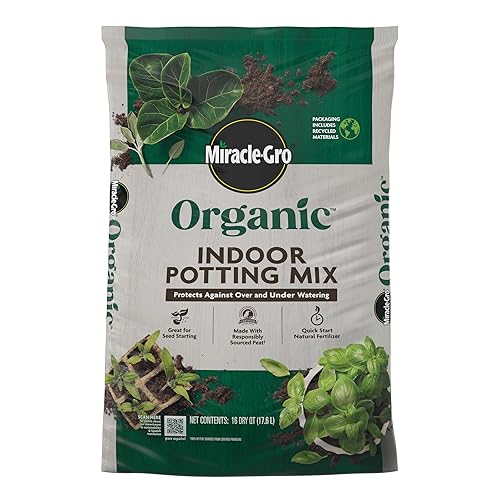 Best for indoor containersMiracle-Gro Organic Indoor Potting MixView on Amazon
- 7
 Best budget pickCompost Bliss Natural Compost SoilView on Amazon
Our Top Picks
| Product | Best for | Key feature |
|---|---|---|
| Miracle-Gro Organic Outdoor Potting Mix (16 qt.) | General outdoor container planting | Quick-release natural fertilizer, OMRI listed |
| Burpee Premium Organic Potting Mix (9 qt.) | Vegetables, herbs and flowers in pots and beds | Coconut coir base, OMRI listed |
| Back to the Roots Organic Coir Expanding Soil (51 qt.) | Seed starting and potting | Compressed coir that expands with water |
| Rosy Soil Organic Garden Mix (8 qt.) | Vegetables and flowers, peat-free growing | Worm castings and biochar |
| FoxFarm Happy Frog Potting Soil (2 cu ft) | Large pots, raised beds and long-season crops | Soil microbes, earthworm castings, bat guano |
| Miracle-Gro Organic Indoor Potting Mix (16 qt.) | Indoor containers and houseplants | Moisture balance against over- and under-watering |
| Compost Bliss Natural Compost Soil (8 qt.) | Amending potting mixes and seed starting | 100% natural compost for blending |
Miracle-Gro Organic Outdoor Potting Mix
Plant Soil For Outdoor Container Plants, Contains Quick-Release Natural Fertilizer, OMRI Listed Miracle-Gro Organic Outdoor Potting Mix, 16 qt.
Best for: General outdoor container planting with a simple, all-purpose mix.
This mix suits gardeners who want a ready-to-use organic blend for pots, planters and small raised containers without mixing their own amendments. Manufacturers describe it as containing quick-release natural fertilizer, and it carries an OMRI listing for organic input use.
Key specs
- Size: 16 quarts
- Listed as OMRI certified for organic use
- Formulated for outdoor container plants
Pros
- Ready to use straight from the bag
- Includes natural fertilizer for early feeding
- Widely available in a size suited to small pots
Cons
- Smaller bag size is less economical for large containers
- Fertilizer release means long-season crops may need supplemental feeding
Bottom line: A sensible first choice for gardeners who want a dependable, certified organic mix for everyday container growing.
Burpee Premium Organic Potting Mix Garden Soil with Coconut Coir
Burpee Premium Organic Potting Mix Garden Soil with Coconut Coir for Indoor Plants & Outdoor Containers, OMRI Listed, Ideal for Vegetables, Flowers, Herbs (9 Quarts, 0.12-0.12-0.12)
Best for: Vegetables, herbs and flowers grown in pots and beds.
Gardeners growing tomatoes, peppers or herbs in containers often want a mix that holds moisture without staying waterlogged. This blend pairs coconut coir with organic components and is marketed for indoor and outdoor containers alike.
Key specs
- Size: 9 quarts
- Coconut coir base
- OMRI listed, suited to vegetables, flowers and herbs
Pros
- Coconut coir improves water retention and aeration
- Labeled for a wide range of edible and ornamental plants
- Works for both indoor and outdoor containers
Cons
- Nine quarts fills only a few medium pots
- Coir-based mixes can dry quickly in hot, windy spots
Bottom line: Best for gardeners who want a versatile organic mix for mixed vegetable and herb containers.
Back to the Roots Organic Coir Expanding Soil
Back to The Roots Organic Coir, 51 Quart Expanding Soil, Great for Seeds and Potting
Best for: Seed starting and potting, especially for gardeners who buy in bulk.
This product is a compressed coir block that expands with water into a large volume of growing medium. It suits gardeners who start seeds or fill many small pots and want to store a lot of soil in a compact package.
Key specs
- Size: 51 quarts when expanded
- Organic coconut coir base
Pros
- Compact to store until needed
- Large yield for seed trays and many pots
- Light, well-aerated texture
Cons
- Coir has little natural nutrition, so feeding is required after germination
- Expansion takes time and needs thorough mixing with water
Bottom line: A strong choice for seed starting, but pair it with a feed program for fruiting vegetables.
Rosy Soil Organic Garden Soil with Worm Castings
Organic Garden Soil with Worm Castings for Vegetables, Herbs, and Flowers, Peat-free Outdoor Potting Mix, Made in USA Rosy Soil Garden Mix Biochar Potting Soil for Outdoor Plants, 8 Quart
Best for: Vegetables and flowers in a peat-free, worm-casting-rich mix.
Gardeners who avoid peat and want a fertility-focused blend often look for worm castings and biochar. This mix is positioned for vegetables, herbs and flowers in outdoor containers.
Key specs
- Size: 8 quarts
- Peat-free formulation
- Contains worm castings and biochar
Pros
- Peat-free, which suits sustainability goals
- Worm castings add slow-release nutrients
- Biochar can help hold nutrients and moisture
Cons
- Smaller bag volume for larger planters
- Worm castings vary in strength, so feeding schedules may need adjusting
Bottom line: Good for gardeners who want a peat-free, nutrient-rich mix for moderate-sized containers.
FoxFarm Happy Frog Potting Soil
Ready-to-Use Amended Container Blend with Soil Microbes, Earthworm Castings, Bat Guano, and Aged Forest Products FoxFarm Happy Frog Potting Soil with 2 Plant Tags, 2 cu ft
Best for: Large pots, raised beds and long-season crops.
This is a ready-to-use amended blend containing soil microbes, earthworm castings, bat guano and aged forest products. It suits gardeners who grow in bigger volumes and want a mix that feeds plants over several months.
Key specs
- Size: 2 cubic feet
- Contains soil microbes, earthworm castings and bat guano
- Includes plant tags
Pros
- Large volume for big containers and beds
- Rich organic fertility supports fruiting crops
- Microbial content supports root activity
Cons
- Heavy when wet, so moving large pots is harder
- Rich blend may need a light supplemental feed in peak season
Bottom line: The best fit for gardeners filling large containers who want a well-amended organic mix that lasts.
Miracle-Gro Organic Indoor Potting Mix
Protects Against Over & Under Watering, Planting Soil For Indoor Container Plants, Houseplants & Starter Plants, OMRI Listed Miracle-Gro Organic Indoor Potting Mix, 16 qt.
Best for: Indoor containers and houseplants.
Indoor growers face different moisture problems than outdoor gardeners, and this mix is marketed to help plants resist both over- and under-watering. It suits herbs on a windowsill, container salad greens and houseplants.
Key specs
- Size: 16 quarts
- OMRI listed for organic use
- Formulated for indoor container and starter plants
Pros
- Designed to buffer watering mistakes
- Suitable for herbs and starter plants indoors
- Organic certification for edible crops
Cons
- Not intended for large outdoor beds
- Indoor conditions still require good light for vegetables
Bottom line: Pick this for indoor herbs and containers where consistent moisture is the main challenge.
Compost Bliss Natural Compost Soil
Compost Bliss (8 Qts) – 100% Natural Compost Soil for Gardening, Seed Starting Soil, & Potting Mixes – Compost Organic Garden Fertilizer – Mix with Potting Soil Indoor Plants & Outdoor Plants
Best for: A budget pick for amending potting mixes and seed starting.
This product is a natural compost rather than a complete potting mix. Gardeners often blend compost into their own container soil to add organic matter and microbial life, which makes it a useful, lower-cost addition to a homemade recipe.
Key specs
- Size: 8 quarts
- 100% natural compost
Pros
- Useful as a soil amendment for many mixes
- Smaller bag is easy to handle
- Adds organic matter to dense soils
Cons
- Not a complete potting mix on its own
- Nutrient content varies by batch and is lower than fertilized blends
Bottom line: A good add-in for experienced gardeners who mix their own containers, but not a standalone choice for beginners.
Buying Guide
Organic certification and inputs
Look for an OMRI listing or a clear statement that the mix contains no synthetic fertilizers or prohibited substances. Certification tells you how the inputs were sourced, not how well the mix will perform, so check the ingredient list for compost, worm castings, and natural mineral amendments.
Good picks for this: Miracle-Gro Organic Outdoor Potting Mix and Burpee Premium Organic Potting Mix.
Drainage and aeration
Containers dry and compact faster than ground soil. A good mix holds moisture while letting excess water drain freely. Coconut coir and perlite-style additions improve aeration, while very fine, dense mixes can turn soggy in pots without drainage holes.
Good picks for this: Burpee Premium Organic Potting Mix and Back to the Roots Organic Coir Expanding Soil.
Nutrient content and feeding needs
Some mixes come pre-fertilized, while others are mostly a structural base. Fruiting vegetables such as tomatoes and peppers need steady nutrition, so a richer blend or a planned feed schedule matters more than for leafy herbs.
Good picks for this: FoxFarm Happy Frog Potting Soil and Rosy Soil Organic Garden Soil with Worm Castings.
Container size and volume
Match the bag to your total planting volume. A 10-inch pot holds roughly 2.5 gallons, so a 2-cubic-foot bag (about 15 gallons) fills several medium containers, while an 8- or 16-quart bag is better for a few small pots.
Good picks for this: FoxFarm Happy Frog Potting Soil for large volumes and Miracle-Gro Organic Outdoor Potting Mix for small containers.
Indoor versus outdoor use
Indoor containers lose water more slowly and get less light, so they need a mix that resists waterlogging. Outdoor pots face sun, wind and heavy rain. Check whether a product is labeled for indoor or outdoor conditions before you buy.
Good picks for this: Miracle-Gro Organic Indoor Potting Mix and Miracle-Gro Organic Outdoor Potting Mix.
Peat-free and sustainable ingredients
Many gardeners avoid peat because harvesting it damages wetlands. Coconut coir, worm castings and compost are common peat alternatives. Read the label to confirm what is actually in the mix.
Good picks for this: Rosy Soil Organic Garden Soil with Worm Castings and Back to the Roots Organic Coir Expanding Soil.
Storage and handling
Dry bags keep well if sealed, but moist mixes can develop odors or mold. Store opened bags in a dry place with the top rolled shut, and mix any compost-based amendments into container soil shortly before planting to keep them fresh.
Good picks for this: Compost Bliss Natural Compost Soil and FoxFarm Happy Frog Potting Soil.
FAQ
Is organic container garden soil better than regular potting mix?
Organic mixes avoid synthetic fertilizers and often include compost, worm castings or other natural amendments. Whether they perform better depends on your crops and feeding habits. Both types can grow healthy plants when matched to the plant’s needs.
How often should I replace soil in containers?
Many gardeners refresh the top few inches each season and replace the full mix every one to two years, since organic matter breaks down and nutrients are used up. Vegetables in long seasons may need replacement sooner.
Can I use organic container soil for tomatoes?
Yes. Tomatoes are heavy feeders, so choose a richer mix or add a balanced organic fertilizer when fruit sets. Container size matters too; a 5-gallon pot is a practical minimum for a determinate variety.
Do I need to add fertilizer to organic potting mix?
It depends on the product. Some mixes include slow-release natural fertilizer, while others rely on the plant’s own feeding schedule. Check the label and plan a supplemental feed for fruiting crops, usually every two to four weeks during active growth.
Is coconut coir a good base for container soil?
Coconut coir holds moisture well and provides good aeration, which suits many container plants. It contains little nutrition on its own, so pair it with compost or fertilizer for vegetables.
Can I mix compost into container soil?
Yes. Blending a modest amount of finished compost into a potting mix adds organic matter and microbial life. Use well-finished compost only, since fresh material can overheat or tie up nutrients.
Conclusion
For most outdoor vegetable containers, Miracle-Gro Organic Outdoor Potting Mix and Burpee Premium Organic Potting Mix are dependable starting points. Gardeners growing large fruiting crops or filling big planters will likely prefer FoxFarm Happy Frog Potting Soil. Indoor growers should look at Miracle-Gro Organic Indoor Potting Mix, while seed starters benefit from Back to the Roots Organic Coir Expanding Soil. Rosy Soil suits peat-free gardeners, and Compost Bliss works well as an amendment for those who mix their own blends. Check current labels before purchase, and consult your local extension office for regional advice on crop feeding.
Sources
- National Organic Program standards and what organic labeling requires (usda.gov)
- Research-based guidance on container growing media and vegetable production (extension.org)
- How OMRI listing verifies that a product is allowed for organic production
Related reading
- Top 7 Vege Garden Soil Mix Picks for Raised Beds and Containers
- Top 7 Organic Veggie Garden Soil Picks for Healthy Harvests in 2026
- Top 7 Organic Raised Bed Garden Soil Picks for Healthy Vegetables
- Top 7 Miracle-Gro Organic Raised Bed & Garden Soil Picks for 2026
- Pro Mix Organic Herb and Vegetable Garden Soil: 7 Best Picks for 2026
About Ethan Brooks
Ethan Brooks is part of our editorial team and reviews and edits our vegetable & edible gardening guides, checking product details against manufacturer specifications and owner feedback.


