 By Ethan Brooks
Updated November 2026
Shoppers looking for ash for garden soil usually want one of two things: a way to raise soil pH and add potassium and calcium, or a mineral amendment that supplies trace elements to vegetables and herbs. The products below fall into two groups. Some are hardwood or white oak wood ashes, which act quickly on soil chemistry. Others are volcanic rock dust products, which release minerals slowly over months. We compared each one on the criteria that matter most in a vegetable garden: what the material actually is, how it is packaged and processed, how easy it is to apply in beds or containers, and how well it fits common soil problems such as acidity and mineral deficiency.
Our top picks at a glance
- 1
 TOP CHOICEBest overallAll Natural Clean Sifted Premium Hardwood Ashes Live Oak Wood Ash, 2 lbsView on Amazon
- 2
 TOP CHOICEBest for bulk garden use5lb Garden Ash – Hardwood Ashes w/TextureView on Amazon
- 3
 TOP CHOICEBest for raised beds and compostWhite Oak Wood Ash Soil Booster 2lbView on Amazon
- 4
 Best for mineral-rich feedingGreenway Biotech Azomite Rock Dust Volcanic Ash 4 lbView on Amazon
- 5
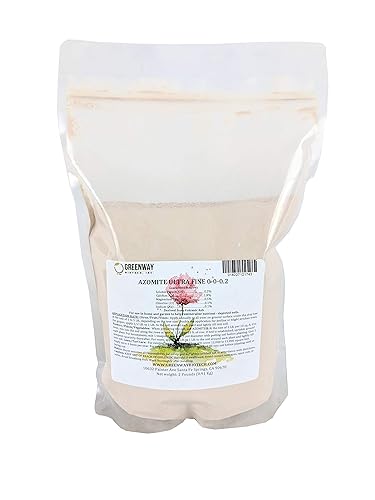 Best budget pick for trace mineralsGreenway Biotech Ultra Fine Azomite Rock Dust Volcanic Ash 2 lbView on Amazon
Important note before you buy: wood ash is alkaline and can raise soil pH quickly. It should not be used on acid-loving crops such as blueberries, potatoes or azaleas, and it should never be applied in quantity to already alkaline soil. A soil test from your local extension office is the best way to decide whether you need it at all.
Our Top Picks
Quick Comparison
| Product | Best for | Key feature |
|---|---|---|
| All Natural Clean Sifted Premium Hardwood Ashes Live Oak Wood Ash, 2 lbs | Gardeners wanting a clean, sifted wood ash for general use | Sifted, consistent fine texture |
| 3.5lb Garden Ash Hardwood Ashes w/Texture | Larger beds and seasonal top-dressing | Includes natural charcoal and mineral bits |
| White Oak Wood Ash Soil Booster 2lb | Raised beds, compost piles and containers | White oak source with calcium and potassium |
| Greenway Biotech Azomite Rock Dust 4 lb | Long-term mineral feeding of vegetables | Slow-release volcanic trace minerals |
| Greenway Biotech Ultra Fine Azomite Rock Dust 2 lb | Trying a rock dust before committing to more | Ultra-fine particle size for easy mixing |
All Natural Clean Sifted Premium Hardwood Ashes Live Oak Wood Ash, 2 lbs
All Natural, Clean Sifted, Premium, MultiUse Hardwood Ashes Live Oak Wood Ash, 2 lbs We also found 13 Best Garden Soil Test Kits useful on this point.
Best for: Gardeners who want a clean, sifted hardwood ash for general soil amendment.
This is a good starting point for home vegetable growers who have confirmed through a soil test that their soil is acidic and needs calcium and potassium. The sifting step matters: uneven, lumpy ash is harder to spread evenly and can burn tender seedlings if concentrated in one spot.
Key specs
- Hardwood (live oak) wood ash
- Sold as 2 lb
- Sifted for a consistent texture
Pros
- Sifted texture spreads more evenly across beds
- Small package makes it easy to test a small area first
- Natural source with no synthetic additives listed
Cons
- Small quantity may not cover a large bed at recommended rates
- Will raise pH, so it is unsuitable for acid-loving crops
Bottom line: A sensible first buy for a small raised bed or container mix when a soil test shows acidic conditions.
3.5lb Garden Ash – Hardwood Ashes w/Texture
3.5lb Garden Ash – Hardwood Ashes w/Texture – Natural bits of Wood Charcoal Biochar & Minerals for Planting (3.5 Pound)
Best for: Gardeners who need a larger quantity for multiple beds or seasonal top-dressing.
This product suits gardeners with several beds or a sizable in-ground vegetable plot. The listing notes natural wood charcoal bits and minerals, which some growers value for soil structure and biological activity, though the amount of biochar is modest.
Key specs
- Hardwood ash with visible natural texture
- 3.5 lb package
- Contains natural charcoal (biochar) bits per the listing
Pros
- Larger quantity covers more area per bag
- Textured blend includes charcoal and minerals
- Useful for seasonal applications across several beds
Cons
- Texture is less uniform, so spreading takes more care
- Charcoal bits do not provide quick nutrients on their own
Bottom line: A practical choice for gardeners managing more square footage who have already confirmed their soil needs liming.
White Oak Wood Ash Soil Booster 2lb
White Oak Wood Ash Soil Booster 2lb – Natural Calcium & Potassium for Gardens, Raised Beds, Compost, & Potted Plants | Lab-Tested, Clean Untreated Wood | Improves Soil pH & Fertility
Best for: Raised beds, compost piles and container mixes.
The listing positions this product as a calcium and potassium source for gardens, raised beds and potted plants. Its focus on compost and containers makes it a reasonable fit for gardeners who mix their own growing media.
Key specs
- White oak wood ash
- 2 lb package
- Listed as untreated, clean wood source
Pros
- Positioned for raised beds, compost and containers
- Untreated wood source as described in the listing
- Supplies calcium and potassium alongside pH adjustment
Cons
- Listing claims for lab testing should be verified on the product label
- Small size limits use in large in-ground plots
Bottom line: Best for container and raised-bed growers who want a single amendment for compost and mix preparation.
Greenway Biotech Azomite Rock Dust Volcanic Ash 4 lb
Greenway Biotech, Inc. Azomite Rock Dust Volcanic Ash Organic Fertilizer with Micronutrient & Trace Minerals- Natural Mineral Soluble Plant Fertilizers for Enhances & Increases Crop Yield (4 Pounds)
Best for: Long-term mineral feeding and trace element supplementation.
Azomite is a volcanic rock dust rather than a wood ash, and it works differently. It does not raise pH quickly. Instead, it supplies a broad spread of trace minerals slowly over time, which suits gardeners who want to build soil fertility gradually rather than correct a specific chemistry problem.
Key specs
- Volcanic rock dust (azomite) with micronutrients and trace minerals
- 4 lb package
- Marketed as an organic fertilizer
Pros
- Slow release suits long-term soil building
- Broad trace mineral profile
- Does not sharply change soil pH
Cons
- Results are gradual and not visible in a single season
- Does not supply the fast calcium boost that wood ash provides
Bottom line: A good pick for gardeners who want gentle, long-term mineral support rather than a quick pH change.
Greenway Biotech Ultra Fine Azomite Rock Dust Volcanic Ash 2 lb
Greenway Biotech, Inc. Ultra Fine Azomite Rock Dust Volcanic Ash (Certified Dealer) Organic Trace Minerals – 2 Pounds
Best for: Trying a rock dust before committing to a larger amount.
The ultra-fine grade blends more easily into potting mixes and raised-bed soil than coarser material. The smaller bag is a sensible trial size for a first-time rock dust user.
Key specs
- Ultra-fine volcanic rock dust
- 2 lb package
- Trace mineral profile
Pros
- Fine grade mixes evenly into soil and compost
- Small size is a low-commitment trial
- Same trace mineral profile as the larger Azomite product
Cons
- Small quantity is not enough for large plots
- Fine dust can be unpleasant to handle without a mask
Bottom line: A low-risk way to test whether rock dust fits your garden before buying a bigger bag.
Buying Guide
Wood ash versus rock dust
Wood ash is alkaline and raises soil pH fairly quickly, typically over a few weeks after incorporation. It also supplies calcium and potassium. Rock dust such as azomite changes pH very little and releases minerals slowly. Decide which problem you are solving before you buy.
Good picks for this: All Natural Clean Sifted Premium Hardwood Ashes Live Oak Wood Ash, Greenway Biotech Azomite Rock Dust Volcanic Ash 4 lb
Soil test results and pH
Get a soil test before adding any ash. Most university extension services test pH and recommend lime rates. Ash can overshoot in already alkaline soil, so if your pH is above about 7.0, skip wood ash entirely.
Good picks for this: White Oak Wood Ash Soil Booster 2lb, All Natural Clean Sifted Premium Hardwood Ashes Live Oak Wood Ash
Particle size and texture
Fine, sifted ash spreads evenly and integrates into soil faster. Coarse or textured ash can leave visible patches and takes longer to break down. Ultra-fine rock dust blends easily into potting mixes.
Good picks for this: Greenway Biotech Ultra Fine Azomite Rock Dust Volcanic Ash 2 lb, All Natural Clean Sifted Premium Hardwood Ashes Live Oak Wood Ash
Quantity and garden size
Measure your beds before buying. Wood ash is typically applied in small amounts per square foot, and overapplication can raise pH too far. A 2 lb bag covers a small raised bed or a few containers, while 3.5 to 4 lb suits multiple beds.
Good picks for this: 3.5lb Garden Ash Hardwood Ashes w/Texture, Greenway Biotech Azomite Rock Dust Volcanic Ash 4 lb
Source and purity
Look for ash made from clean, untreated hardwood. Avoid ash from painted, pressure-treated or charcoal-briquette sources, which can contain contaminants. Listings that name a specific wood source, such as live oak or white oak, give you more to go on than vague descriptions.
Good picks for this: White Oak Wood Ash Soil Booster 2lb, All Natural Clean Sifted Premium Hardwood Ashes Live Oak Wood Ash
Intended use: beds, containers and compost
Containers hold less soil and react faster to amendments, so use smaller amounts. Compost piles can absorb ash well and buffer its effect. Raised beds sit between these two situations. Match the product size and form to where you will use it.
Good picks for this: White Oak Wood Ash Soil Booster 2lb, Greenway Biotech Ultra Fine Azomite Rock Dust Volcanic Ash 2 lb
Handling and safety
Ash dust is caustic to skin and eyes and irritating to lungs. Wear gloves, eye protection and a dust mask when mixing. Keep it away from children and pets, and store it dry in a sealed container. Wood ash should never be added to compost meant for acid-loving plants.
Good picks for this: Greenway Biotech Ultra Fine Azomite Rock Dust Volcanic Ash 2 lb, 3.5lb Garden Ash Hardwood Ashes w/Texture
FAQ
Can I put wood ash directly on my vegetable garden?
You can, but only in modest amounts and after a soil test shows that your soil is acidic. Spread it lightly, work it into the top few inches, and water it in. Applying too much can raise pH above the range most vegetables prefer, which is roughly 6.0 to 7.0 for many crops.
How often should I add ash to garden soil?
Retest soil before reapplying. Many gardeners apply ash only when a test indicates a need, rather than on a fixed schedule. Over-liming is harder to reverse than under-liming, so err on the side of less.
Is wood ash safe for tomatoes and peppers?
Tomatoes and peppers prefer slightly acidic to neutral soil, so wood ash should be used cautiously and only if your soil test calls for it. Excess calcium and high pH can contribute to problems such as blossom end rot when other factors are off balance, though ash is not a direct cause on its own.
What is the difference between wood ash and azomite rock dust?
Wood ash is alkaline, fast-acting, and rich in calcium and potassium. Azomite is a volcanic rock dust that supplies trace minerals slowly and does not raise pH much. The two serve different purposes and are not interchangeable.
Can I add ash to compost?
Yes, in small amounts. Ash can help balance acidic compost and add potassium. Add it in thin layers rather than dumping it in one spot, and avoid adding it to piles intended for acid-loving plants.
Does ash deter slugs or pests?
Some gardeners use dry ash as a barrier against soft-bodied pests, but evidence for this is anecdotal and it can irritate plants and soil life. It is not a reliable pest control method and should not replace integrated pest management.
Should I wear protection when handling ash?
Yes. Wear gloves, eye protection and a dust mask, and wash hands afterward. If you have respiratory conditions or concerns about exposure, consult a doctor or occupational health professional before handling large amounts.
Conclusion
For most home gardeners, the right ash for garden soil depends on what your soil test shows. If you need to raise acidic pH and add calcium and potassium, a clean hardwood or white oak wood ash is the most direct choice. Pick the All Natural Clean Sifted Premium Hardwood Ashes for a small, sifted starter bag, the 3.5lb Garden Ash for multiple beds, or the White Oak Wood Ash Soil Booster for raised beds and compost. If your soil is already adequate in pH and you want slow, broad trace mineral support, the Greenway Biotech Azomite products are a better fit. Start small, test your soil, and let the results guide how much you add.
Sources
- Extension guidance on soil testing, pH management and liming materials (extension.org)
- Soil health and nutrient management resources from the USDA (usda.gov)
- Workplace guidance on handling alkaline dusts and respiratory protection (osha.gov)
Related reading
- Where to Buy Bulk Garden Soil: 6 Best Picks for Raised Beds (2026)
- Top 7 Vege Garden Soil Mix Picks for Raised Beds and Containers
- Top 7 Soils for Raised Vegetable Garden Beds: Compared for 2026
- Top 7 Organic Veggie Garden Soil Picks for Healthy Harvests in 2026
About Ethan Brooks
Ethan Brooks is part of our editorial team and reviews and edits our vegetable & edible gardening guides, checking product details against manufacturer specifications and owner feedback.


