 By Graham Fisher
Updated November 2026
Choosing the right landscape fabric for raised garden bed use comes down to a few practical questions: Will the material let water drain while keeping soil in place? Will it block weeds from creeping up through the bottom? Will it last several seasons without tearing? This guide compares six options based on manufacturer specifications, brand reputation and the patterns owners often describe in their feedback. We looked at fabric type (woven versus non-woven), weight, roll size, drainage behavior and how well each product suits a raised bed setup rather than a driveway or path.
Our top picks at a glance
- 1
 TOP CHOICEBest overall4FT x 50FT Heavy Duty Weed Barrier Fabric, Landscape Fabric Ground Cover for Garden BedsView on Amazon
- 2
 TOP CHOICEBest for vegetable troughs2PCS 63 x 114IN Raised Garden Bed Liner, Non Woven Fabric for Large Veg TroughView on Amazon
- 3
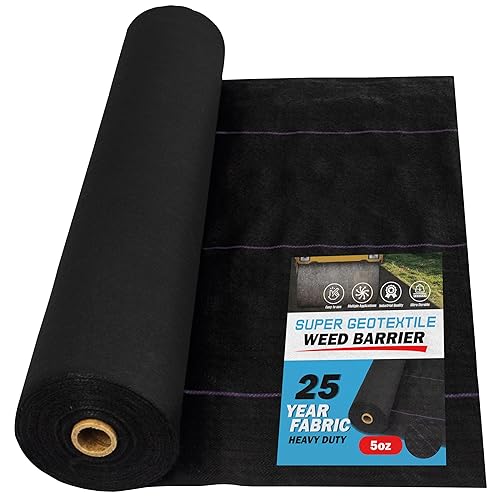 TOP CHOICEBest for heavy-duty bed bottomsFlower Beds, Raised Beds, Ground Cover, Under Mulch, Under Gravel, WalView on Amazon
- 4
 Best for easy installationBlackKnight 3×50 Weed Barrier Landscape Fabric, Non-WovenView on Amazon
- 5
 Best for wide coverage3ftx50ft Weed Barrier Landscape Fabric Heavy Duty, Woven Geotextile FabricView on Amazon
- 6
 Best budget pick for fabric liners63 x114 Inch Black Non-Woven Fabric for Planter Box, Cuttable Plant LinerView on Amazon
Our Top Picks
| Product | Best for | Key feature |
|---|---|---|
| 4FT x 50FT Heavy Duty Weed Barrier Fabric | Overall use in beds and paths | Woven fabric with 15 garden staples included |
| 2PCS 63 x 114IN Raised Garden Bed Liner | Large vegetable troughs | Non-woven, cuttable liner for soil containment |
| Flower Beds Dual Layer Woven Geotextile 3x100Ft | Heavy-duty bed bottoms | Dual-layer woven polypropylene, 5oz weight |
| BlackKnight 3×50 Weed Barrier Landscape Fabric | Easy installation | Non-woven, lightweight and easy to cut |
| 3ftx50ft Weed Barrier Landscape Fabric Heavy Duty | Wide coverage projects | Woven geotextile in a 3-foot-wide roll |
| 63 x114 Inch Black Non-Woven Fabric Planter Liner | Budget-minded planter liners | Non-woven drainage liner, cuttable to fit |
4FT x 50FT Heavy Duty Weed Barrier Fabric, Landscape Fabric Ground Cover for Garden Beds
4FT x 50FT Heavy Duty Weed Barrier Fabric, Landscape Fabric Ground Cover for Garden Beds, Raised Beds, Mulch & Gravel Paths, Woven Geotextile Weed Blocker with 15 Garden Staples
Best for: Overall use in beds and paths
This is a good fit for gardeners who want one roll that handles raised bed bottoms, pathways and mulched areas around the garden. The roll length makes it practical for covering several beds at once.
Key specs
- Size: 4 feet wide by 50 feet long
- Woven weed barrier fabric
- Includes 15 garden staples
Pros
- Wide roll reduces the number of seams
- Staples included for fast anchoring
- Suitable for beds, gravel and mulch areas
Cons
- Woven fabric can be harder to cut neatly than non-woven
- Owners often note it is better for bed bottoms than for fully enclosed planters
Bottom line: A strong all-purpose choice for gardeners who want one roll for multiple beds and walkways.
2PCS 63 x 114IN Raised Garden Bed Liner, Non Woven Fabric for Large Veg Trough
2PCS 63 x 114IN Raised Garden Bed Liner, Non Woven Fabric for Large Veg Trough, Cuttable Plant Liner Keeps Soil Contained & Water Drainage for Outdoor Planter Veg Trough
Best for: Large vegetable troughs
This suits gardeners with large wooden or metal troughs who want the soil held in place while water still drains out the bottom. Two pieces give you enough material for a larger planter or two smaller ones.
Key specs
- Size: 63 x 114 inches per piece, two pieces
- Non-woven, cuttable fabric
- Designed for soil containment and drainage
Pros
- Large sheets fit deep troughs well
- Non-woven material is easy to cut and fold
- Allows water drainage while keeping soil contained
Cons
- Non-woven fabric is less puncture-resistant than woven geotextile
- Not intended as a weed barrier under bare ground
Bottom line: Best for gardeners lining large troughs or planters rather than covering open ground.
Flower Beds, Raised Beds, Ground Cover, Under Mulch, Dual Layer Woven Polypropylene Weed Barrier Fabric 3x100Ft
Flower Beds, Raised Beds, Ground Cover, Under Mulch, Under Gravel, Walkways, Dual Layer Woven Polypropylene, Needle Punched Super Geotextile Heavy Duty 5oz Weed Barrier Fabric 3x100Ft, Landscape
Best for: Heavy-duty bed bottoms
This is aimed at gardeners who want a sturdy base under raised beds, especially where roots or rocky soil could stress thinner materials. The dual-layer construction is meant to resist tearing during installation.
Key specs
- Size: 3 feet by 100 feet
- Dual layer woven polypropylene
- Listed weight: 5 oz needle-punched geotextile
Pros
- Dual-layer build suits heavy-duty use
- Long roll covers multiple beds
- Works under mulch, gravel and walkways
Cons
- Heavier material is harder to handle in small spaces
- Owners sometimes find it stiff to shape around corners
Bottom line: A solid pick for gardeners who want durability under beds in rocky or rough ground.
BlackKnight 3×50 Weed Barrier Landscape Fabric, Non-Woven
Easy-to-install non-woven weed barrier fabric for garden beds, raised beds, mulch, soil, and rock BlackKnight 3×50 Weed Barrier Landscape Fabric, Non-Woven
Best for: Easy installation
This is a practical match for beginners or anyone building a small bed who wants material that cuts and lays flat without special tools.
Key specs
- Size: 3 feet by 50 feet
- Non-woven construction
- Suitable for garden beds, mulch and soil layers
Pros
- Easy to cut with scissors
- Lightweight and simple to handle
- Lays flat over uneven ground
Cons
- Non-woven fabric may tear sooner under heavy stone loads
- Shorter roll length than some heavy-duty options
Bottom line: A good choice for first-time builders and smaller raised beds.
3ftx50ft Weed Barrier Landscape Fabric Heavy Duty, Woven Geotextile Fabric
3ftx50ft Weed Barrier Landscape Fabric Heavy Duty,Weed Block Gardening Ground Cover Mat, Weed Control Garden Cloth ,Woven Geotextile Fabric for Underlayment,Commercial Driveway Fabric
Best for: Wide coverage projects
This works for gardeners laying fabric under several beds or a broader planting area where a long roll saves time and seams.
Key specs
- Size: 3 feet by 50 feet
- Woven geotextile fabric
- Marketed as heavy duty weed control
Pros
- Long roll suits larger layouts
- Woven construction resists tearing
- Useful under mulch and gravel
Cons
- Woven fabric can be harder to cut cleanly
- Owners sometimes report it needs more staples to stay flat
Bottom line: Best for gardeners covering a larger area who want durable weed control.
63 x114 Inch Black Non-Woven Fabric for Planter Box, Cuttable Plant Liner
63 x114 Inch Black Non-Woven Fabric for Planter Box, Cuttable Plant Liner with Soil Containment & Water Drainage Raised Garden Bed Liner,Fabric Planter Liner for Vegetable Gardening
Best for: Budget-minded planter liners
This suits gardeners who mainly want to line planter boxes and raised bed sides to hold soil and allow drainage, rather than blocking weeds underground.
Key specs
- Size: 63 x 114 inches
- Black non-woven fabric
- Cuttable for custom fit
Pros
- Easy to cut to fit irregular planters
- Supports soil containment and drainage
- Large sheet covers multiple sides
Cons
- Not a heavy-duty weed barrier
- Thinner than woven geotextile options
Bottom line: A sensible pick for planter liners and raised bed sides when weed control is not the main goal.
Buying Guide
Woven versus non-woven fabric
Woven geotextile is typically stronger and resists tearing under stone or mulch. Non-woven fabric is softer, easier to cut and better for holding soil while letting water pass through. For raised beds, many gardeners use non-woven for sides and planters and woven for bed bottoms.
Good picks for this: Flower Beds Dual Layer Woven Geotextile and 2PCS Raised Garden Bed Liner
Fabric weight and thickness
Weight is usually given in ounces per square yard for geotextiles. Heavier fabric holds up better under rocks and root pressure, while lighter fabric is simpler to shape. Check the listed weight and choose based on whether the bed sits on rough ground.
Good picks for this: Flower Beds Dual Layer Woven Geotextile and 4FT x 50FT Heavy Duty Weed Barrier Fabric
Roll size and coverage
Measure each bed’s bottom area and add 4 to 6 inches on each side so the fabric can be folded up the walls. A 4-foot-wide roll covers most standard raised beds in one piece, while narrower rolls may need seams.
Good picks for this: 4FT x 50FT Heavy Duty Weed Barrier Fabric and 3ftx50ft Weed Barrier Landscape Fabric
Drainage and water flow
Raised beds need drainage. Fabric that blocks water can cause soggy roots. Non-woven liners generally allow better water passage than dense woven sheets, though all of these products are meant to let water pass.
Good picks for this: 63 x114 Inch Non-Woven Planter Liner and BlackKnight 3×50 Non-Woven Fabric
Ease of installation
Lightweight fabric is easier to lay flat and cut around corners. Owners often mention that non-woven rolls are quicker to work with for a first build. Keep a utility knife or heavy scissors nearby, and plan to use landscape staples every 12 to 18 inches along edges.
Good picks for this: BlackKnight 3×50 Weed Barrier Landscape Fabric and 4FT x 50FT Heavy Duty Weed Barrier Fabric
Durability and tear resistance
Look for fabric that resists punctures from roots, stones and tools. Woven geotextile generally holds up better over several seasons. For steady, long-term bed bottoms, durability matters more than the lowest upfront roll price.
Good picks for this: Flower Beds Dual Layer Woven Geotextile and 3ftx50ft Heavy Duty Weed Barrier Fabric
Use case: bed bottom versus bed sides
Bed bottoms need fabric that blocks weeds and supports drainage. Bed sides and planter walls mainly need soil containment. Using a heavier fabric on the bottom and a lighter liner on the sides is a common approach.
Good picks for this: 2PCS 63 x 114IN Raised Garden Bed Liner and 63 x114 Inch Black Non-Woven Fabric Planter Liner
FAQ
Do I need landscape fabric under a raised garden bed?
It is not strictly required. Fabric helps block weeds from below and keeps soil from washing out through the bottom. Many gardeners skip it on native soil and use it mainly for sides or for beds set on lawn or weedy ground.
Should I use woven or non-woven fabric for raised beds?
Woven geotextile is stronger and better for bed bottoms in rough conditions. Non-woven fabric is easier to cut and works well for liners and sides. Many gardeners use both in the same build.
Will landscape fabric block water from draining?
Quality landscape and non-woven fabrics are designed to let water pass through. Problems usually come from fabric that is too dense or from a bed with no drainage path beneath. Check the product description for drainage notes.
How do I attach fabric inside a raised bed?
Lay the fabric over the bottom, folding excess up the sides. Secure it with landscape staples along the edges and around any corners. Trim excess after the bed is filled, leaving enough to fold over the top edge if you want extra containment.
Does landscape fabric break down over time?
Most landscape fabrics are made from polypropylene or polyester, which break down slowly. Owners often report they last several seasons, but exposure to sunlight can weaken some products. Check the manufacturer’s guidance for expected lifespan.
Can I use landscape fabric in a vegetable garden?
Yes, though many vegetable gardeners prefer non-woven liners or the bottom layer only, since some roots can grow into the soil below. Avoid covering the entire garden floor if you plan to plant directly into the ground.
How long should I leave fabric in place before planting?
You can plant as soon as the bed is filled and the fabric is secured. Just avoid tearing it when you plant seedlings. Cut small openings only where you need them.
Conclusion
For most gardeners, the 4FT x 50FT Heavy Duty Weed Barrier Fabric offers a flexible all-purpose roll, while the Flower Beds Dual Layer Woven Geotextile suits rough ground and heavy-duty bed bottoms. Gardeners lining large troughs should consider the 2PCS 63 x 114IN Raised Garden Bed Liner, and beginners may find the BlackKnight 3×50 easiest to handle. The 3ftx50ft Heavy Duty fabric suits wider layouts, and the 63 x114 Inch Non-Woven Planter Liner fits simpler planter projects. Match the fabric to your bed’s exposure, soil condition and whether you need weed control or only soil containment.
Sources
- Research-based guidance on raised bed construction, drainage and soil management (extension.org)
- Information on soil health, drainage and vegetable garden planning (usda.gov)
- Guidance on polymer materials and garden landscaping practices (epa.gov)
Related reading
- 6 Best Fabric Raised Garden Beds for Vegetables and Herbs (2026)
- Raised Garden Flower Beds: A Step-by-Step Guide for Beginners
- Raised Garden Beds: Sizes, Materials and Setup
- Raised Bed Garden Layout Companion Planting: A Step-by-Step Guide
- Raised Bed Companion Planting Vegetable Garden Layout: A Step-by-Step Guide
- Companion Planting for Raised Garden Beds: A Step-by-Step Guide
About Graham Fisher
Graham Fisher is part of our editorial team and reviews and edits our vegetable & edible gardening guides, checking product details against manufacturer specifications and owner feedback.