 By Ethan Brooks
Finding a good expert gardener organic garden soil is harder than it should be. Bags look alike, labels mix “potting mix,” “garden soil” and “compost” without clear differences, and the right choice depends on whether you are filling containers, starting seeds, or amending a raised bed. This guide compares seven organic options available on Amazon US and explains how to match each one to your planting plan. Selection was based on product specifications, brand reputation and the patterns owners commonly report, not on any testing of our own.
Our Top Picks
Quick Comparison
| Product | Best for | Key feature |
|---|---|---|
| Miracle-GroPlant Soil For Outdoor Container Plants, 16 qt. | Outdoor containers and patio vegetables | Quick-release natural fertilizer, OMRI listed |
| Compost Bliss (8 Qts) Natural Compost Soil | Mixing into beds and potting blends | 100% natural compost for amending |
| Burpee Premium Organic Potting Mix with Coconut Coir, 9 Quarts | Vegetables, herbs and flowers in pots | Coconut coir base, OMRI listed |
| Back to the Roots Organic Coir, 51 Quart Expanding Soil | Seed starting and bulk filling | Compressed coir that expands with water |
| Miracle-GroProtects Against Over & Under Watering, 16 qt. | Indoor containers and starter plants | Moisture-balancing formula, OMRI listed |
| Compressed Organic Potting Soil for Garden, Plants & Vegetables | Small spaces, storage and transport | Compressed block that expands about 4x |
| FoxFarm Ready-to-Use Amended Container Blend, 2 cu ft | Large containers and raised beds | Soil microbes, earthworm castings and bat guano |
Miracle-GroPlant Soil For Outdoor Container Plants, 16 qt.

Plant Soil For Outdoor Container Plants, Contains Quick-Release Natural Fertilizer, OMRI Listed Miracle-Gro Organic Outdoor Potting Mix, 16 qt.
This suits gardeners growing tomatoes, peppers, herbs or leafy greens in outdoor pots, window boxes and patio containers. Because it is a potting mix rather than dense garden soil, it drains well and resists compaction in confined spaces.
Key specs
- Volume: 16 quarts
- Contains quick-release natural fertilizer
- OMRI listed organic outdoor potting mix
Pros
- Fertilizer is included, so plants get an early nutrient start
- OMRI listing supports organic use
- Lightweight enough to move between containers
Cons
- Fertilizer feeding may need supplementing for heavy feeders like tomatoes later in the season
- Volume is modest for large raised beds
Compost Bliss (8 Qts) – 100% Natural Compost Soil for Gardening

Compost Bliss (8 Qts) – 100% Natural Compost Soil for Gardening, Seed Starting Soil, & Potting Mixes – Compost Organic Garden Fertilizer – Mix with Potting Soil Indoor Plants & Outdoor Plants
This is best for gardeners who already have a base soil and want to improve structure and fertility. Mixed into beds or blended with potting soil, finished compost adds organic matter, water-holding capacity and slow-release nutrients.
Key specs
- Volume: 8 quarts
- 100% natural compost
- Suitable for seed starting and potting mix blends
Pros
- Versatile: works as an amendment or a blend component
- Improves soil structure over time in both sandy and clay soils
- Natural ingredients with no synthetic additives
Cons
- Compost alone is too dense for most container growing and should be blended
- Eight quarts covers only a small area of bed amendment
Burpee Premium Organic Potting Mix Garden Soil with Coconut Coir, 9 Quarts

Burpee Premium Organic Potting Mix Garden Soil with Coconut Coir for Indoor Plants & Outdoor Containers, OMRI Listed, Ideal for Vegetables, Flowers, Herbs (9 Quarts, 0.12-0.12-0.12)
This fits gardeners growing vegetables, herbs and flowers in pots or raised containers, especially those who want an OMRI-listed mix with coconut coir for moisture retention. It is a practical choice for first-time container growers.
Key specs
- Volume: 9 quarts
- Coconut coir base
- OMRI listed, labeled for indoor and outdoor containers
Pros
- Coconut coir holds moisture while keeping air spaces open
- Clearly labeled for vegetables, herbs and flowers
- Good size for a few medium containers
Cons
- Coir-based mixes can dry out quickly in hot weather and need regular checking
- Nine quarts is not enough for large raised beds
Back to the Roots Organic Coir, 51 Quart Expanding Soil

Back to The Roots Organic Coir, 51 Quart Expanding Soil, Great for Seeds and Potting
This is aimed at gardeners who need a large volume of light, sterile-feeling starting medium for seeds and cuttings, or who want to fill many containers economically. The compressed form makes storage and shipping simple.
Key specs
- Volume: 51 quarts when expanded
- Organic coir, compressed
- Expands when mixed with water
Pros
- Large volume from a small, compact package
- Excellent texture for seed starting and rooting
- Easy to store until needed
Cons
- Coir has little nutrient content, so fertilizer must be added for longer crops
- Requires mixing with water and some effort before first use
Miracle-GroProtects Against Over & Under Watering, 16 qt.
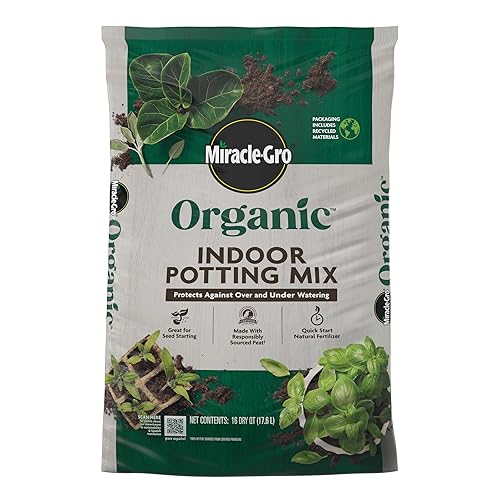
Protects Against Over & Under Watering, Planting Soil For Indoor Container Plants, Houseplants & Starter Plants, OMRI Listed Miracle-Gro Organic Indoor Potting Mix, 16 qt.
This is suited to indoor container plants, houseplants and starter plants where watering mistakes are common. Its moisture-balancing formula is designed to reduce both drought stress and waterlogging.
Key specs
- Volume: 16 quarts
- OMRI listed organic indoor potting mix
- Moisture-balancing formulation
Pros
- Forgiving for gardeners still learning their watering rhythm
- OMRI listing supports organic use
- Useful for indoor herbs and seedlings
Cons
- Written for indoor use, so outdoor vegetable containers may need a more drainage-focused mix
- Moisture-balancing claims are best confirmed against the label for your conditions
Compressed Organic Potting Soil for Garden, Plants & Vegetables

Compressed Organic Potting Soil for Garden, Plants & Vegetables – Expands 4x When Mixed with Water – Indoor or Outdoor Use – Plant Food Mix Derived from Natural Coconut Coir & Worm Castings Fertilizer
This works well for gardeners with limited storage, apartment balconies or anyone who needs to transport soil. It is built on coconut coir and worm castings, giving a clean, nutrient-supplied starting medium.
Key specs
- Compressed block that expands roughly 4 times with water
- Base of natural coconut coir
- Includes worm castings as a fertilizer component
Pros
- Very space-efficient to store and carry
- Worm castings provide gentle, organic nutrition
- Suitable for indoor and outdoor use
Cons
- Expanded volume depends on water and mixing thoroughness, so results vary
- May need added compost for vegetables that feed heavily
FoxFarm Ready-to-Use Amended Container Blend, 2 cu ft

Ready-to-Use Amended Container Blend with Soil Microbes, Earthworm Castings, Bat Guano, and Aged Forest Products FoxFarm Happy Frog Potting Soil with 2 Plant Tags, 2 cu ft
This is the choice for larger containers, raised beds and gardeners who want a biologically active, ready-to-plant mix. It contains soil microbes, earthworm castings and bat guano for a richer organic base.
Key specs
- Volume: 2 cubic feet
- Amended with soil microbes, earthworm castings and bat guano
- Includes aged forest products
Pros
- Large volume covers substantial containers or bed top-ups
- Ready to plant without pre-amending
- Rich organic nutrition for long-season crops
Cons
- Heavy bag that is harder to move than smaller packs
- Rich formulation can be too strong for seedlings and needs care with young plants
Buying Guide
Choosing an organic garden soil is less about brand and more about matching the mix to the job. Start with how you plan to grow, then check the label for a handful of specific features.
Selection Criteria
The products above were compared on four points: whether the mix is clearly organic (OMRI listing or explicit organic ingredients), how well the ingredients suit the intended use, the volume offered relative to typical needs, and the consistency of owner feedback patterns about texture and drainage.
Important Features to Look For
- Organic certification: An OMRI listing means the product has been reviewed against organic standards for inputs. It does not guarantee every plant will thrive, but it confirms the ingredient list suits organic growing.
- Texture and drainage: Vegetable containers need loose, airy mixes. Look for coconut coir, perlite or bark components. Dense compost-heavy mixes can stay waterlogged in pots.
- Nutrient content: Some mixes include fertilizer or amendments; others are mostly coir or compost and need feeding. Tomatoes, squash and corn are heavy feeders and usually need supplemental nutrition.
- Purpose-built formulas: Seed-starting mixes are fine and low in nutrients. Container blends are richer. Garden amendments like compost improve existing soil rather than replacing it.
Specs to Check on the Label
- Volume in quarts or cubic feet, and whether it is compressed (expands when wetted)
- The OMRI listing or organic statement
- Main ingredients, especially the coir, compost, worm castings or bark share
- Intended use: indoor, outdoor, seed starting or vegetables
- Included fertilizer, and its release timing
Choosing by Need
- Containers on a patio: A potting mix with good drainage, such as the outdoor container mix or the Burpee coir blend.
- Seed starting: Coir-based products like Back to the Roots, which are light and fine-textured.
- Improving garden beds: Compost such as Compost Bliss, mixed into existing soil. For a comprehensive bed prep, see Preparing Garden Soil for Planting: A Practical Guide (see Preparing Garden Soil for Planting: A Practical Guide).
- Large raised beds or big pots: A larger bagged blend like FoxFarm, or several bags of a compost-and-coir mix.
- Limited space or storage: The compressed organic option.
If you are still deciding how your bed should be built, Raised Garden Beds: Sizes, Materials and Setup covers dimensions and materials, and Garden Soil Types: Sand, Silt, Clay and Loam explains why your existing soil affects how much amendment you need.
Things to Watch Out For
- Bagged garden soil can contain weed seeds or pests if poorly processed. Buy from reputable sources and check bags for damage or moisture.
- Do not use pure compost as a container medium; it compacts and drains poorly.
- Expect nutrient needs to change over the season. Plan a feeding schedule rather than relying on one fertilizer charge.
- Test your garden soil before large amendment projects. How to Take a Soil Sample for a Garden Soil Test shows how to get accurate results.
FAQ
What makes a garden soil organic?
An organic garden soil uses ingredients such as compost, coconut coir, worm castings and natural minerals, and avoids synthetic fertilizers and pesticides. An OMRI listing is a useful third-party signal that the product meets organic input standards.
Can I use bagged potting mix as garden soil?
Potting mixes are designed for containers and are usually lighter than garden soil. They work for raised beds if mixed with existing soil or compost, but on their own they can dry out quickly in open beds and do not carry the structure needed for in-ground planting.
How much organic soil do I need for a raised bed?
Multiply length, width and depth in feet, then divide by 27 to get cubic yards. A 4 by 8 foot bed filled 12 inches deep needs about 1.2 cubic yards. Bagged products are sold by cubic foot or quart, so convert accordingly.
Do I need to add fertilizer to organic potting soil?
It depends on the product. Some mixes include slow-release fertilizer, while coir-based blends usually need feeding. Heavy feeders like tomatoes, squash and corn typically need supplemental nutrients through the season.
How often should I replace soil in containers?
Many gardeners refresh the top few inches each season and replace the full mix every one to two years, since organic matter breaks down and nutrients are used up. Regular feeding slows this decline.
Is coconut coir better than peat in organic gardening?
Coir is generally considered a more sustainable choice than peat and holds moisture well. Both can be used in organic systems, but coir is often preferred for its renewable source and good aeration.
Should I amend my garden soil or buy new soil?
For in-ground beds, amending existing soil with compost is usually more practical than replacing it. For raised beds or containers, a fresh mix is standard. Improving Garden Drainage in Heavy or Wet Soil covers how to fix drainage in existing beds.
Conclusion
The best expert gardener organic garden soil depends on where and how you grow. For outdoor containers, the Miracle-Gro outdoor mix and the Burpee coir blend offer clear, organic-labeled options with good drainage. For seed starting, the Back to the Roots coir is a practical choice in volume. The Compost Bliss product is the right pick for improving existing beds, while the FoxFarm blend suits large containers and raised beds that need a richer starting base. Choose the compressed option when space and storage are limited, and the indoor-focused Miracle-Gro mix for houseplants and starter plants. Match the mix to the job, check the label for organic certification and volume, and plan feeding through the season for the best results.
About Ethan Brooks
Ethan Brooks is part of our editorial team and reviews and edits our vegetable & edible gardening guides, checking product details against manufacturer specifications and owner feedback.


