As an Amazon Associate I earn from qualifying purchases. This page may contain affiliate links.
Companion planting with pole beans is one of the easiest ways to make a small vegetable plot work harder. Pole beans climb, which means they use vertical space well, and they fix nitrogen in the soil, which benefits heavy feeders planted nearby. The challenge is choosing the right partners, the right seed varieties and the right reference material so you do not end up with crowded rows, stunted vines or a pest problem you did not see coming. The picks below were selected by comparing product specifications, publisher and brand reputation, and the patterns owners commonly describe in their reviews. Each pick is ranked by how well it fits the typical needs of a home gardener planning companion planting with pole beans, from classic Three Sisters combinations to chart-based planning for raised beds and small containers.
Our Top Picks
Quick Comparison
| Product | Best for | Key feature |
|---|---|---|
| Sow Right Seeds – Three Sisters Seed Collection for Planting Home Garden | Gardeners who want a ready-made corn, bean and squash combination | Corn, pole bean and winter squash in one collection |
| Companion Planting for Beginners: Pair Your Plants for a Bountiful, Chemical-Free Vegetable Garden | Beginners learning which vegetables pair well | Plain-language pairing guidance for home gardens |
| Kentucky Wonder Pole Bean Seeds by Isla’s Garden Seeds | Growers who want a classic, heavy-climbing bean | Non-GMO heirloom seed with tender green pods |
| Companion Planting Charts: 101 Charts for Organic Pest Control and Raised Beds | Planners working in raised beds and containers | Large set of charts covering many pairings |
| Great Garden Companions: A Companion-Planting System for a Beautiful, Chemical-Free Vegetable Garden | Gardeners who want a whole-garden system | Organized, system-based approach to planting plans |
| Plant Partners: Science-Based Companion Planting Strategies for the Vegetable Garden | Readers who want evidence-oriented explanations | Focus on the reasoning behind each pairing |
| Veggie Matchmakers: The Ultimate Companion Planting Guide for Beginners | Small-space and container gardeners | Beginner-friendly guidance for compact plots |
| Companion Planting: 7 Proven Strategies for Partnering Plants and Growing a Bountiful, Organic Vegetable Garden | Organic growers who want strategy-focused reading | Seven core strategies for partnering plants |
Sow Right Seeds – Three Sisters Seed Collection for Planting Home Garden

Includes sweet corn, pole bean, winter squash companion plants. Non-GMO heirloom varieties for outdoor vegetable gardening. Sow Right Seeds – Three Sisters Seed Collection for Planting Home Garden
This collection suits gardeners who want to start the classic Three Sisters planting, where corn supports climbing beans and winter squash shades the soil at the base. It is a strong match for anyone planning companion planting with pole beans alongside corn.
Key specs
- Includes sweet corn, pole bean and winter squash seeds
- Non-GMO heirloom varieties
- Intended for outdoor vegetable gardening
Pros
- Covers all three crops of the Three Sisters system in one purchase
- Heirloom seed suits gardeners who save seed
- Useful for planning a single bed around a proven combination
Cons
- Quantities per crop may be small for large plantings
- Gardeners in short-season areas will need to check maturity dates
Companion Planting for Beginners: Pair Your Plants for a Bountiful, Chemical-Free Vegetable Garden

Companion Planting for Beginners: Pair Your Plants for a Bountiful, Chemical-Free Vegetable Garden
A beginner-focused guide for readers who want to understand the basic logic of companion planting before buying seed or building a layout. It is useful for anyone deciding where pole beans should go relative to tomatoes, corn and cucumbers.
Key specs
- Book format focused on vegetable pairings
- Chemical-free, organic gardening emphasis
Pros
- Plain language suited to new gardeners
- Explains pairings in terms of practical garden results
- Gives a foundation for reading more specialized material
Cons
- Beginners may want more detailed spacing tables
- Regional timing details will need checking against your local frost dates
Kentucky Wonder Pole Bean Seeds (Phaseolus vulgaris) – 30+ Non-GMO Heirloom Seeds for Planting

Kentucky Wonder Pole Bean Seeds (Phaseolus vulgaris) – 30+ Non-GMO Heirloom Seeds for Planting, Classic Climbing Variety with Tender Green Pods, by Isla’s Garden Seeds, Gift Idea for Gardeners
This is a classic climbing bean for gardeners who want a vigorous vine that uses a trellis or teepee well. It fits anyone who wants a dependable pole bean for companion planting with pole beans next to sweet corn or along a fence line.
Key specs
- Phaseolus vulgaris, pole type
- Non-GMO heirloom seed
- Packet listed at 30+ seeds
Pros
- Well-known heirloom variety with a long history in home gardens
- Tender green pods suited to fresh eating
- Climbing habit makes good use of vertical space
Cons
- Needs a sturdy support, which adds setup work
- Seed count may not cover large plantings
COMPANION PLANTING CHARTS: 101 Companion Planting Charts for Organic Pest Control
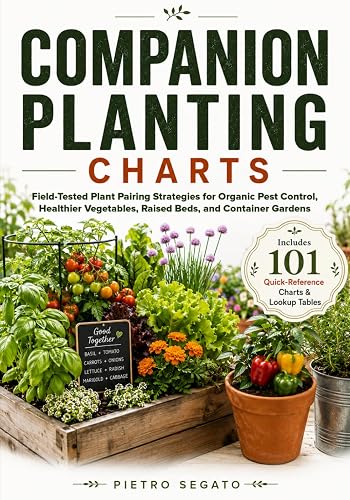
COMPANION PLANTING CHARTS: 101 Companion Planting Charts for Organic Pest Control, Better Vegetable Pairings, Raised Beds, and Container Gardens … for Raised Beds, Containers & Small Spaces)
A chart-driven reference for gardeners who plan in grids, especially raised beds and containers. It is useful for checking which vegetables sit well beside pole beans before you commit to a layout.
Key specs
- Described as 101 companion planting charts
- Covers raised beds, containers and small spaces
Pros
- Quick visual lookup for pairings
- Covers small-space and container situations
- Helpful for planning rotations on paper
Cons
- Charts summarize, so you still need spacing details from other sources
- Some owners prefer narrative explanations
Great Garden Companions: A Companion-Planting System for a Beautiful, Chemical-Free Vegetable Garden

Great Garden Companions: A Companion-Planting System for a Beautiful, Chemical-Free Vegetable Garden
A system-based book for gardeners who want to plan an entire plot around pairings rather than one bed at a time. It suits readers who expect to grow pole beans alongside several other crops across a season.
Key specs
- Book format
- Presents a companion-planting system
Pros
- Organized around a complete system rather than isolated tips
- Useful for whole-garden planning
- Chemical-free approach matches many home gardeners’ goals
Cons
- Systems can feel rigid for small or irregular plots
- May be more than a beginner needs for a single bed
Plant Partners: Science-Based Companion Planting Strategies for the Vegetable Garden

Plant Partners: Science-Based Companion Planting Strategies for the Vegetable Garden
A good fit for readers who want the reasoning behind a pairing, not just a list. It helps gardeners judge whether a companion claim is well supported before acting on it.
Key specs
- Book format
- Emphasis on science-based strategies
Pros
- Explains mechanisms such as nitrogen fixing and pest interactions
- Helps separate well-supported claims from folklore
- Useful for gardeners who like to adapt plans
Cons
- Can be more technical than casual gardeners want
- Practical layouts may need to be built from the explanations
Veggie Matchmakers: The Ultimate Companion Planting Guide for Beginners

Veggie Matchmakers: The Ultimate Companion Planting Guide for Beginners – Grow Healthier Vegetables, Herbs, and Flowers Naturally in Small Spaces
Aimed at beginners and gardeners with small spaces, including balconies, raised beds and containers. It is a reasonable starting point for someone who wants to fit pole beans into a compact area.
Key specs
- Beginner-oriented guide
- Covers vegetables, herbs and flowers
Pros
- Built for small-space planning
- Covers herbs and flowers as well as vegetables
- Accessible writing for new gardeners
Cons
- Less depth on large-scale rotations
- Owners who want technical detail may find it light
Companion Planting: 7 Proven Strategies for Partnering Plants and Growing a Bountiful, Organic Vegetable Garden

Companion Planting: 7 Proven Strategies for Partnering Plants and Growing a Bountiful, Organic Vegetable Garden Using Sustainable Techniques
A strategy-focused guide for organic growers who want a framework they can apply across several crops. It suits gardeners who prefer a clear set of rules over a large chart collection.
Key specs
- Describes seven strategies
- Organic and sustainable techniques emphasis
Pros
- Clear, repeatable strategies
- Focus on sustainable methods
- Good companion to a seed collection or chart
Cons
- Strategies may need adjusting for your climate and soil
- Fewer ready-made layouts than chart-based guides
Buying Guide
Choosing resources for companion planting with pole beans comes down to three things: what you plan to grow, how much space you have, and how much explanation you want. A seed collection solves the question of what to plant together. A chart or system book solves the question of where to put everything. A beginner guide helps you understand why a pairing works, which makes it easier to adapt when conditions change.
Selection criteria
- Crop fit: Does the product cover pole beans and the crops you actually plan to grow beside them?
- Space fit: Is the advice written for in-ground beds, raised beds, or containers?
- Depth: Do you want a quick reference or a full explanation of the reasoning?
- Climate fit: Will the variety mature within your frost-free window?
Important features to look for
- Clear pairings for pole beans with corn, cucumbers, squash, tomatoes and herbs
- Spacing guidance that accounts for vine width and support height
- Notes on which combinations to avoid, such as beans planted near onions or garlic
- Seed listings that state variety type (pole or bush) so you do not buy the wrong habit
Specs to check before buying
For seed products, check the variety type, the stated seed count, and whether the seed is listed as non-GMO heirloom. For books and charts, check the publication format, whether the content is organized by crop or by bed layout, and whether it addresses your growing space. Manufacturers and publishers usually describe scope in the listing, so read it closely before purchasing.
Choosing by need
- Starting out: A beginner guide plus a single classic pole bean seed.
- Three Sisters planting: A combined seed collection that covers corn, beans and squash.
- Raised beds or containers: A chart-based reference built for small spaces.
- Organic whole-garden planning: A system or strategy book.
Things to watch out for
- Pole beans need a support at least 6 to 8 feet tall for most varieties, so do not plant them without a trellis plan.
- Avoid planting beans near alliums such as onions, garlic and leeks, which are commonly reported to slow bean growth.
- Companion charts vary in quality. Cross-check a claim against a second source before acting on it.
- Do not assume a companion pairing will fix a pest problem on its own. Monitor plants and act early.
FAQ
What vegetables grow well with pole beans?
Sweet corn, winter squash, cucumbers, carrots, radishes, marigolds and many herbs are commonly paired with pole beans. Corn gives the beans a natural support, and squash shades the soil and suppresses weeds. Keep beans away from alliums such as onions and garlic.
How far apart should pole beans be planted?
Most pole bean varieties are planted 4 to 6 inches apart at the base of a trellis, with rows or teepees spaced about 3 feet apart. Confirm the spacing on your seed packet, since vine vigor varies.
When should I plant pole beans?
Plant pole beans after the soil has warmed and frost danger has passed. Soil temperatures around 60°F or higher are generally recommended. In many US regions this falls in late spring. Check your local last frost date before sowing.
Do pole beans need a trellis?
Yes. Pole beans climb by twining and need a support 6 to 8 feet tall or taller. Options include bamboo poles in a teepee, a fence or a sturdy trellis. Corn planted as a living support can also work when the timing is right.
Why are my pole bean leaves turning yellow?
Yellowing can come from overwatering, poor drainage, nutrient imbalance or pests. Check soil moisture first, then look under leaves for aphids or spider mites. Soil tests through your local extension office can clarify nutrient issues. A plant health specialist can help if the problem persists.
Are companion planting charts reliable?
Charts are a useful starting point, but evidence for many pairings is mixed. Treat them as guidance, observe your own garden, and adjust over time. Pairings that focus on spacing, support and soil fertility tend to be the most dependable.
Can I grow pole beans in containers?
Yes, with a deep container at least 12 inches across and a sturdy support. Choose a compact or container-friendly variety, water consistently, and feed regularly. Combining beans with a shallow-rooted herb or lettuce in a larger pot can use the space efficiently.
Conclusion
Companion planting with pole beans works best when you match the resource to your situation. For a classic corn, bean and squash combination, a Three Sisters seed collection is the most direct path. A beginner guide helps you understand the logic before you commit to a layout. Chart-based references suit raised beds and containers, while system and strategy books serve gardeners planning a whole plot. Pair any of these with a reliable pole bean variety and a support at least 6 feet tall, and you will have a solid foundation for a productive, space-efficient garden.
Related reading
- Companion Planting with Pole Beans: 8 Best Supports, Companions and Tools (2026)
- 8 Best Pole Beans and Tomatoes Companion Planting Picks for 2026
- 7 Best Green Beans and Cucumber Companion Plantings (2026): Expert Picks
- 6 Best Basil and Beans Companion Planting Tips for Better Harvests
- What Does Companion Planting Mean? Pairings and Pitfalls