 By Ethan Brooks
Updated November 2026
Liquid fertilizer for vegetable garden beds is one of the fastest ways to correct a nutrient shortfall, because plants can absorb it through their roots within hours of watering. Gardeners usually reach for it when tomatoes stall, leaves yellow, or a container crop looks hungry partway through the season. The challenge is that bottles vary widely in nutrient ratio, concentration and intended use, so the right choice depends on what you are growing and how you feed it. The picks below are grouped by need, with specifications drawn from manufacturer labels and common owner feedback rather than any hands-on trials.
Our top picks at a glance
- 1
 TOP CHOICEBest overallFoxFarm Grow Big Liquid Plant Food – 6-4-4 House Plant Fertilizer forView on Amazon
- 2
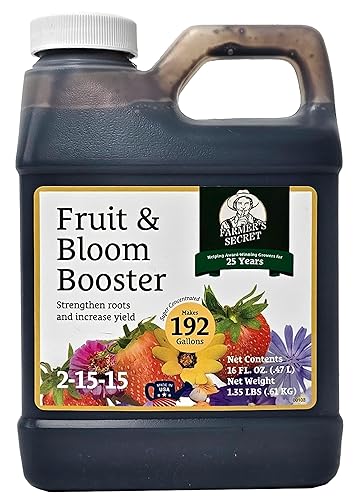 TOP CHOICEBest for flowering and fruitingFarmer’s Secret Fruit & Bloom Booster Fertilizer – Super ConcentratedView on Amazon
- 3
 TOP CHOICEBest for balanced all-season feedingIron & Micronutrient Enriched Formula, Balanced N-P-K Ratio, SupportsView on Amazon
- 4
 Best for a full feeding programFoxFarm Soil Liquid Trio Pack – Big Bloom, Grow Big, Tiger Bloom FertilizersView on Amazon
- 5
 Best for quick, ready-to-use feedingMiracle-Gro LiquaFeed Tomato, Fruits and Vegetables Plant Food (2-Pack)View on Amazon
- 6
 Best budget pickTriple 10 All Purpose Liquid Fertilizer 10-10-10 with Amino Acids (5.5View on Amazon
- 7
 Best for organic gardensNeptune’s Harvest Organic Tomato & Vegetable Plant Fertilizer (2-4-2)View on Amazon
Our Top Picks
Quick Comparison
| Product | Best for | Key feature |
|---|---|---|
| FoxFarm Grow Big Liquid Plant Food | Leafy growth and transplants | 6-4-4 ratio favoring nitrogen |
| Farmer’s Secret Fruit & Bloom Booster Fertilizer | Flowering and fruit set | Concentrated bloom-focused formula |
| Iron & Micronutrient Enriched 10-10-10 Liquid Fertilizer | Balanced season-long feeding | Equal N-P-K with added iron |
| FoxFarm Soil Liquid Trio Pack | Full feeding program | Three complementary bottles |
| Miracle-Gro LiquaFeed Tomato, Fruits and Vegetables Plant Food | Quick, convenient feeding | Two-pack for in-ground and containers |
| Triple 10 All Purpose Liquid Fertilizer 10-10-10 | Budget-conscious all-purpose use | Amino acids and seaweed extract |
| Neptune’s Harvest Organic Tomato & Vegetable Plant Fertilizer | Organic vegetable beds | Fish, seaweed and molasses base |
FoxFarm Grow Big Liquid Plant Food – 6-4-4 House Plant Fertilizer for Lush Vegetative Growth
FoxFarm Grow Big Liquid Plant Food – 6-4-4 House Plant Fertilizer for Lush Vegetative Growth, Fast Nutrient Uptake for Roses, Tomatoes & Veggies – Pint Size Concentrate
Best for: Leafy growth and transplants
This suits gardeners whose vegetables need strong foliage in the first half of the season, such as lettuce, brassicas, and young tomato and pepper plants moving from pots into beds.
Key specs
- Guaranteed analysis listed as 6-4-4 (nitrogen, phosphate, potash)
- Pint-size concentrate that is diluted before use
- Labeled for roses, tomatoes and vegetables
Pros
- Nitrogen-forward ratio supports vigorous leaf development
- Concentrate stretches across many gallons of solution
- Widely available and familiar to many vegetable growers
Cons
- Too much nitrogen late in the season can delay fruiting
- Needs careful dilution, since owners often report over-feeding when starting out
Bottom line: A strong pick for the vegetative stage. Switch to a bloom-focused feed once flowers appear.
Farmer’s Secret Fruit & Bloom Booster Fertilizer – Super Concentrated
Farmer’s Secret Fruit & Bloom Booster Fertilizer – Super Concentrated – Boosts Flowering and Yield on All Varieties of Fruits, Vegetables and Flowers (16oz)
Best for: Flowering and fruit set
This is aimed at gardeners who want more blossoms and heavier yields from tomatoes, peppers, squash and strawberries during the reproductive stage.
Key specs
- Super-concentrated formula, sold in a 16 oz bottle
- Marketed for all fruiting and flowering vegetables
Pros
- Bloom-focused profile suits the flowering stage
- Small amount per gallon keeps the cost of each feeding low in effort
- Works across fruits, vegetables and flowers
Cons
- Using it too early can push flowers before plants are established
- Concentration means dosing errors are easy to make
Bottom line: Best added once plants begin setting flowers. Pair it with a growth-stage feed earlier in the season.
Iron & Micronutrient Enriched Formula, Balanced N-P-K Ratio, Concentrated Liquid 10-10-10 Fertilizer for Vegetables
Iron & Micronutrient Enriched Formula, Balanced N-P-K Ratio, Supports Root Growth, Boosts Harvest Yields, Concentrated Liquid 10-10-10 Fertilizer for Vegetables, Complete Liquid Plant Food, 8 oz
Best for: Balanced season-long feeding
Gardeners who want one bottle for the whole season, with equal nitrogen, phosphate and potash, will find this straightforward to use across mixed beds.
Key specs
- Balanced 10-10-10 N-P-K ratio
- Enriched with iron and micronutrients
- 8 oz concentrated liquid
Pros
- Equal ratio makes it easy to follow a simple schedule
- Micronutrients help address minor deficiencies
- Compact bottle is easy to store
Cons
- Smaller volume means more frequent reordering for large plots
- A balanced ratio may not push flowering as hard as bloom-specific feeds
Bottom line: A sensible everyday feed for mixed vegetable beds that need steady nutrition.
FoxFarm Soil Liquid Trio Pack – Big Bloom, Grow Big, Tiger Bloom Fertilizers
FoxFarm Soil Liquid Trio Pack – Big Bloom, Grow Big, Tiger Bloom Fertilizers Supports Vigorous Plant Growth, Bud Development & Abundant Fruit – Complete Liquid Plant Food Set – 3 Pint Bottles
Best for: Full feeding program
This set fits gardeners who want to match nutrition to each growth stage, moving from leafy growth to flowering to fruiting with separate bottles.
Key specs
- Three 1-pint bottles: Grow Big, Big Bloom, Tiger Bloom
- Designed as a stage-based feeding system
Pros
- Stage-by-stage feeding lets you match nutrients to plant needs
- Comprehensive option for large or long-season gardens
- Consistent product line from one brand
Cons
- Three bottles require more planning and storage
- Overkill for a small raised bed with one or two crops
Bottom line: Best for gardeners who enjoy a structured schedule and grow a wide range of vegetables.
Miracle-Gro LiquaFeed Tomato, Fruits and Vegetables Plant Food (2-Pack)
Contains Two 16 fl. oz. Liquid Plant Fertilizer Bottles, For In-Ground and Container Plants Miracle-Gro LiquaFeed Tomato, Fruits and Vegetables Plant Food (2-Pack)
Best for: Quick, convenient feeding
This is for gardeners who want a ready-to-attach feeding system rather than mixing concentrates, especially for tomatoes and container plants.
Key specs
- Two 16 fl. oz. bottles
- Labeled for in-ground and container plants
Pros
- Convenient to apply without measuring large volumes
- Two-pack covers a full season for a few plants
- Suitable for both beds and containers
Cons
- Ready-to-use volume costs more per feeding than concentrates, according to common owner comparisons
- Limited volume for large plots
Bottom line: A practical choice for container tomatoes and small plantings where convenience matters most.
Triple 10 All Purpose Liquid Fertilizer 10-10-10 with Amino Acids (5.5%) & Seaweed Extract (32oz)
Triple 10 All Purpose Liquid Fertilizer 10-10-10 with Amino Acids (5.5%) & Seaweed Extract (32oz)
Best for: Budget-conscious all-purpose use
Gardeners who want a general-purpose balanced feed with added organic-derived ingredients will find this a useful everyday option.
Key specs
- 10-10-10 N-P-K ratio
- Contains amino acids at 5.5% and seaweed extract
- 32 oz bottle
Pros
- Balanced ratio suits most vegetable crops
- Amino acids and seaweed add secondary benefits for stressed plants
- Larger bottle size for multiple feedings
Cons
- Not targeted to a specific growth stage
- Owners sometimes report it needs more dilution than expected
Bottom line: A workable all-purpose feed for gardeners who want one bottle and a simple routine.
Neptune’s Harvest Organic Tomato & Vegetable Plant Fertilizer (2-4-2) – Liquid Plant Food
Neptune’s Harvest Organic Tomato & Vegetable Plant Fertilizer (2-4-2) – Liquid Plant Food w/Fresh Fish, Seaweed, Molasses, Yucca Extract, & Humic Acids – for Vegetable Garden (Pint)
Best for: Organic vegetable beds
This suits organic growers who want a fish-and-seaweed based feed that works gently over time and supports soil biology.
Key specs
- 2-4-2 N-P-K analysis
- Formulated with fresh fish, seaweed, molasses, yucca extract and humic acids
- Pint bottle
Pros
- Suitable for certified organic gardening practices in many programs
- Gentler nutrient release than synthetic concentrates
- Labeled specifically for tomatoes and vegetables
Cons
- Lower N-P-K numbers mean more frequent feeding for heavy feeders
- Fish-based odor is noticeable when opening the bottle
Bottom line: Best for organic beds where steady, gentle feeding matters more than fast results.
Buying Guide
Nutrient Ratio (N-P-K)
The three numbers on the label show the percentage of nitrogen, phosphate and potash. Nitrogen drives leaf growth, phosphate supports roots and flowering, and potash supports fruit quality and overall plant health. For leafy crops, a higher first number helps; for fruiting crops, a balanced or bloom-leaning ratio usually works better once flowers appear.
Good picks for this: FoxFarm Grow Big Liquid Plant Food, Iron & Micronutrient Enriched 10-10-10 Liquid Fertilizer
Growth Stage Match
Plants need different nutrients at different times. Seedlings and transplants benefit from nitrogen, while flowering and fruiting plants need more phosphate and potash. Matching the product to the stage often gives better results than using one feed all season.
Good picks for this: FoxFarm Soil Liquid Trio Pack, Farmer’s Secret Fruit & Bloom Booster Fertilizer
Concentrate vs. Ready-to-Use
Concentrates cost less per feeding but require accurate dilution. Ready-to-use or attachable formulas remove the mixing step, which is helpful for beginners or container growers, though they cover fewer plants per bottle.
Good picks for this: Miracle-Gro LiquaFeed Tomato, Fruits and Vegetables Plant Food, Farmer’s Secret Fruit & Bloom Booster Fertilizer
Organic vs. Synthetic Ingredients
Organic liquids use plant, fish or mineral sources and tend to release nutrients more slowly, while synthetic formulas act faster. If you follow organic practices, check that the product is labeled for organic use and review your certifying body’s rules.
Good picks for this: Neptune’s Harvest Organic Tomato & Vegetable Plant Fertilizer, Triple 10 All Purpose Liquid Fertilizer 10-10-10
Micronutrients and Secondary Nutrients
Calcium, magnesium, iron and sulfur often matter as much as the big three. Look for listed micronutrients if you have had leaf discoloration without an obvious nitrogen shortage, and consider a soil test to confirm the gap.
Good picks for this: Iron & Micronutrient Enriched 10-10-10 Liquid Fertilizer, Triple 10 All Purpose Liquid Fertilizer 10-10-10
Bottle Size and Storage
Estimate how many gallons of solution you will use each week across the season. Pint bottles suit a few containers, while 32 oz or multi-pack options make more sense for a full raised bed. Keep bottles sealed, out of direct sun and away from freezing temperatures.
Good picks for this: FoxFarm Soil Liquid Trio Pack, Miracle-Gro LiquaFeed Tomato, Fruits and Vegetables Plant Food
Application Method
Liquid feeds are usually applied as a soil drench or as a foliar spray. Drenching delivers nutrients to roots, while foliar feeding gives a faster visible response but should be done in the cooler part of the day to avoid leaf scorch. Always water plants lightly before feeding dry soil.
Good picks for this: Triple 10 All Purpose Liquid Fertilizer 10-10-10, Farmer’s Secret Fruit & Bloom Booster Fertilizer
FAQ
How often should I apply liquid fertilizer to vegetables?
Most liquid feeds are applied every 1 to 3 weeks during active growth, depending on the product strength and the crop. Heavy feeders like tomatoes and squash often respond well to more frequent applications, while leafy greens may need less. Always follow the label dilution rate and adjust based on how plants look.
Can liquid fertilizer burn plants?
Yes. Applying a concentrate at full strength or feeding dry soil can burn roots and leaf edges. Water first, measure carefully, and start with a weaker solution if you are unsure. Owners frequently report that over-feeding causes more problems than under-feeding.
Is liquid fertilizer better than granular fertilizer?
Liquid feeds act faster because nutrients are immediately available to roots, which makes them useful for correcting a shortfall. Granular fertilizers release more slowly and last longer, so many gardeners use granular at planting and liquid as a supplement during the season.
Can I use liquid fertilizer in raised beds and containers?
Yes. Raised beds and containers drain quickly, so nutrients can wash out faster than in-ground soil. Regular liquid feeding helps keep container plants supplied, and many of the products above are labeled for both in-ground and container use.
Do I still need a soil test if I use liquid fertilizer?
A soil test is still useful, because it shows which nutrients are actually low and whether pH is limiting uptake. Without that information, you may add nutrients that are already sufficient. University extension services can often help interpret results.
Is organic liquid fertilizer as effective as synthetic?
Organic liquids typically work more gradually and depend partly on soil microbes to make nutrients available. Synthetic feeds act faster but offer less support for soil life. Many gardeners combine both approaches depending on the crop and the season.
Conclusion
For most vegetable gardens, a balanced liquid feed used through the season covers the basics, while stage-specific products help with flowering and fruiting. The FoxFarm Grow Big Liquid Plant Food suits early leafy growth, the Farmer’s Secret Fruit & Bloom Booster Fertilizer suits fruiting crops, and the Iron & Micronutrient Enriched 10-10-10 Liquid Fertilizer is a steady all-purpose option. Container growers may prefer the Miracle-Gro LiquaFeed Tomato, Fruits and Vegetables Plant Food for convenience, the Triple 10 All Purpose Liquid Fertilizer 10-10-10 suits budget-minded gardeners, and organic growers should look at the Neptune’s Harvest Organic Tomato & Vegetable Plant Fertilizer. A soil test and careful dilution will help you get the most from any of these.
Sources
- Research-based guidance on fertilizing vegetable gardens and interpreting nutrient needs (extension.org)
- Information on soil health, nutrient management and organic production standards (usda.gov)
- Guidance on safe handling, storage and disposal of fertilizer products (epa.gov)
Related reading
- Best 10 Garden Fertilizers for Vegetables, Flowers and Trees
- 6 Best Garden Soils with Fertilizer for Vegetable Beds (2026)
- Raised Bed Companion Planting Vegetable Garden Layout: A Step-by-Step Guide
- Garden Plot Companion Planting Vegetable Garden Layout: A Step-by-Step Guide
- Companion Planting Beginner 20×20 Vegetable Garden Layout: A Step-by-Step Guide
- Companion Planting 4×8 Raised Bed Vegetable Garden Layout: A Practical Guide (2026)
About Ethan Brooks
Ethan Brooks is part of our editorial team and reviews and edits our vegetable & edible gardening guides, checking product details against manufacturer specifications and owner feedback.