 By Graham Fisher
Updated November 2026
A raised garden soil calculator is simply a way to turn your bed dimensions into a volume of soil, so you buy the right amount the first time. In this guide you will measure your beds, convert those measurements into cubic feet and cubic yards, add a settling allowance, and check the result against a worked example. Most of the math takes less than five minutes once you know the formula.
Why Getting the Soil Amount Right Matters
Underestimating soil leaves you with shallow beds that dry out quickly and crowd roots. Overestimating means paying for material that sits unused in a pile. Soil also compacts and settles after you fill the bed, typically by 10 to 20 percent in the first few months, so the volume you see on delivery day is not the volume you will have in July. A good estimate accounts for that settling from the start.
Shopping for one? See our guide: 5 Best Garden Soil in Bulks for Raised Beds and Gardens (2026).
If you are still deciding how deep your beds should be, our guide Raised Garden Bed Soil Calculator: How Much Soil You Really Need covers depth recommendations by crop type. For a broader look at bed construction, see Raised Garden Bed Soil Layers: A Step-by-Step Guide for Vegetables.
Step 1: Measure Each Bed Accurately
Start by measuring the inside dimensions of each bed. Measure from the inside edge of the boards or frame, not the outside, because the wood takes up space you cannot fill with soil.
- Measure the length in feet, to the nearest inch (for example, 8 feet 3 inches becomes 8.25 feet).
- Measure the width the same way.
- Measure the depth from the top of the frame down to the bottom of the soil layer. Common depths are 6 inches for shallow beds, 8 to 12 inches for most vegetables, and 18 inches or more for root crops and deep-rooted plants.
- Record all three numbers for every bed. Repeat this for each bed you plan to fill.
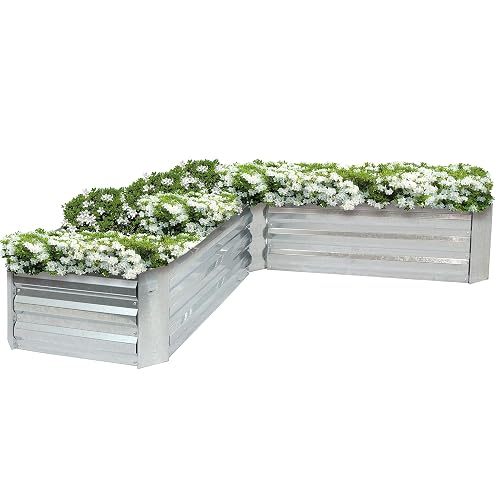
If your beds are irregular, split them into rectangles, calculate each one separately, and add the results together.
Step 2: Convert Dimensions to Cubic Feet
Soil is sold by volume, usually in cubic feet or cubic yards. Multiply length, width, and depth, keeping all measurements in feet:
Volume (cubic feet) = Length (ft) × Width (ft) × Depth (ft)
Depth is in feet, so a 10-inch depth is 10 ÷ 12 = 0.83 feet. Here are a few common bed sizes at a 10-inch depth:
| Bed size (L × W) | Depth | Cubic feet | Cubic yards |
|---|---|---|---|
| 4 ft × 8 ft | 10 in | 26.7 | 0.99 |
| 4 ft × 4 ft | 10 in | 13.3 | 0.49 |
| 3 ft × 6 ft | 10 in | 15.0 | 0.56 |
| 4 ft × 12 ft | 12 in | 48.0 | 1.78 |
To convert cubic feet to cubic yards, divide by 27. Bulk soil is almost always quoted in cubic yards, so this step matters when you compare suppliers.
Step 3: Add a Settling Allowance
Because soil settles, multiply your raw volume by about 1.15 (a 15 percent buffer). This is a practical middle figure; use 1.10 for well-structured mixes that are already aged and 1.20 for loose, high-organic blends that compress more.
Using the 4 ft × 8 ft bed above: 26.7 cubic feet × 1.15 = 30.7 cubic feet, or about 1.14 cubic yards.
Step 4: Calculate the Total for All Beds
Add the adjusted volumes for every bed, then round up to the nearest sensible bag count or delivery unit. Round up rather than down; a small surplus is easy to spread on pathways or mix into compost later, while running short mid-project means waiting for another delivery.
Worked example: three beds, each 4 ft × 8 ft at 10 inches deep.
- Raw volume per bed: 26.7 cu ft
- Three beds raw: 80.1 cu ft
- With 15 percent settling buffer: 92.1 cu ft
- In cubic yards: 92.1 ÷ 27 = 3.41 cu yd, so order about 3.5 cubic yards
Step 5: Check Bagged Soil Quantities
If you are buying bags rather than bulk, check the bag volume printed on the label, which is usually in cubic feet. Divide your adjusted total by that figure and round up. For example, if your total is 92 cubic feet and each bag holds 2 cubic feet, you need 46 bags. Bagged soil is often a better fit for small beds and containers, and our roundup of 7 Best 2 CF Garden Soil Picks for Vegetables and Raised Beds (2026) compares popular bag sizes.
Checklist before you order
- Inside dimensions of every bed, recorded in feet and inches
- Target depth for each bed, based on the crops you plan to grow
- Raw cubic feet per bed, then total
- Settling buffer applied (10 to 20 percent)
- Total converted to cubic yards for bulk or to bag count for bagged soil
- Delivery access checked, since bulk trucks need clear space to dump
Tools You Will Need
- A tape measure long enough to span the bed in one pass
- A calculator or spreadsheet for the multiplication and totals
- A pencil and notebook, or a note on your phone, to log each bed
- A level or straight board to check that the frame is square before you measure
Common Mistakes
- Measuring the outside of the frame. This overstates the volume and can add a cubic yard or more to a large project.
- Forgetting depth conversions. Entering 10 inches as 10 feet multiplies your answer by 12. Always convert inches to feet first.
- Ignoring settling. A bed filled to the rim on day one may sit several inches low by midseason.
- Confusing cubic feet and cubic yards. Check which unit your supplier uses before comparing quotes.
- Skipping the subsoil question. If the bed sits on native ground and you are not lining it, you may use less soil than planned if you add a few inches of compost at the base. Recalculate after you decide.
Tips for Accurate Estimates
- Measure twice, and measure at two or three points across each bed to catch uneven frames.
- Keep a single spreadsheet with one row per bed, so you can update numbers if you change a plan.
- If you plan to top-dress with compost each spring, add that volume to your annual budget separately from the initial fill.
- Mix a small test batch first if you are blending your own soil, to confirm the texture and water-holding behavior before you scale up. The method in Raised Garden Bed Soil Mixture: A Step-by-Step Recipe for Healthy Vegetables is a useful starting point.
Recommended gear
A long, rigid tape measure makes the first step faster and more accurate, especially on beds wider than 4 feet where a flexible tape tends to sag.
A bubble level or small torpedo level helps confirm that your frame is square, which keeps the length and width readings honest.
A tarp or heavy plastic sheet spread before a bulk delivery keeps the pile contained and makes it easier to move soil into beds without losing material to the lawn.
FAQ
How do I calculate soil for an irregular raised bed?
Divide the bed into simple rectangles, calculate the cubic feet for each, and add them together. Apply the settling buffer to the combined total.
How much settling should I plan for?
A buffer of 10 to 20 percent is typical. Use the lower end for mature, well-blended soil and the higher end for loose mixes with a lot of compost or bark.
Is 10 inches of soil deep enough for vegetables?
For most leafy greens, herbs, and beans, 10 to 12 inches is adequate. Deep-rooted crops like carrots and parsnips benefit from 12 inches or more.
Should I buy bulk or bagged soil?
Bulk is usually more economical for large projects, while bags suit small beds or spot repairs. Choose based on how much you need and where the material will go.
Can I include the wood frame in my calculation?
No. Measure the interior only, because the frame occupies space that soil cannot fill.
How many cubic yards is a standard pickup load?
It varies by truck bed size and how full it is loaded, so ask your supplier or measure a test load before relying on that figure.
Do I need to recalculate every year?
You only need a full recalculation if you change bed size or depth. Annual top-dressing with compost is a smaller, separate calculation.
Should I consult anyone before filling beds with specific soil mixes?
If your beds sit near a known contamination source, such as old lead paint, treated lumber residues, or industrial sites, have the soil tested by a local extension office before planting edibles.
Conclusion
A raised garden soil calculator is a short sequence of measurements and multiplication: find the inside volume of each bed, add a settling buffer, and round up to a usable unit. Doing this before you order saves money and avoids mid-season shortfalls. Keep your numbers in a simple log, and you can revisit them each time you expand or refill your beds.
Ready to choose one?
About Graham Fisher
Graham Fisher is part of our editorial team and reviews and edits our vegetable & edible gardening guides, checking product details against manufacturer specifications and owner feedback.