 By Ethan Brooks
Updated November 2026
Choosing organic soil for garden beds is less about finding one perfect bag and more about matching the mix to what you are growing, where you are growing it, and how much work you want to do before planting. Some blends are built for in-ground beds that need a nutrient-rich base. Others are light potting mixes meant for containers, seed starting, or houseplants. This list compares seven organic options across those needs. Selection criteria: whether the product is labeled organic or OMRI Listed, the stated intended use, the ingredients named on the label, the packaging size and whether it suits beds, containers or indoor pots, and the general pattern of owner feedback about moisture retention, drainage and fertility.
Our top picks at a glance
- 1
 TOP CHOICEBest overallMiracle-Gro Organic Outdoor Potting Mix (16 qt.)View on Amazon
- 2
 TOP CHOICEBest for in-ground bedsCoast of Maine Cobscook Blend In-Ground Garden SoilView on Amazon
- 3
 TOP CHOICEBest for vegetables and herbsBurpee Premium Organic Potting Mix Garden SoilView on Amazon
- 4
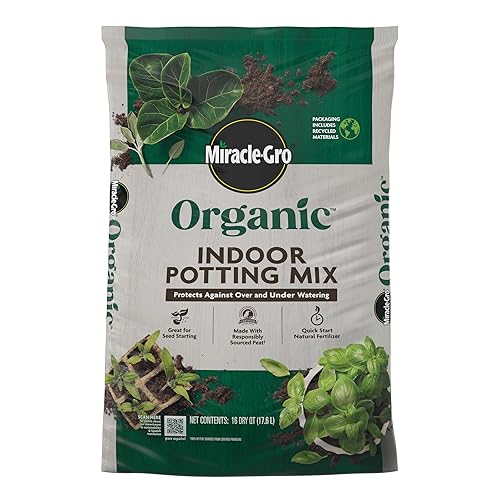 Best for houseplantsMiracle-Gro Organic Indoor Potting Mix (16 qt.)View on Amazon
- 5
 Best for seed startingBack to The Roots Organic Coir Expanding SoilView on Amazon
- 6
 Best budget pickCompressed Organic Potting Soil for Garden, Plants & VegetablesView on Amazon
- 7
 Best for large containersFoxFarm Happy Frog Potting Soil with 2 Plant Tags, 2 cu ftView on Amazon
Our Top Picks
Quick Comparison
| Product | Best for | Key feature |
|---|---|---|
| Miracle-Gro Organic Outdoor Potting Mix (16 qt.) | Outdoor containers and raised beds | Quick-release natural fertilizer, OMRI Listed |
| Miracle-Gro Organic Indoor Potting Mix (16 qt.) | Houseplants and starter plants | Designed to help protect against over- and under-watering |
| Burpee Premium Organic Potting Mix Garden Soil | Vegetables, flowers and herbs | Coconut coir base, OMRI Listed |
| Coast of Maine Cobscook Blend In-Ground Garden Soil | Amending in-ground beds | Ocean and land-sourced ingredients, 1 cu ft |
| Back to The Roots Organic Coir Expanding Soil | Seed starting and light mixes | Compressed organic coir that expands with water |
| Compressed Organic Potting Soil (coir and worm castings) | Budget-conscious container planting | Compressed block, mixes with water to expand |
| FoxFarm Happy Frog Potting Soil (2 cu ft) | Large containers and bulk planting | Soil microbes, earthworm castings and bat guano |
Miracle-Gro Organic Outdoor Potting Mix (16 qt.)
Plant Soil For Outdoor Container Plants, Contains Quick-Release Natural Fertilizer, OMRI Listed Miracle-Gro Organic Outdoor Potting Mix, 16 qt.
Best for: Outdoor containers and raised beds that need a ready-to-plant mix with built-in feeding.
This is a good fit for gardeners who want to fill pots, planters or a small raised bed without mixing their own blend. It suits flowers, herbs and small vegetables grown in containers.
Key specs
- Size: 16 quarts
- Labeled for outdoor container use
- Contains quick-release natural fertilizer
- OMRI Listed for organic use
Pros
- Ready to plant straight from the bag
- Includes fertilizer, so early feeding is handled
- OMRI Listed, which helps organic growers confirm suitability
Cons
- Smaller bag size may not fill large beds
- Fertilizer release means feeding needs may be lower later in the season
Bottom line: A strong default choice for container gardeners who want a convenient, organic-labeled mix.
Coast of Maine Cobscook Blend In-Ground Garden Soil
Builds Nutrient-Rich Soil, In-Ground Garden Blend, Ocean & Land-Sourced Ingredients Coast of Maine Cobscook Blend In-Ground Garden Soil, 1 cu ft
Best for: Amending in-ground beds and building soil structure over time.
This blend is aimed at gardeners working with existing ground who want to enrich it rather than replace it. It fits vegetable beds that need organic matter and a fuller nutrient profile.
Key specs
- Volume: 1 cubic foot
- Marketed as an in-ground blend
- Uses ocean and land-sourced ingredients
Pros
- Designed to build nutrient-rich soil rather than only fill space
- Useful for topdressing or mixing into existing beds
- Natural ingredient base appeals to organic growers
Cons
- One cubic foot covers limited area, so larger beds need several bags
- Results depend on how it is mixed with native soil
Bottom line: Best for gardeners improving in-ground soil who want a richer, organic-focused amendment.
Burpee Premium Organic Potting Mix Garden Soil
Burpee Premium Organic Potting Mix Garden Soil with Coconut Coir for Indoor Plants & Outdoor Containers, OMRI Listed, Ideal for Vegetables, Flowers, Herbs (9 Quarts, 0.12-0.12-0.12)
Best for: Vegetables, flowers and herbs in both containers and indoor pots.
This mix is suited to people who grow a range of edibles and ornamentals and want one bag that works across locations.
Key specs
- Size: 9 quarts
- Coconut coir base
- OMRI Listed
- Labeled for indoor and outdoor containers
Pros
- Versatile across vegetables, flowers and herbs
- Coconut coir supports moisture retention
- OMRI Listed for organic growing
Cons
- Smaller bag volume is less economical for large projects
- Coir-based mixes can dry out faster if left unwatered
Bottom line: A flexible pick for mixed edible and flower containers.
Miracle-Gro Organic Indoor Potting Mix (16 qt.)
Miracle-GroProtects Against Over & Under Watering, Planting Soil For Indoor Container Plants, Houseplants & Starter Plants, OMRI Listed Organic Indoor Potting Mix, 16 qt.
Best for: Houseplants, starter plants and indoor containers.
This is aimed at indoor growers who struggle with watering consistency. The label emphasizes protection against both overwatering and underwatering.
Key specs
- Size: 16 quarts
- Labeled for indoor container use
- OMRI Listed
Pros
- Designed for indoor moisture balance
- Organic labeling for indoor herbs and greens
- Good size for several pots
Cons
- Not intended for in-ground or large raised beds
- Indoor mixes are lighter and may need supplemental feeding later
Bottom line: Pick this for indoor herbs, houseplants and seedlings in pots.
Back to The Roots Organic Coir Expanding Soil
Back to The Roots Organic Coir, 51 Quart Expanding Soil, Great for Seeds and Potting
Best for: Seed starting and light, airy growing mixes.
This compressed coir product suits gardeners who want a sterile, lightweight base for starting seeds or blending their own mixes.
Key specs
- Size: 51 quarts when expanded
- Organic coir base
- Sold as an expanding soil for seeds and potting
Pros
- Lightweight and easy to store in compressed form
- Good base for seed starting
- Can be blended with compost for container mixes
Cons
- Low in nutrients on its own, so it needs feeding or amendment
- Coir can be hard to rewet if it dries out completely
Bottom line: Ideal for seed starting or as a base you build on with compost and fertilizer.
Compressed Organic Potting Soil for Garden, Plants & Vegetables
Compressed Organic Potting Soil for Garden, Plants & Vegetables – Expands 4x When Mixed with Water – Indoor or Outdoor Use – Plant Food Mix Derived from Natural Coconut Coir & Worm Castings Fertilizer
Best for: Budget-conscious container planting with a compact, easy-to-store product.
Gardeners with limited storage or those trying out container gardening may prefer a compressed block that expands on mixing.
Key specs
- Compressed block that expands with water
- Natural coconut coir base
- Includes worm castings as a fertilizer component
- Usable indoors or outdoors
Pros
- Compact to ship and store
- Worm castings add organic fertility
- Works for both indoor and outdoor pots
Cons
- Expansion requires water and mixing time
- Output volume depends on how thoroughly it is rehydrated
Bottom line: A practical option for small container projects where storage space matters.
FoxFarm Happy Frog Potting Soil with 2 Plant Tags, 2 cu ft
Ready-to-Use Amended Container Blend with Soil Microbes, Earthworm Castings, Bat Guano, and Aged Forest Products FoxFarm Happy Frog Potting Soil with 2 Plant Tags, 2 cu ft
Best for: Large containers and bulk planting in ready-to-use organic blend.
This is a bigger-volume option for gardeners filling multiple containers or raised containers and who want a biologically active mix.
Key specs
- Volume: 2 cubic feet
- Amended with soil microbes, earthworm castings and bat guano
- Includes aged forest products
- Ready to use with no mixing needed
Pros
- Large volume for filling big containers
- Microbes and worm castings support soil life
- Ready-to-use blend saves prep time
Cons
- Heavy when wet, so moving full containers takes effort
- Richer blends may need some lime or pH checking for certain crops
Bottom line: Best for gardeners filling large containers who want an amended, organic-focused mix in one bag.
Buying Guide
Check for Organic Certification or OMRI Listing
Organic labeling on a bag should be backed by a recognized listing. The Organic Materials Review Institute (OMRI) reviews inputs for organic use, and many products state an OMRI Listed status. Read the ingredient list too, since some blends include synthetic fertilizers or wetting agents that disqualify them for strict organic growing.
Good picks for this: Miracle-Gro Organic Outdoor Potting Mix, Burpee Premium Organic Potting Mix Garden Soil
Match the Mix to Where You Are Planting
Container mixes are lighter and drain faster than in-ground soil. Raised bed and in-ground blends contain more mineral content and organic matter to hold structure over a season. Using a container mix in a large in-ground bed can lead to poor water-holding and rapid nutrient loss.
Good picks for this: Coast of Maine Cobscook Blend In-Ground Garden Soil, FoxFarm Happy Frog Potting Soil
Consider Volume and Coverage
Calculate how much soil you need before buying. A raised bed 4 feet by 8 feet and 12 inches deep holds about 32 cubic feet, which is roughly 1 cubic yard. Containers are often measured in quarts or cubic feet, so convert your pot volume before ordering. Small bags are convenient for pots but expensive per cubic foot for large jobs, so choose a bag size that matches your project.
Good picks for this: FoxFarm Happy Frog Potting Soil, Compressed Organic Potting Soil
Look at the Base Material
Coconut coir, peat-free bases and compost are common in organic mixes. Coir holds moisture well but has little nutrition on its own. Compost adds fertility and biology. Many gardeners prefer peat-free options for environmental reasons, and most organic mixes from reputable brands now use coir or composted materials instead.
Good picks for this: Back to The Roots Organic Coir Expanding Soil, Burpee Premium Organic Potting Mix Garden Soil
Check Built-In Fertility
Some mixes include fertilizer, worm castings or microbes, while others are sold as base mixes you must feed. If you prefer to control feeding, choose a plainer base. If you want a head start, pick a fertilized blend and still plan to supplement with organic feed as plants grow.
Good picks for this: Miracle-Gro Organic Outdoor Potting Mix, Compressed Organic Potting Soil
Think About Storage and Handling
Compressed blocks save space and shipping weight. Bagged mixes are heavier and need dry storage to prevent mold or clumping. Wet bags of potting mix can weigh substantially more, so plan how you will move them to the garden.
Good picks for this: Back to The Roots Organic Coir Expanding Soil, Compressed Organic Potting Soil
Plan for Care and Replenishment
Organic soils lose structure and nutrients over time. Plan to top-dress with compost each season and refresh containers yearly or after a heavy crop. Test soil pH and nutrient levels periodically with a home kit or a university extension lab, since fertility needs vary by crop.
Good picks for this: Coast of Maine Cobscook Blend In-Ground Garden Soil, Miracle-Gro Organic Indoor Potting Mix
FAQ
Is organic soil for garden better than regular garden soil?
Organic soil is formulated without synthetic fertilizers or pesticides, which matters if you follow organic practices. It can be just as productive as conventional mixes when matched to the crop, but the feeding schedule and nutrient profile differ.
Can I use potting mix in raised garden beds?
You can, but many potting mixes are too light and drain too fast for large beds over a full season. For beds, look for a blend labeled for raised beds or in-ground use, or mix your own with compost and topsoil.
How often should I replace organic garden soil?
Refresh containers every year or after a heavy crop. In raised beds, add compost each season and consider a fuller replacement every two to three years, depending on how the soil performs.
Does organic soil need fertilizer?
Some organic mixes include fertilizer, and others do not. Even fertilized mixes usually need supplemental feeding during heavy fruiting or flowering. Read the label for the stated feeding duration.
What pH should organic garden soil be?
Most vegetables grow best in slightly acidic to neutral soil, roughly pH 6.0 to 7.0. Test your soil before amending, and adjust with lime or sulfur based on the results.
Is coconut coir sustainable for gardening?
Coir is a byproduct of coconut processing and is often promoted as a peat alternative. Its sustainability depends on sourcing, so check the label or the manufacturer’s information for origin details.
How do I know if a soil product is truly organic?
Look for an OMRI Listed mark or an organic certification statement, and review the ingredient list. Products labeled as organic should disclose their main materials.
Conclusion
For most container gardeners, the Miracle-Gro Organic Outdoor Potting Mix is a convenient starting point. In-ground gardeners improving existing beds may prefer the Coast of Maine Cobscook Blend. Vegetable and herb growers who want versatility can look at the Burpee Premium Organic Potting Mix Garden Soil, while houseplant owners should consider the Miracle-Gro Organic Indoor Potting Mix. Seed starters and gardeners building custom blends will find the Back to The Roots Organic Coir useful, and the compressed budget option or the 2 cubic foot FoxFarm bag suit larger or cost-sensitive projects. Match the mix to the location, volume and feeding plan, and you will get more consistent results from your organic soil for garden beds and containers.
Sources
- Federal organic standards and labeling requirements for organic products (usda.gov)
- Research-based extension guidance on soil testing, pH and amendments (extension.org)
- University horticulture resources on potting mixes and soil structure (cornell.edu)
Related reading
- Top 7 Miracle-Gro Organic Raised Bed & Garden Soil Picks for 2026
- Organic Garden Bed Soil: 5 Best Picks Compared (2026)
- Kellogg Garden Organics Topper Soil: 10 Best Picks for Your Garden (2026)
- Expert Gardener Organic Garden Soil: 7 Best Picks for 2026
- 8 Best Organic Raised Garden Soil Options for Vegetable Beds (2026)
- 8 Best Organic Raised Bed Garden Soils for Home Gardens: 8 Picks Compared
About Ethan Brooks
Ethan Brooks is part of our editorial team and reviews and edits our vegetable & edible gardening guides, checking product details against manufacturer specifications and owner feedback.


