By Ethan Brooks
Updated November 2026
Choosing the best garden vegetable fertilizer comes down to matching a nutrient blend to what your plants need at each stage, from leafy growth early in the season to fruit set later on. This guide compares seven widely sold products by nutrient ratio, form (granular, water-soluble or liquid), release speed, organic status and the crops each one suits. The selection is based on published specifications, brand reputation and common owner feedback patterns. It is not based on hands-on testing.
Our top picks at a glance
- 1
 TOP CHOICEBest overallDr. Earth Organic 5 Tomato, Vegetable & Herb FertilizerView on Amazon
- 2
 TOP CHOICEBest for fruiting cropsFoxFarm Happy Frog Tomato & Vegetable FertilizerView on Amazon
- 3
 TOP CHOICEBest for container gardensMiracle-Gro Shake 'N Feed Tomato, Fruit & Vegetable Plant FoodView on Amazon
- 4
 Best for quick feedingMiracle-Gro Water Soluble All Purpose Plant FoodView on Amazon
- 5
 Best organic all-rounderDown to Earth All Natural Organic Vegetable Garden Fertilizer 4-4-4View on Amazon
- 6
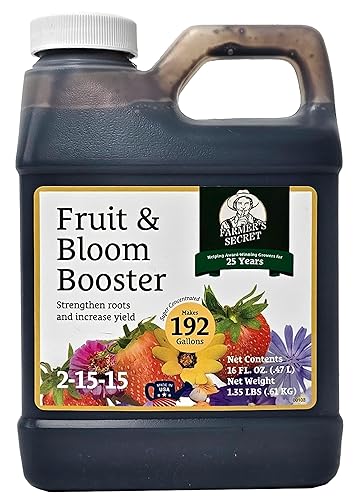 Best for flowering and yieldFarmer's Secret Fruit & Bloom BoosterView on Amazon
- 7
 Best budget pick for liquid feedingIron & Micronutrient Enriched 10-10-10 Liquid Vegetable FertilizerView on Amazon
Our Top Picks
Quick Comparison
| Product | Best for | Key feature |
|---|---|---|
| Dr. Earth Organic 5 Tomato, Vegetable & Herb Fertilizer | Organic beds and general use | Certified organic granular blend |
| FoxFarm Happy Frog Tomato & Vegetable Fertilizer | Heavy-feeding fruiting crops | Calcium and mycorrhizal fungi |
| Miracle-Gro Shake ‘N Feed Tomato, Fruit & Vegetable Plant Food | Containers and in-ground beds | Feeds up to three months per application |
| Miracle-Gro Water Soluble All Purpose Plant Food | Quick corrective feeding | Fast-acting water-soluble formula |
| Down to Earth All Natural Organic Vegetable Garden Fertilizer | Herbs, greens and raised beds | Balanced 4-4-4 organic formula |
| Farmer’s Secret Fruit & Bloom Booster | Flowering and fruit yield | Concentrated bloom-focused formula |
| Iron & Micronutrient Enriched 10-10-10 Liquid Fertilizer | Liquid feeding at regular intervals | Added iron and micronutrients |
Dr. Earth Organic 5 Tomato, Vegetable & Herb Fertilizer
Dr. Earth Organic 5 Tomato, Vegetable & Herb Fertilizer Poly Bag
Best for: Organic beds and general vegetable and herb use
This is a good fit for gardeners who want an organic granular fertilizer that works across tomatoes, peppers, squash and herbs without switching products mid-season. It suits in-ground beds and raised beds alike.
Key specs
- Organic granular formulation sold in a poly bag
- Designed for tomatoes, vegetables and herbs
- Organic-certified blend
Pros
- Organic ingredients suitable for edible gardens
- Works across many vegetable and herb types
- Granular form is easy to broadcast and work into soil
Cons
- Slower visible response than water-soluble products
- Bag size may feel large for a few small containers
Bottom line: A strong default choice for gardeners who want organic feeding for a mixed vegetable bed.
FoxFarm Happy Frog Tomato & Vegetable Fertilizer
FoxFarm Happy Frog Tomato & Vegetable Fertilizer – Vegetable Fertilizer for Vigorous Feeders, 5-7-3 Blend with Calcium & Mycorrhizal Fungi, Supports Abundant Fruit Development, 4 lb
Best for: Heavy-feeding fruiting crops
Gardeners growing tomatoes, peppers, eggplant and other vigorous fruiting plants will find this formula aimed at the flowering and fruit-set stage. Owners often report good results when it is applied at planting and again mid-season.
Key specs
- 5-7-3 nutrient ratio
- Includes calcium and mycorrhizal fungi
- 4 lb package
Pros
- Phosphorus and potassium weighted for fruiting
- Calcium support helps with blossom-end concerns in tomatoes
- Mycorrhizal fungi may help root uptake
Cons
- Lower nitrogen may not suit leafy greens
- Requires accurate dosing to avoid overfeeding
Bottom line: Best for gardeners focused on tomatoes and other fruiting vegetables.
Miracle-Gro Shake ‘N Feed Tomato, Fruit & Vegetable Plant Food
Miracle-GroFertilizer for Vegetable Gardens, for In-Ground and Container Plants, Feeds up to 3 Months Shake 'N Feed Tomato, Fruit & Vegetable Plant Food, 1 lb.
Best for: Container gardens and in-ground beds needing long-lasting feed
This shaker-style granular product is designed for easy application. The label says a single application feeds for up to three months, which suits busy gardeners who prefer fewer feedings.
Key specs
- Granular, shake-on application
- Feeds up to three months per application (per listing)
- 1 lb container
Pros
- Simple to apply around plant bases
- Long feeding window reduces frequent applications
- Works in containers and in-ground beds
Cons
- Synthetic formula, not suitable for certified organic growing
- Small container size for large beds
Bottom line: A convenient pick for container growers who want slow feeding without a complicated routine.
Miracle-Gro Water Soluble All Purpose Plant Food
Fertilizer for All Indoor or Outdoor Plants including Roses, Flowers, Vegetables, Houseplants, Trees, and Shrubs Miracle-Gro Water Soluble All Purpose Plant Food, 1.5 lb.
Best for: Quick corrective feeding of vegetables and flowers
This water-soluble powder is useful when plants show signs of nutrient shortage and you want a fast response. It works across vegetables, flowers, shrubs and houseplants, so it suits mixed gardens.
Key specs
- Water-soluble all-purpose formula
- Suitable for vegetables, flowers, trees and houseplants (per listing)
- 1.5 lb package
Pros
- Fast-acting when dissolved in water
- Versatile across many plant types
- Easy to mix at measured rates
Cons
- Nutrients wash out faster, so feeding is more frequent
- Not tailored specifically to fruiting vegetables
Bottom line: Best as a supplemental feed for quick correction rather than a sole season-long program.
Down to Earth All Natural Organic Vegetable Garden Fertilizer 4-4-4
Down to Earth All Natural Fertilizers Organic Vegetable Garden – Plant Food for Vegetables, Herbs, Greens and Raised Beds 4-4-4, 1 lb
Best for: Herbs, greens and raised beds with an organic approach
A balanced 4-4-4 organic blend suits gardeners who grow a wide range of crops and want even feeding without heavy adjustments. It fits raised beds and kitchen herb plots well.
Key specs
- Balanced 4-4-4 ratio
- All-natural organic formulation
- 1 lb package
Pros
- Balanced ratio suits mixed plantings
- Organic ingredients for edible gardens
- Good match for leafy greens and herbs
Cons
- Lower nutrient concentration means larger amounts per square foot
- Small package for large beds
Bottom line: A sensible organic choice for mixed raised beds and herb gardens.
Farmer’s Secret Fruit & Bloom Booster
Farmer’s Secret Fruit & Bloom Booster Fertilizer – Super Concentrated – Boosts Flowering and Yield on All Varieties of Fruits, Vegetables and Flowers (16oz)
Best for: Boosting flowering and fruit yield
This concentrated booster is aimed at the flowering stage of fruits, vegetables and flowers. It is best used as a supplement to a base fertilizer rather than as the only feed.
Key specs
- Concentrated bloom-focused formula
- 16 oz container
- Labeled for fruits, vegetables and flowers
Pros
- Targets flowering and fruit set
- Concentrated, so a small amount goes a long way
- Works across many crop types
Cons
- Not a complete fertilizer on its own
- Overuse can burn roots if dosing is ignored
Bottom line: A useful add-on for gardeners who want more blooms and fruit from an existing feeding plan.
Iron & Micronutrient Enriched 10-10-10 Liquid Vegetable Fertilizer
Iron & Micronutrient Enriched Formula, Balanced N-P-K Ratio, Supports Root Growth, Boosts Harvest Yields, Concentrated Liquid 10-10-10 Fertilizer for Vegetables, Complete Liquid Plant Food, 8 oz
Best for: Regular liquid feeding of vegetables
A liquid 10-10-10 formula with added iron and micronutrients suits gardeners who prefer to feed every couple of weeks through the season. It is a practical option for container and raised-bed growers.
Key specs
- 10-10-10 balanced N-P-K ratio
- Iron and micronutrient enriched
- 8 oz concentrated liquid
Pros
- Balanced ratio for general vegetable growth
- Micronutrients may help prevent minor deficiencies
- Liquid form is easy to dilute and apply
Cons
- Small volume needs frequent reordering for large gardens
- Requires careful dilution to avoid leaf or root burn
Bottom line: A practical liquid option for regular feeding of containers and small beds.
Buying Guide
Nutrient ratio (N-P-K)
The three numbers on a label show the percentage of nitrogen (N), phosphorus (P) and potassium (K). Leafy crops like lettuce and spinach respond to higher nitrogen early on. Fruiting crops such as tomatoes and peppers generally benefit from more phosphorus and potassium once they start flowering. Balanced ratios like 10-10-10 or 4-4-4 are good general choices when you grow a mix of crops.
Good picks for this: FoxFarm Happy Frog Tomato & Vegetable Fertilizer, Down to Earth All Natural Organic Vegetable Garden Fertilizer 4-4-4
Organic versus synthetic formulas
Organic fertilizers release nutrients as soil microbes break down the material, which tends to be slower and gentler. Synthetic and water-soluble products act faster but also leach more quickly. If you follow organic standards or grow for a local organic market, look for explicit organic certification on the label.
Good picks for this: Dr. Earth Organic 5 Tomato, Vegetable & Herb Fertilizer, Down to Earth All Natural Organic Vegetable Garden Fertilizer 4-4-4
Form: granular, water-soluble or liquid
Granular products are worked into soil or sprinkled around plant bases and feed over weeks. Water-soluble powders dissolve and act quickly, which is helpful for correcting shortages but needs more frequent application. Liquids sit between the two and are often used on a regular schedule in containers.
Good picks for this: Miracle-Gro Shake ‘N Feed Tomato, Fruit & Vegetable Plant Food, Iron & Micronutrient Enriched 10-10-10 Liquid Vegetable Fertilizer
Release speed and feeding frequency
Check the label for feeding duration. Some granular products list a window of several months, while water-soluble products may need reapplication every one to two weeks. Match the schedule to how often you can realistically feed, since missed applications are a common cause of underfed plants.
Good picks for this: Miracle-Gro Shake ‘N Feed Tomato, Fruit & Vegetable Plant Food, Miracle-Gro Water Soluble All Purpose Plant Food
Crop focus
A product labeled for tomatoes and vegetables suits fruiting plants. A general all-purpose formula suits mixed beds. Bloom or fruit boosters work best alongside a base feed rather than replacing it. Consider what fills most of your beds before choosing.
Good picks for this: Farmer’s Secret Fruit & Bloom Booster, FoxFarm Happy Frog Tomato & Vegetable Fertilizer
Micronutrients and soil testing
Nitrogen, phosphorus and potassium are not the only nutrients vegetables need. Iron, calcium and magnesium matter too, and deficiencies can show as yellowing or distorted growth. A basic soil test helps you decide whether a micronutrient-enriched formula is worth it. Our guide to soil testers can help you start.
Good picks for this: Iron & Micronutrient Enriched 10-10-10 Liquid Vegetable Fertilizer, FoxFarm Happy Frog Tomato & Vegetable Fertilizer
Application rate and safety
Over-fertilizing can burn roots, cause salt buildup and produce lush foliage with few vegetables. Follow label rates, water before and after applying dry fertilizer, and keep products away from children and pets. Concentrated liquids and boosters need the most careful measuring.
Good picks for this: Farmer’s Secret Fruit & Bloom Booster, Miracle-Gro Water Soluble All Purpose Plant Food
FAQ
When should I start fertilizing vegetables?
Many gardeners work a slow-release or balanced granular product into the bed at planting time, then top-dress or feed again about four to six weeks later. Fast-growing leafy crops and heavy feeders may need more frequent feeding. Always follow the rate on the label.
Is organic fertilizer better than synthetic for vegetables?
Neither is automatically better. Organic products release nutrients more slowly and improve soil life over time, while synthetic products act faster. The right choice depends on your growing standards, soil condition and how often you can feed.
Can I use tomato fertilizer on all vegetables?
Tomato-labeled products are higher in phosphorus and potassium, which suits fruiting crops. They may be less ideal for leafy greens that need more nitrogen. A balanced all-purpose product is often better for a mixed bed.
How much fertilizer should I apply to a raised bed?
Rates vary by product, so use the label as your starting point. A soil test can show whether your bed is already rich in certain nutrients. Avoid guessing high rates, since excess nutrients can harm plants and water quality.
What are signs of over-fertilizing?
Common signs include leaf edge browning, wilting despite moist soil, excessive leafy growth with few flowers or fruit, and a white crust on the soil surface. If you suspect overfeeding, water deeply to flush excess salts and hold off on further feeding.
Can I combine liquid and granular fertilizers?
Many gardeners do, using a granular base at planting and a liquid feed mid-season. Just avoid stacking high-nitrogen products in the same window, and keep track of total rates so you do not exceed label guidance.
Do I need a soil test before buying fertilizer?
It is not required, but it helps you avoid applying nutrients your soil does not need. Test kits and lab services can show pH and major nutrient levels. Our guide to a soil test for vegetable garden covers options.
Conclusion
For a mixed vegetable bed, a balanced organic granular product such as Dr. Earth Organic 5 Tomato, Vegetable & Herb Fertilizer or Down to Earth All Natural 4-4-4 is a sensible starting point. Tomato and fruiting-crop growers may prefer FoxFarm Happy Frog. Container gardeners will find Miracle-Gro Shake ‘N Feed convenient, while quick corrective feeding suits Miracle-Gro Water Soluble. Farmer’s Secret Fruit & Bloom Booster works as an add-on, and the liquid 10-10-10 suits regular feeding of small beds. Match the product to your crops, feeding schedule and whether you follow organic standards. For more options, see our roundup of the best 10 garden fertilizers for vegetables, flowers and trees.
Sources
- Research-based guidance on fertilizing vegetables and soil nutrient management from land-grant university extension programs (extension.org)
- Information on soil health, organic production standards and nutrient management (usda.gov)
- Guidance on fertilizer runoff, safe handling and reducing nutrient impacts on water (epa.gov)
Before you buy: helpful guides
- Best Soil Mixture for Raised Garden Beds: A Step-by-Step Recipe for Vegetables
- Best Soil Combination for Vegetable Garden: A Step-by-Step Recipe (2026)
- Best Vegetable Garden Soil Mixture: A Step-by-Step Recipe for 2026
- Is Garden Soil the Same as Top Soil? A Practical Guide for Vegetable Growers
- Good Soil Mix for Vegetable Garden: A Step-by-Step Guide (2026)
Related reading
- Top 6 Slow Release Fertilizers for Vegetable Garden Picks Compared (2026)
- Best 10 Garden Fertilizers for Vegetables, Flowers and Trees
- 7 Best Liquid Fertilizers for Vegetable Garden Picks Compared (2026)
About Ethan Brooks
Ethan Brooks is part of our editorial team and reviews and edits our vegetable & edible gardening guides, checking product details against manufacturer specifications and owner feedback.