 By Graham Fisher
Updated November 2026
An 8 x 4 vegetable garden layout gives you a practical footprint: 32 square feet of growing space that is large enough to feed a small household but small enough to tend in a few hours a week. In this guide you will learn how to orient the bed, divide it into zones, place crops by height and sun needs, space plants correctly and build a simple plan you can draw on paper before you dig.
Why an 8 x 4 Bed Works Well
Eight feet by four feet is a size most gardeners can reach across without stepping onto the soil. A standard 4-foot depth means you can reach the center from either long side, which keeps you from compacting the growing area. Lumber for this size is also widely available in common lengths, so cutting waste stays low.
Shopping for one? See our guide: 7 Best Organic Raised Garden Soil Picks for Vegetable Beds (2026).
The bed holds roughly 32 square feet. That is enough for six to eight productive crop groups, or about 20 tomato-sized plants, or several dozen lettuce heads if you stagger harvests. Think of it as a set of smaller sections rather than one large field.
Step 1: Choose the Right Location and Orientation
Before you think about crops, check the site. Most vegetables need at least six to eight hours of direct sun. Watch the spot for a full day if you can, noting shade from fences, trees and nearby buildings.
Set the Long Axis North to South
When the 8-foot side runs north to south, both sides of the bed get even sun across the day. Tall plants on the north edge will not shade the rest of the bed. If your yard forces an east-west orientation, place the tallest crops on the north side and keep them to one row.
Plan for Access
Leave at least 24 inches of clear path on at least one long side so you can reach the bed with a wheelbarrow or hose. Mulched or gravel paths work well here.
Step 2: Divide the Bed Into Zones
Split the 8-foot length into four 2-foot sections. Each section can hold one crop family or one growth habit. This makes rotation and harvest planning far easier than treating the bed as a single open space.
| Section (2 ft x 4 ft) | Suggested Crop Group | Example Plants |
|---|---|---|
| North section | Tall, trellised crops | Pole beans, indeterminate tomatoes, cucumbers on a trellis |
| Second section | Fruiting and mid-height crops | Peppers, eggplant, determinate tomatoes |
| Third section | Root crops | Carrots, beets, radishes |
| South section | Low, quick crops | Lettuce, spinach, bush beans, herbs |
Rotate these groups each season so the same family does not return to the same square foot two years running. Use a simple sketch to track what grew where.
Step 3: Place Crops by Height and Spacing
Within each section, plant by the mature size of the plant. Use this general spacing for common crops in a raised bed with good soil:
- Lettuce and spinach: 6 inches apart in a grid, or in rows 8 inches apart.
- Carrots and radishes: 2 to 3 inches apart, thinned as they grow.
- Bush beans: 4 to 6 inches apart.
- Peppers and eggplant: 18 inches apart.
- Determinate tomatoes: 24 inches apart.
- Indeterminate tomatoes: 24 to 36 inches apart, staked or caged.
- Cucumbers on a trellis: 12 inches apart along the trellis.
In a 4-foot width, you can usually fit two rows of tomatoes at 24 inches apart with a 12-inch gap for airflow, or a single row of tomatoes plus a companion row of basil or marigolds. Check the spacing on your seed packet, since varieties differ.
Step 4: Build a Simple Planting Plan
Draw the bed to scale on graph paper, using one square per 6 inches. Mark the four zones, then sketch in each crop group using the spacing above. Note the planting window for each crop, since spring crops and fall crops can share a square if you sow them at different times.
Checklist for Your Plan
- Measure the actual bed and the sun exposure throughout the day.
- Confirm the long axis runs north to south, or adjust tall crops accordingly.
- Divide the bed into four 2-foot sections.
- Assign crop groups by height and sun need.
- Apply spacing for each crop from your seed packets.
- Plan a succession crop for each section (for example, lettuce after garlic, or beans after early spinach).
- Keep a dated record of planting and harvest dates.
Step 5: Plan Companion Pairings Carefully
Companion planting can help with pest pressure, pollination and space efficiency, though the evidence for some pairings is mixed. Basil near tomatoes, marigolds at the bed edge and radishes among carrots are common examples. Keep companions to the margins of each section so that the main crops still get their full spacing.
Soil and Bed Preparation
An 8 x 4 bed usually needs a fill of loose, well-draining garden soil with organic matter. A mix of topsoil and compost is a typical starting point, and many gardeners add a soil test first to check pH and nutrient levels. Extension services in most states offer inexpensive testing with clear recommendations.
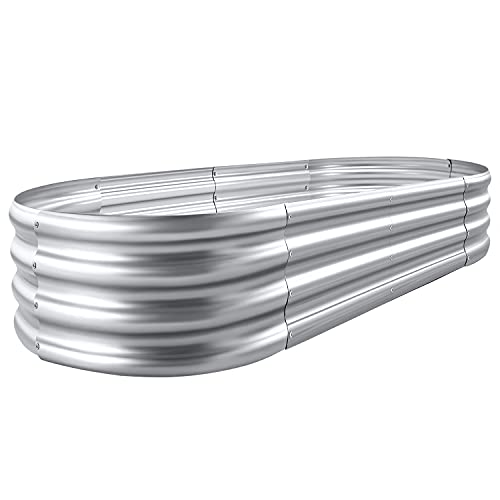
If you are considering the bed’s construction, a standard 8-foot by 4-foot kit or cedar frame works well. Look for boards at least 10 inches deep so roots have enough room.
Recommended gear
A few basic tools make laying out and maintaining the bed easier:
- Garden twine and stakes: Mark the four 2-foot sections and keep rows straight. View on Amazon
- A 25-foot measuring tape: Confirms bed dimensions and path width before you build. View on Amazon
- A soil thermometer: Helps you time sowing for warm-season crops. View on Amazon
- Tomato cages or a trellis: Keeps tall crops in the north section upright and off the soil. View on Amazon
Related Reading
If you want a deeper look at spacing and pairings, start with Companion Planting 4×8 Raised Bed Vegetable Garden Layout: A Practical Guide (2026), which covers the same bed size in more detail. For soil and bed-building questions, Raised Garden Bed 4 X 8: A Step-by-Step Guide for Vegetable Growers walks through construction. Gardeners planning a larger plot can compare options in Raised Bed Garden Design Layout: A Step-by-Step Guide for Vegetables and Vegetable Garden Layout Companion Planting: A Step-by-Step Guide. For prep work before planting, see Vegetable Garden Soil Prep: A Step-by-Step Guide for Healthy Crops, and for tools that help with planning, Vegetable Garden Layout Tools: 6 Essentials for Planning Your Plot (2026).
Common Mistakes
- Planting tall crops on the south side. They shade everything behind them. Keep them on the north edge.
- Ignoring mature spacing. Crowded tomatoes and peppers invite disease and reduce yield.
- Skipping the path. Walking on the bed compacts the soil over the season.
- Planting the same family in the same place every year. Rotate sections to slow soil-borne disease.
- Forgetting succession. Empty squares after early harvests are lost growing time.
- Not labeling or recording. A simple sketch and dated notes save guesswork next season.
FAQ
How many plants fit in an 8 x 4 raised bed?
It depends on the crops. Roughly 20 tomato-sized plants, a few dozen lettuce heads, or a mix of 40 to 60 smaller vegetables is a reasonable range when spacing is followed.
Which way should an 8 x 4 bed face?
Run the long axis north to south so both sides receive even sun. If that is not possible, keep the tallest plants on the north edge.
Can I grow tomatoes in an 8 x 4 bed?
Yes. Plan for two tomato plants in the north or second section, spaced 24 inches apart, with staking or caging.
How deep should the soil be?
Aim for at least 10 inches of soil for most vegetables. Deeper beds suit root crops like carrots and tall-rooted plants better.
Should I rotate crops within a small bed?
Yes. Rotating the four sections each season helps reduce soil-borne disease and nutrient depletion, even in a small space.
What is the best time of year to lay out the bed?
Plan in late winter or early spring, before sowing. Check your local frost dates with your regional extension office, since they vary widely.
Do I need a soil test before planting?
A test is useful, especially for a new bed. Most state extension services offer testing with specific amendment recommendations. Consult them for local guidance.
Conclusion
An 8 x 4 vegetable garden layout rewards a little planning. Orient the bed north to south, divide it into four 2-foot sections, place crops by height and spacing, and sketch a rotation plan before you sow. With a simple drawing and a dated record, you will be able to adjust each season with confidence.
Ready to choose one?
About Graham Fisher
Graham Fisher is part of our editorial team and reviews and edits our vegetable & edible gardening guides, checking product details against manufacturer specifications and owner feedback.